

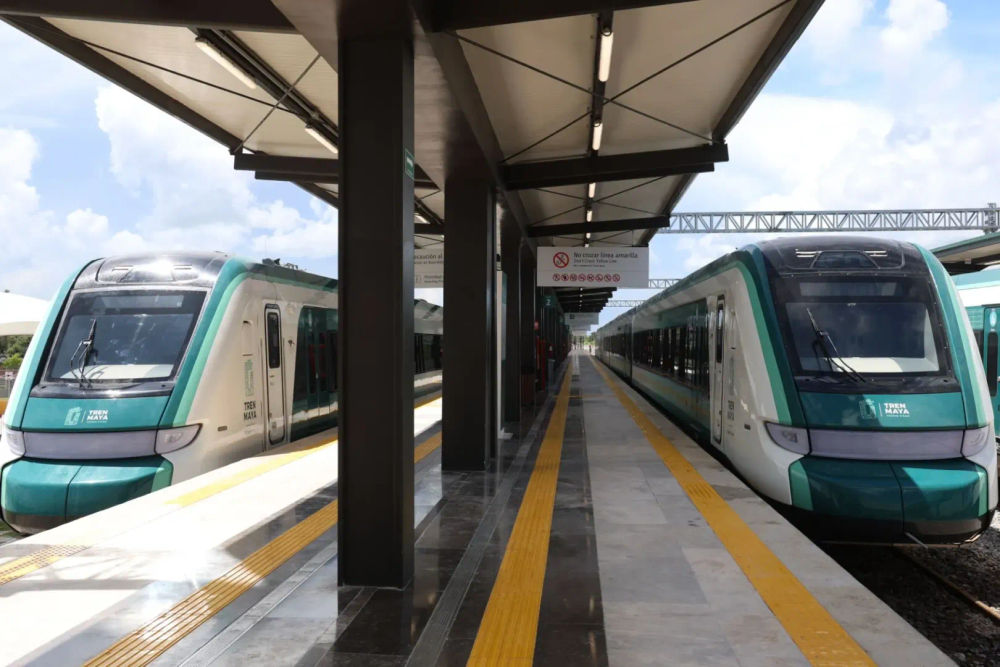
In the sweltering heat of summer 2025, the Tren Maya has hit an impressive milestone: over 50,000 passengers in a single week. A triumph, no doubt, for Mexico’s flagship infrastructure project, yet behind the celebratory numbers lies a growing tension felt most acutely in the southern towns of Quintana Roo.
Places like Tulum and Bacalar, beloved for their raw beauty and relative calm, are now caught in the crosshairs of progress. And while the train surges forward, the local infrastructure is beginning to creak under the weight of success.
The Most Popular Route: Cancún to Palenque at Full Capacity
According to official sources at Tren Maya S.A. de C.V., the Cancún-Palenque corridor has emerged as the most in-demand route, boasting an average weekend occupancy rate of 92%. That figure speaks volumes. Travelers from across Mexico and beyond are choosing the train as a more adventurous and scenic way to explore the Yucatán Peninsula, beyond the usual beachfront clichés.
For many, the experience is a game-changer. Instead of relying on costly tours or long, patchwork bus journeys, tourists can now hop on a train in Playa del Carmen, explore Tulum’s ancient ruins by midday, and arrive at Bacalar’s iconic Seven-Color Lagoon by late afternoon.
But convenience for the traveler often comes at a cost for the host.
The Tourist Experience: Easier Access, New Complications
Yes, the train has opened its doors. But it has also opened floodgates.
In Tulum, passengers disembark at a station located far from the heart of town. Once there, many find themselves stranded, left waiting for taxis or app-based transport that are either unavailable or charging inflated prices. Demand regularly outpaces supply, resulting in long lines, mounting frustration, and fare surges that locals and travelers alike find hard to swallow.
It’s a classic infrastructure lag. The train arrived fast. Everything else is still catching up.
Local Voices: Opportunity Meets Unease
For residents and small business owners, the impact of the Tren Maya is deeply felt, and deeply divided.
On one hand, many restaurants and shops near the stations are seeing unprecedented foot traffic. For some, business is booming for the first time since the pandemic.
On the other hand, concerns about long-term sustainability are growing louder. In Bacalar, where the lagoon is both sacred and fragile, locals are sounding the alarm. Hotel owners and environmental groups warn that the influx of tourists has not been matched by a proportional investment in water treatment, drainage systems, or sustainable planning.
“It’s true, we’re selling more,” admits a Bacalar hotel entrepreneur who asked to remain anonymous. “But what’s the point if in five years the lagoon is dead? The train was step one. Step two has to be a massive investment in sanitation and an urban development plan that respects this town’s limits.”
The Real Challenge: Growth Without Collapse
This is the defining tension of the Tren Maya era: how to embrace economic growth without eroding the very ecosystems and communities that make the region worth visiting in the first place.
For Tulum and Bacalar, the stakes couldn’t be higher. The promise of prosperity is real, but so is the risk of losing the delicate balance that has defined these towns for decades.
Municipal and state governments now face a critical test. Can they translate the train’s success into long-term sustainability? Can they upgrade essential services quickly enough to keep pace with demand? Can they protect the lagoon, the jungle, and the daily life of residents, before they become collateral damage in the rush to modernize?
The answers remain uncertain. But one thing is clear: if the Tren Maya is to be more than a symbol, it must be followed by action. And fast.
Have you traveled on the Tren Maya? Share your experience in the comments. If you’re a local, we want to hear how your community has been affected.