
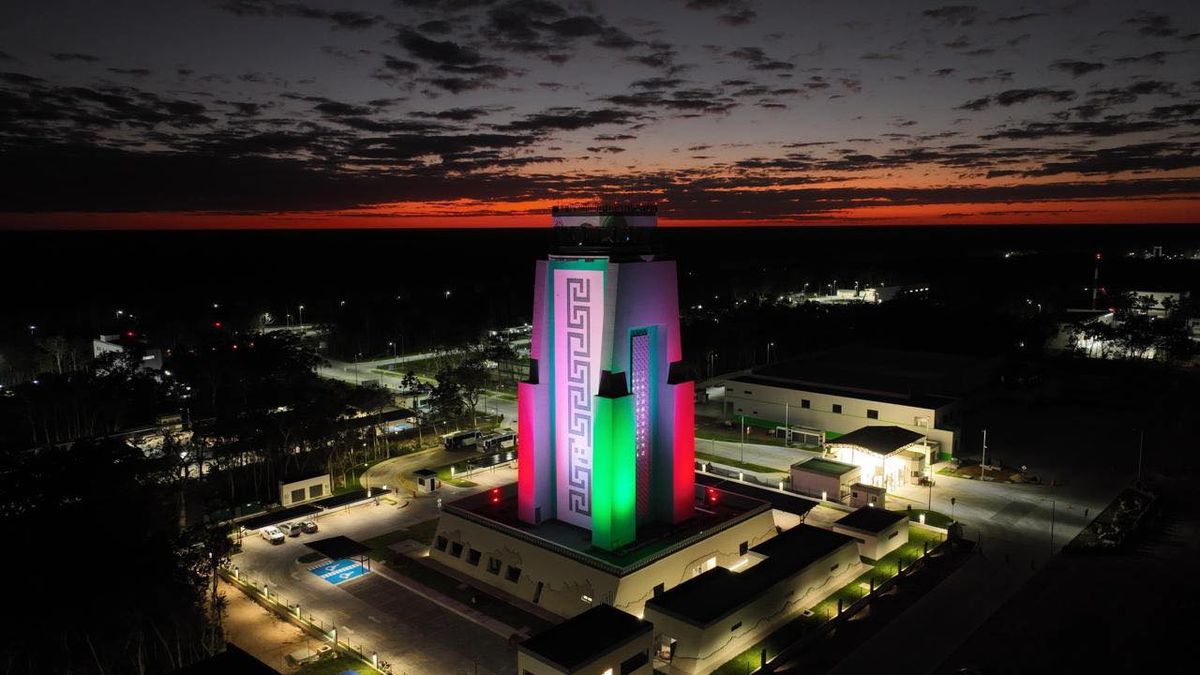
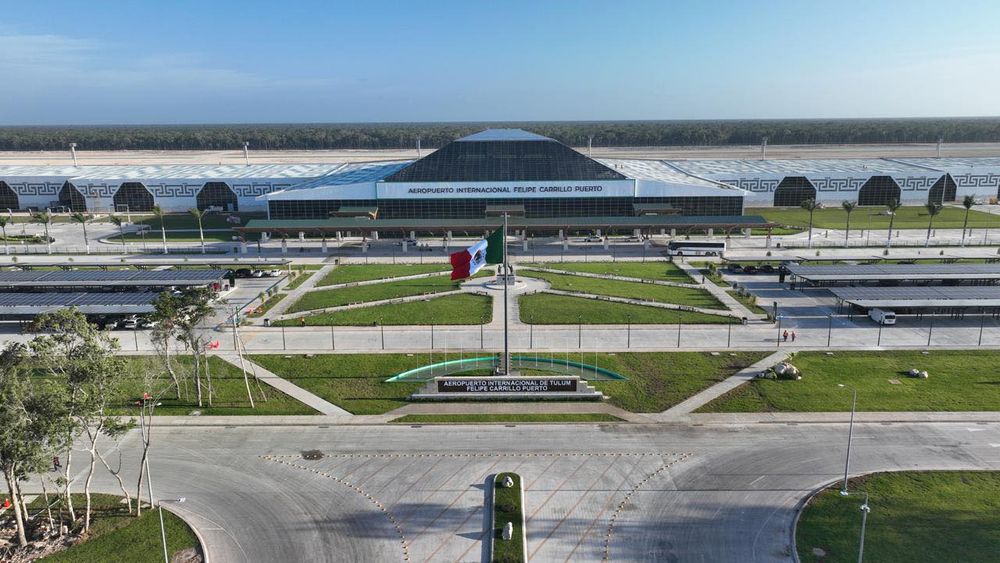
The Tulum airport has passed one million passengers this year, a figure that signals resilience even as several airlines have reduced or halted operations. Officials in Quintana Roo say the terminal might still match last year’s count of just over 1.23 million travelers. The numbers raise a sharp question for the region. How does an airport gain momentum while losing routes at the same time.
According to the latest report from the Grupo Aeroportuario, Ferroviario, de Servicios Auxiliares y Conexos Olmeca Maya Mexica, the terminal has handled 1,019,070 travelers so far. The mix is almost even, with 46.7 percent domestic and 53.3 percent international. The count suggests steady demand in a year marked by shifting airline decisions and competitive pressures across the Riviera Maya.
Routes that left, routes that stalled
Avianca ended its service from Bogotá, ending a short-lived route that some in the industry expected to grow more slowly than others in Mexico. Air Canada also withdrew flights from Ottawa and Quebec and reduced frequencies from Montreal, although the airline kept Toronto service intact. United halted its Boston route and dropped earlier plans to launch flights from Denver.
Each decision had its own internal logic. But the cumulative effect created a perception that Tulum was losing traction in the regional market. And for a few weeks, local hotel operators expressed concern that the drop would ripple into the winter season.
One airport worker in the ground operations team told The Tulum Times that the sudden shift in airline schedules created more questions than answers. The worker added, “Passengers ask why flights vanished so quickly.” It is the kind of comment that circulates easily on social media.

Seasonal traffic and political assurances
Officials in Quintana Roo frame the situation differently. Bernardo Cueto, head of the state tourism office, said the route changes reflect routine seasonal adjustments. He noted that many flights are expected to return in November to match high-season demand in the Riviera Maya.
His position aligns with how other airports in Mexico often operate. Carriers adjust capacity at the end of the northern summer and rebuild connections for the December peak. Tulum’s new infrastructure, backed by federal support, is meant to weather these fluctuations. Yet some analysts warn that the airport’s maturity stage could complicate predictions during its early years.
A short conversation with a taxi driver outside the terminal offered a micro-story that reflects the moment. He said that July felt crowded, then August slowed sharply, and now September feels like a waiting room before the winter surge. The comment is simple but captures a rhythm that many service workers in Quintana Roo recognize.
Airlines that might not return
Even with official assurances, at least one airline has signaled that its retreat could be permanent. David Alemán, Avianca’s sales director for Colombia and South America, said the carrier does not plan to operate the Tulum route again, not even during peak periods.
He explained that Avianca opened operations, watched demand closely, and concluded that traffic levels could not sustain the route. His remarks to REPORTUR underline how competitive the long-haul market has become for the Caribbean side of Mexico. Carriers juggle costs, fleet schedules, and market forecasts. Tulum is part of that complicated map, but not yet a mandatory stop for South American operators.
The statement adds weight to a broader regional question. How many routes are passing adjustments, and how many are signaling structural challenges.
Why the numbers still rise at the Tulum airport
The passenger total, which has already surpassed one million, might appear contradictory given the list of suspended routes. But the figure can be explained by a combination of factors that have shaped air travel across Quintana Roo.
First, domestic travel has held steady, supported by Mexico City, Monterrey, and Guadalajara connections. Mexican travelers continue to treat Tulum as a weekend destination, especially with improved road access to the Costa Maya corridor.
Second, international arrivals from the United States remain strong. Orlando, Los Angeles, Chicago, and Houston are still major feeders. Even with Boston and Denver absent, other cities have filled part of the gap.
Third, the spread of alternative carriers introduces flexibility. Some low-cost airlines absorb seasonal traffic and respond quickly to market shifts. These dynamics have helped stabilize numbers, even as legacy carriers trimmed service.
And there is a fourth layer that speaks to long-term behavior. Travelers often adjust faster than airlines. People search for the easiest or cheapest entry point to Quintana Roo. If Cancun fares surge, Tulum can serve as a backup and vice versa.

Regional competition reshapes expectations
The Tulum airport sits in a fast-evolving space. Cancun remains the primary gateway for the region, hosting more than 20 million passengers a year. Cozumel, although smaller, captures steady cruise and diving markets. Merida continues to expand in the Yucatan peninsula. Each hub influences demand flows.
As a result, Tulum must define a role that matches its size and market realities. Analysts note that airports in Mexico often take several years to settle into predictable patterns. Traffic builds, drops, then stabilizes as airlines refine their models. Tulum’s early figures appear to follow this trajectory.
This moment also coincides with broader regional discussions about infrastructure, tourism strategy, and environmental management across Quintana Roo. As the state grows, its airports become a barometer of shifting economic priorities.
Tension between optimism and caution
Officials maintain that December will confirm the airport’s upward trend. Some carriers have hinted at returning flights as the holiday season approaches. And travel agencies in Mexico City report increased interest in Tulum for winter bookings.
But industry analysts suggest that expectations should remain cautious. Early milestones can be misleading. Airports often reach a symbolic figure, such as one million passengers, then struggle to maintain momentum if new routes do not anchor long-term demand.
A subtle editorial reflection emerges here. Tulum’s airport represents both an opportunity and a test case for how new infrastructure interacts with fast-growing tourism corridors. Forecasts depend on more than runway traffic. They depend on decisions made in airline boardrooms far from Quintana Roo.
One line from a tourism analyst summarizes the situation well. “Growth can be real even when it is uneven.”
What comes next for the terminal and the region
December will reveal whether seasonal recovery is enough to approach last year’s figure of 1.23 million travelers. If the state’s tourism office is correct, many suspended flights will return. If Avianca’s view proves more accurate, some absences could become structural. The outcome matters because Tulum’s role in the Riviera Maya depends on clear and stable air links.
The Tulum Times will continue monitoring these developments, especially as high season approaches and airlines finalize winter schedules that affect all of Mexico’s Caribbean coast.
The stakes extend beyond numbers. Connections influence hotel strategy, local employment, and travel costs for visitors who choose between Cancun, Cozumel, or the Tulum airport. The next few months will shape expectations for 2026 and beyond.
In closing, the Tulum airport stands at a point where recovery appears possible and uncertainty remains. We’d love to hear your thoughts. Join the conversation on The Tulum Times’ social media.
What route or airline decision do you think will matter most for the region in the coming year.