
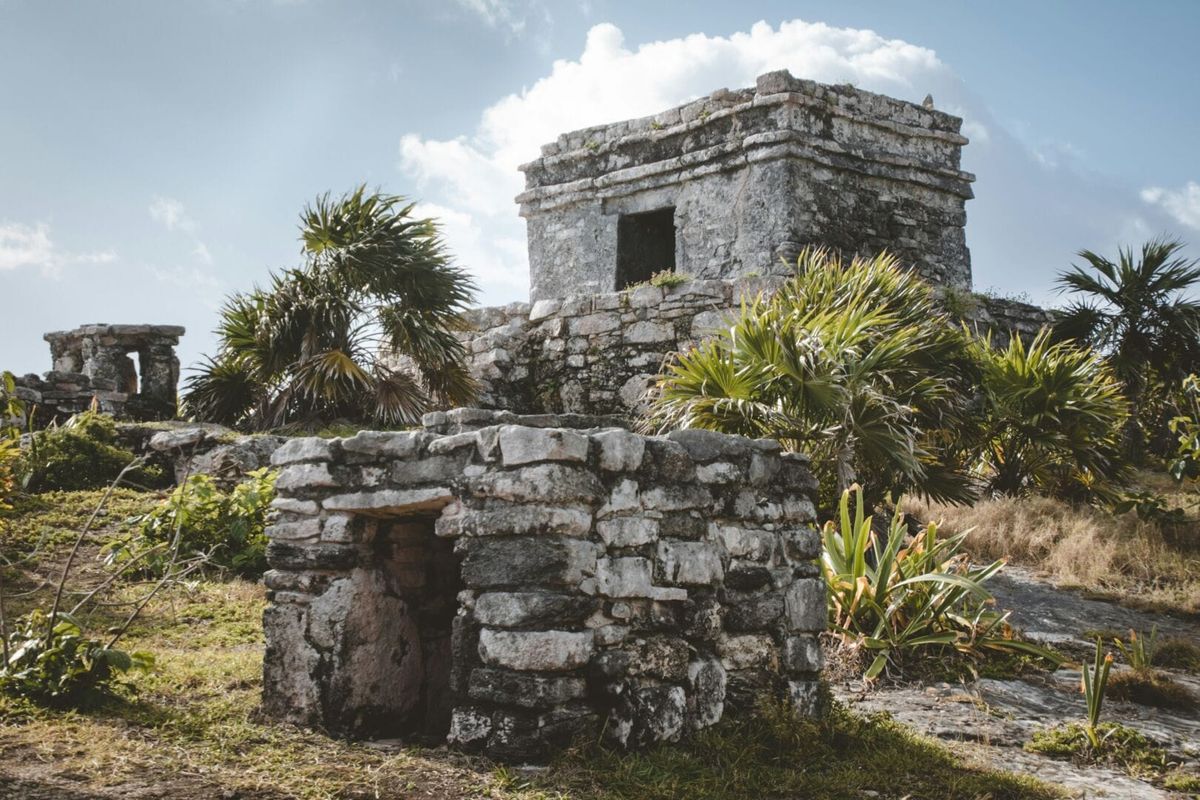
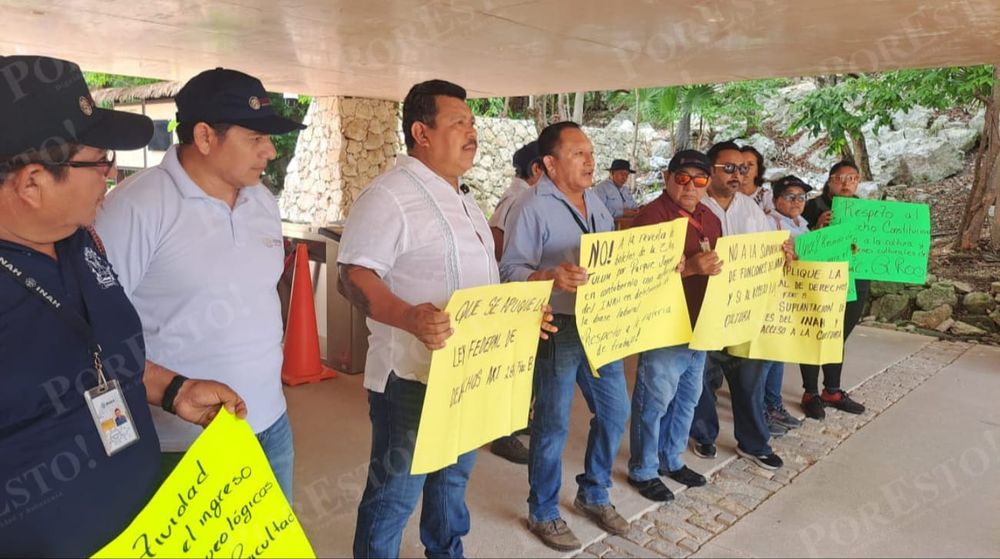
On a scorching Wednesday morning in Tulum, the ancient stones of the city’s archaeological zone stood quiet, but not untouched. Lined up just beyond those weathered ruins were workers from the Instituto Nacional de Antropología e Historia (INAH), Mexico’s longstanding cultural watchdog. No shouting. No chaos. Just signs, solemn expressions, and a singular, unshakable message: Tulum’s heritage is not for sale.
The peaceful protest on August 13 went far beyond disputes over job roles or bureaucratic turf. According to union representatives, the demonstration was sparked by what they describe as the unconstitutional overreach of a private company operating under the name Grupo Mundo Maya.
Their main grievance: the privatized collection of entrance fees at the Tulum archaeological site, which INAH workers claim violates federal law and undermines their institution’s core mission. These aren’t just tickets, they say. They are symbolic contributions to the stewardship of Mexico’s history. And now, that symbolism is quietly being auctioned off.
Who Owns the Gate to Mexico’s Past?
At the heart of the controversy lies the newly developed Parque del Jaguar, a government-endorsed ecotourism project that has quickly become a battleground for control. Though officially distinct from Tulum’s ancient city, the park shares its access routes, infrastructure, and most significantly, its ticketing operations.
According to Juan Antonio Rodelas Piedra, a prominent voice in INAH’s national union committee, Grupo Mundo Maya is currently selling entrance tickets that appear to be INAH-authorized. That, he argues, crosses a constitutional line.
“This is not decoration,” Rodelas said, standing in front of his colleagues. “INAH exists to guard the memory of this nation through its monuments and its archaeological sites. When we are sidelined like this, it’s as if we no longer exist.”
His statement may sound dramatic, but the legal grounding is solid. Mexican law grants INAH exclusive authority over archaeological zones, including the right to collect entrance fees. This responsibility is not simply administrative. It is intrinsic to the institute’s preservation mandate. Delegating it to a private actor, even partially, chips away at the very foundation of that mission.

Ticket Prices That Tell a Different Story
Beyond institutional concerns, the cost of entry is becoming a flashpoint in its own right.
“Imagine bringing your whole family, seven, eight people, and being asked to pay 255 pesos each,” said Rodelas, his voice tight with disbelief. “That’s not just inaccessible. That’s exclusionary.”
Traditionally, INAH has honored a range of exemptions. Children under 12, students, teachers, and individuals with disabilities often enter free of charge. Mexican citizens are granted free access on Sundays, a policy rooted in the democratization of cultural heritage.
But union members claim Grupo Mundo Maya has ignored these longstanding exemptions, charging all visitors without distinction. While this pricing scheme has not been independently confirmed, the allegations alone have stirred outrage across the community.

Cultural Heritage or Theme Park Experience?
Wenceslao Uh Caamal, a veteran ticketing specialist at the site, believes the issue runs deeper than pricing. It’s about public trust, and the erosion of purpose.
“People don’t come here for a theme park,” he said plainly. “They come to see the ruins. That’s what this has always been about. And it’s us, the custodians, the conservators, who have taken care of it.”
For Uh Caamal and many others, this isn’t a theoretical debate. It’s painfully real, deeply personal, and unfolding in real time.

The Warning from Within
“Take a look at Chichén Itzá,” said José Antonio Keb Cetina, head of INAH’s national oversight committee. “This doesn’t happen there. INAH has stood its ground.”
Keb Cetina cautioned that if Tulum’s situation is not urgently addressed, it could set a dangerous precedent. Reduced public access, displaced workers, and a growing disconnect between the nation’s citizens and their cultural heritage are all very real risks.
“If this is allowed here,” he asked pointedly, “where does it stop?”
The demonstrators have called upon Margarito Molina Rendón, INAH’s state director in Quintana Roo, to take a public position. So far, neither Molina Rendón nor Grupo Mundo Maya has issued an official response.
Tourism, Profit, and the Cultural Crossroads
Beneath the legal and bureaucratic surface lies a deeper, more uncomfortable truth: the collision of cultural preservation with commercial tourism. The image of a private company profiting from access to a site protected for decades by public servants is not just awkward. It is emblematic of a broader shift.
It suggests that Mexico’s cultural compass may be tilting, from stewardship toward commodification, from shared heritage to private profit.
And that, say the demonstrators, is what truly endangers the soul of Tulum.
This Is About More Than Just Wages
“This isn’t just about jobs,” said Uh Caamal. “It’s about identity. About who we are. About who has the right to tell our stories.”
He’s not exaggerating. The stones of Tulum may date back centuries, but the questions echoing among them feel unmistakably modern. Who gets to profit from the past? Who decides what our history is worth? And most critically, who gets left out when access is priced out of reach?
As the day faded and the crowd slowly dispersed, the tension didn’t dissolve. If anything, it settled into the dust, the walls, the legacy itself.
This wasn’t just a protest. It was a reckoning.
We invite our readers to share their thoughts. Join the discussion on The Tulum Times’ social platforms and help shape the future of cultural preservation in Mexico.