

The Tulum Archaeological Zone recorded nearly one million visitors between January and November 2025, ranking as the third most visited archaeological site in Mexico, according to data from the Secretaría de Turismo.
Official figures show that the site received approximately 980,000 visitors during the first 11 months of the year, placing it behind only Chichén Itzá in Yucatán and Teotihuacán in central Mexico. The ranking confirms Tulum’s long-standing position among the country’s most frequented cultural landmarks.
Long-standing position among Mexico’s top archaeological sites
According to José Manuel Ochoa, head of the archaeological zone, Tulum’s position in the national ranking is not a recent development. He explained that the site has consistently held third place for many years, following Chichén Itzá and Teotihuacán, and that this pattern has remained largely unchanged over time.
Ochoa noted that while other archaeological sites within Quintana Roo attract significant numbers of visitors, Tulum has maintained a stable presence in the national top three. He added that in earlier years the site occasionally ranked first or second, but in more recent periods it has remained firmly in third place nationwide while continuing to be the most visited archaeological site at the local level.
This consistency, he said, reflects both the site’s international visibility and its proximity to one of Mexico’s most active tourism corridors.

Local leadership within Quintana Roo
Within the state, Tulum remains the most visited archaeological site, surpassing other well-known locations such as Cobá. Its coastal setting, combined with its historical significance as a Maya walled city, has made it a focal point for domestic and international travelers alike.
Tourism operators and guides in the region report that Tulum’s accessibility and inclusion in organized travel itineraries continue to drive high visitor numbers. The site is frequently included in day trips from nearby resorts and urban centers, reinforcing its role as a cornerstone of cultural tourism in the Riviera Maya.

Guides confirm sustained high demand
Alejandro Torres Perera, a veteran guide and one of the pioneers working at the site, agreed that Tulum has consolidated its position as one of Mexico’s most visited archaeological zones. He said the site’s third-place ranking nationally aligns with what guides and operators observe daily on the ground.
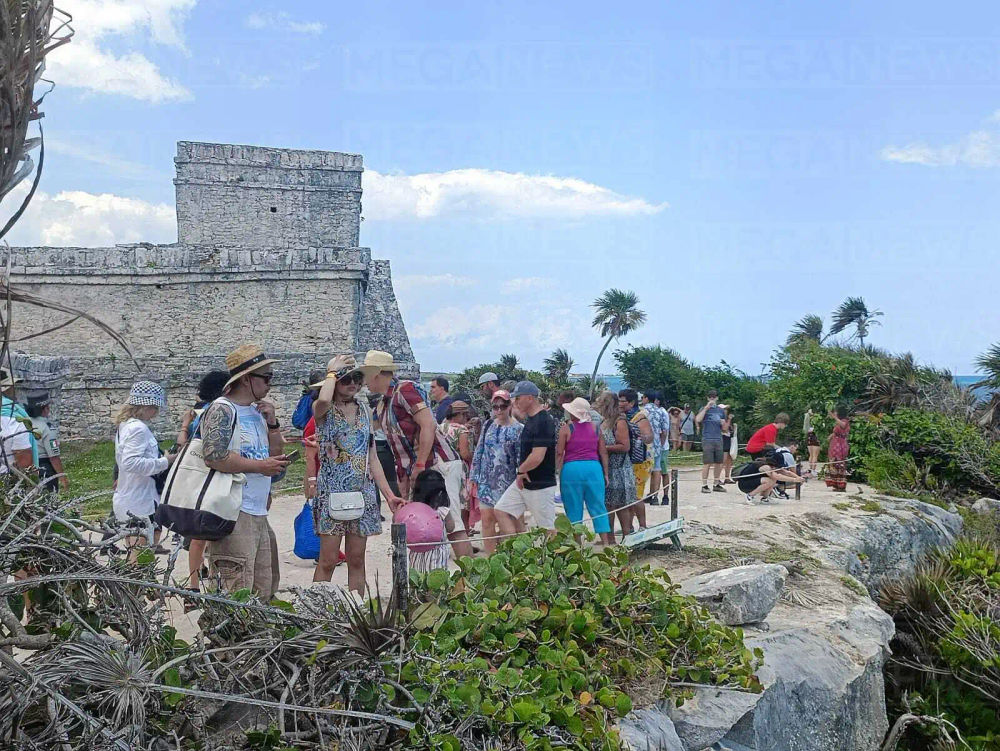
Torres Perera highlighted that visitor numbers increased noticeably toward the end of the winter holiday season, when demand peaked and access logistics became more complex. He described long lines for ticket purchases and situations in which visitors were required to walk extended distances due to the way organized tours manage transportation and drop-off points.
Such scenes, he said, are increasingly common during high season and underscore both the popularity of the site and the operational challenges associated with managing large crowds.
Infrastructure and management challenges under scrutiny
The sustained influx of visitors has brought renewed attention to several operational and infrastructure issues. Torres Perera called on authorities to address concerns related to commercial activity around the site, noting that while vendors are formally regulated, municipal guidelines are not always consistently followed.
He also pointed to shortcomings in the infrastructure of the area known as the Parque del Jaguar, which surrounds and provides access to the archaeological zone. According to Torres Perera, the area requires better conditioning to handle the volume of visitors moving through it daily, particularly during peak periods.
Another persistent issue involves signage. He said inadequate or unclear directional signs often leave visitors confused, with many arriving at access points by simply following the flow of people rather than clear instructions. This lack of orientation, he added, can complicate crowd control and detract from the overall visitor experience.

National context of archaeological tourism growth
At the national level, tourism authorities report that the performance of Tulum reflects broader growth in visits to archaeological sites across Mexico. Josefina Rodríguez Zamora, Mexico’s secretary of tourism, stated that approximately 9 million people visited archaeological zones nationwide during the first 11 months of 2025.
This figure represents a 3.2 percent increase compared with the same period in 2024, indicating a modest but steady rise in cultural tourism. The data suggest that interest in archaeological heritage remains strong, even as travelers balance cultural activities with beach, nature, and urban experiences.
Within this national framework, Tulum stands out not only for its ranking but also for its ability to maintain high visitation levels year after year.

Balancing popularity with preservation
The sustained popularity of the Tulum Archaeological Zone raises ongoing questions about how best to balance access, preservation, and visitor management. While high visitation underscores the site’s cultural and economic importance, it also places pressure on infrastructure, staffing, and conservation efforts.
Authorities have implemented various measures in recent years to regulate access and improve site management, though guides and visitors continue to identify areas for improvement. The challenge lies in accommodating demand while safeguarding the archaeological structures and the surrounding environment.
As one of Mexico’s most recognizable heritage sites, Tulum serves as a test case for how archaeological tourism can be managed at scale without compromising historical integrity.

Why Tulum continues to draw visitors
Despite logistical challenges, Tulum’s appeal remains strong. Its unique location overlooking the Caribbean Sea, combined with its historical role as a Maya trading center, distinguishes it from inland sites. This combination of natural setting and cultural significance continues to attract travelers seeking both history and scenery.
Tourism officials and site managers acknowledge that maintaining this appeal requires ongoing investment and coordination among federal, state, and local authorities. Clear signage, orderly commercial activity, and well-maintained access areas are among the issues most frequently cited by those working directly with visitors.

What lies ahead for Mexico’s third most visited site
As 2025 draws to a close, the nearly one million visitors recorded at the Tulum Archaeological Zone reinforce its position as Mexico’s third most visited archaeological site. The numbers confirm long-term trends while highlighting the operational demands created by sustained popularity.
What remains at stake is the ability to manage growth responsibly, ensuring that visitors can experience the site safely and clearly while preserving its cultural value for future generations. For local guides, authorities, and travelers alike, the question is how Tulum will adapt as interest in Mexico’s archaeological heritage continues to rise.
We’d love to hear your thoughts. Join the conversation on The Tulum Times’ social media.
How should Mexico balance access and preservation at its most visited archaeological sites?