
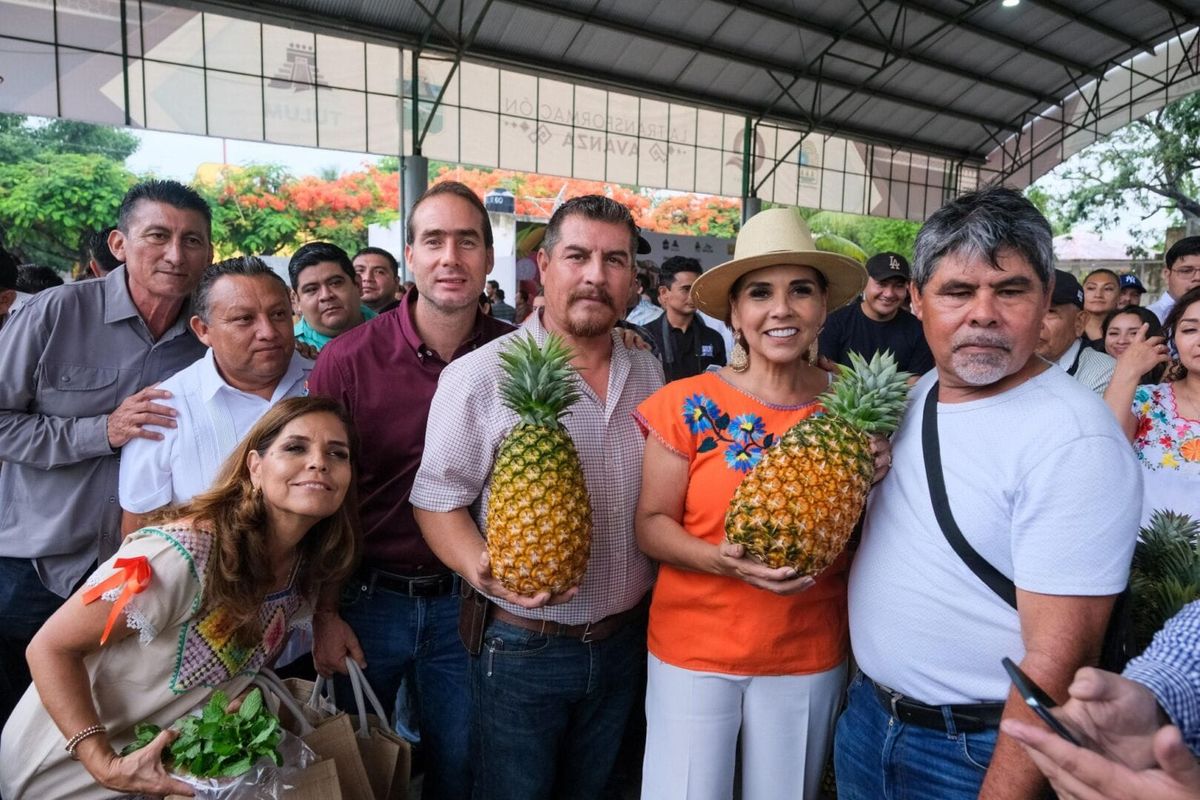
Every so often, a market opens that isn’t just about goods or profits, it’s about memory, resilience, and reclaiming what silence has slowly eroded. Deep in the Maya heartland of southern Quintana Roo, beneath the sweeping curve of Tulum’s Parque Dos Aguas, a new kind of market quietly came to life.
The Mercado de la Prosperidad Compartida didn’t emerge from corporate blueprints or political pageantry. It was built from the trust of neighboring towns and the worn hands of those who till the earth. Behind its humble signage beats something deeper: a miniature movement powered by the often-overlooked force of local artisan markets in Mexico.
No Grandstanding, Just Groundbreaking Change
There were no stages. No ceremonial ribbons fluttering for effect. Instead, a steady hum of voices, farmers, beekeepers, weavers, gathered beneath the dome, their presence speaking volumes. With support from three municipalities, Tulum, Bacalar, and José María Morelos, the market opened not as another vendor fair, but as a collective promise.
Tulum’s Dome Transforms into a Nexus of Shared Growth
Over 40 Producers, One Vision
More than 40 local producers participated in the launch, including 20 from Tulum’s own Maya communities. The rest journeyed from Bacalar and José María Morelos, towns often celebrated for their tranquility, not for economic alliances.
Their tables were stacked with pitahayas, pineapples, honey, corn, squash, cucumbers, and huayas. Nearby, handwoven hammocks swayed next to jars of traditional sweets, potted herbs, and intricate crafts. Each item carried the quiet weight of ancestral skill and daily necessity.
This wasn’t a charity drive. It was economic policy, in sandals and sunhats.

A Moment of Transformation
Governor Mara Lezama Espinosa stood shoulder-to-shoulder with artisans and officials, describing the moment as a true transformation. “This union,” she declared, “is the advance of the transformation, three municipalities united for the artisans and producers, so they can offer directly what they sow with love and harvest with extraordinary hands.”
Crossing Borders: A Rare Alliance in Mexican Governance
Municipal collaboration is, to put it gently, not a hallmark of Mexican bureaucracy. Yet here were the presidents of Bacalar (José Alfredo Contreras Méndez), José María Morelos (Erik Borges Yam), and Tulum (Diego Castañón Trejo), all present and aligned.
Mayor Castañón Trejo made it plain. This market is “the result of real collaboration between municipalities”, a rarity, and perhaps a precedent.
What has changed? Possibly everything. This isn’t top-down paternalism but a shift toward local economic ecosystems rooted in equity. As Lezama put it, this is gobierno humanista con corazón feminista, a humanist government with a feminist heart, putting public resources back into public hands.

And it’s not just lofty rhetoric. Programs like Artesanas del Bienestar are actively training women to grow their businesses and step out from the shadows of informal commerce.
Corporate Curiosity: Promise or Pitfall?
A quiet subplot played out at the market’s debut, representatives from retail giants Chedraui and Soriana were spotted strolling among the stands. They weren’t just shopping. They were observing, noting, perhaps scouting future suppliers.
Could this lead to mainstream retail access for local producers? It’s too early to predict. But their presence hints at a possible, if cautious, opening of the commercial gates.

The Real Voices: Stories Behind the Stalls
Fermina Chulim May, an artisan from Sahcabmukuy, Tulum, didn’t give a speech. She didn’t need to. Her smile did the work. “Gracias por el apoyo,” she said. For the training. For the space. For not having to travel hours to maybe sell a hammock.
She stood among others from communities rarely mentioned in headlines: Buenavista, Kuchumatán, Maya Balam, Manuel Ávila Camacho, Kankabchén, Santa Gertrudis, Puerto Arturo, and Lázaro Cárdenas. Places often forgotten, now sharing the same roof, the same light, the same opportunity.
Nearby, Loyda Ramos Báez from Adolfo de la Huerta in José María Morelos quietly tended her stall. She said nothing. Her work spoke volumes.

A Blueprint for the Future of Artisan Markets in Mexico
This isn’t just about buying and selling. It’s about who gets to be seen. About whose hands shape the future. The Mercado de la Prosperidad Compartida isn’t simply a place, it’s a working prototype. One that, with care and persistence, could replicate itself across Mexico.
It may not be a revolution, not yet. But it is something real. A seed in the soil. A promise in motion. And perhaps, finally, a recognition that local markets are not relics of a rural past, but engines of cultural endurance and economic sovereignty.
What do you think this market represents for the future of the region? Join the conversation on The Tulum Times’ social platforms.