
It’s not just about sun and sand anymore. In Tulum, the question of who gets to dip their toes into the Caribbean is becoming increasingly tangled in policy, politics, and profit.
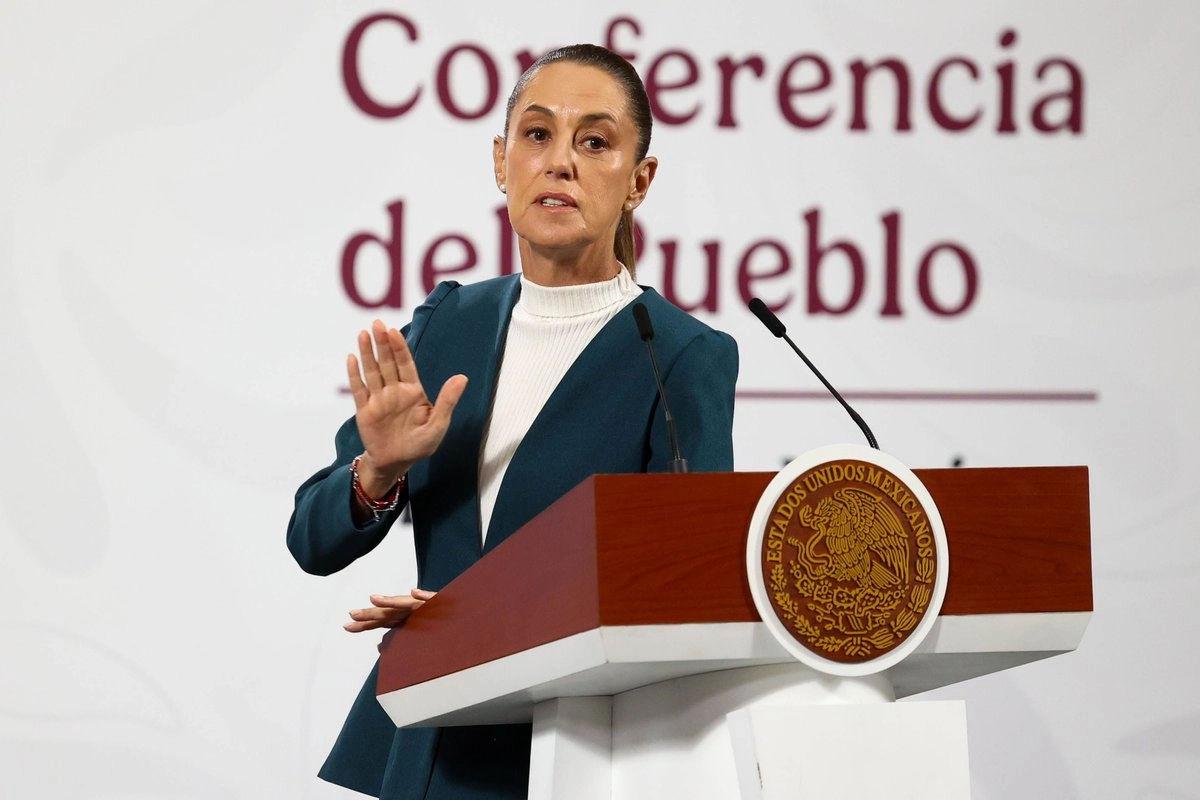
President Claudia Sheinbaum didn’t mince words this week when she warned that beach access “should not be limited to those with economic means.” Her comments came after Tulum’s mayor, Diego Castañón, announced a controversial set of conditions under which visitors could enter the town’s beaches, conditions that have ignited national debate and sparked accusations of creeping privatization.
A paradise fenced in?
While Mexican law guarantees public access to beaches, the reality on the ground tells a different story. In Tulum, many of the most scenic coastal strips are effectively gated, not by fences, but by fine print. Hotels and restaurants along the shore have quietly turned public space into profit zones, allowing access only through their establishments and only if visitors agree to consume on-site.
“Obviously, all national and international tourists can visit without cost,” Mayor Castañón stated in a recent video posted to his social media. “But they cannot bring food. If they want to consume, they must do so here.”
No coolers. No outside drinks. No umbrellas. And no entry without a purchase.
That’s the fine print.
It’s the kind of soft restriction that doesn’t appear on travel brochures, but leaves a bitter taste for many, especially locals and national tourists who feel priced out of their own country’s coastline.
Presidential pushback
In her Thursday morning press conference, Sheinbaum made it clear: controlling beach access is illegal. She confirmed that the Secretary of Tourism, Josefina Rodríguez Zamora, is actively addressing the issue. According to the president, two fronts are being tackled: the actions of private businesses along the beach, and the narrowing of public access routes through the Parque del Jaguar.
“The park protects the archaeological zone, but at the same time, it has left a smaller space to reach the sea,” Sheinbaum noted. An official report is expected next week, outlining agreements and potential resolutions.
The governor of Quintana Roo, Mara Lezama, is also involved, working with federal authorities to ensure that the Riviera Maya doesn’t turn into a luxury-only enclave.
And yet, for many, the damage might already be done.
More than just off-season blues
Empty hammocks. Closed beach bars. Streets once bustling with travelers are now quiet by dusk.
According to data from the Quintana Roo Tourism Information System, Tulum’s hotel occupancy has been in steady decline since the end of summer. From a 62.6% peak in late July, the rate has dropped to 49.2% as of early October, well below Cancun, Isla Mujeres, or Costa Mujeres, which continue to attract stronger visitor numbers.
On platforms like TikTok and X (formerly Twitter), users have posted clips of deserted beaches and shuttered businesses. Some of the most viral content includes messages from local merchants apologizing to national tourists for past treatment. In one striking clip, a group of vendors faces the camera, offering a simple yet powerful statement: “We’re sorry.”
That apology comes not just after years of alleged overpricing and preferential treatment of foreign visitors, but amid rising frustration over sky-high costs. Water bottles are sold at 250 pesos. A trio of cochinita tacos priced at 700. Basic meals that cost more than a hotel room.
And that’s if you can even get to the beach without being asked to “consume first.”
A deeper wound beneath the surface
While some attribute the tourist downturn to natural seasonality, the broader picture suggests structural cracks in Tulum’s model. A model that has prioritized luxury developments, high-ticket tourism, and exclusive experiences, often at the expense of accessibility, sustainability, and inclusivity.
The result? A community grappling with contradictions. On one side, international investors and five-star resorts. On the other, local workers facing unemployment, businesses shutting down, and rising living costs. Newsday Caribe recently ran a feature titled “Crisis in Tulum: Workers flee paradise amid tourism collapse,” reflecting how even those who once relied on tourism are now looking elsewhere.
Tulum, once a backpacker’s haven turned boho-chic hotspot, now finds itself at a crossroads. Is it a destination for all, or a gated mirage for the few?
“Free access” wrapped in restrictions
The mayor insists his new rules are meant to support the local economy by directing spending to coastal businesses. But critics argue that this only reinforces inequality.
“If access depends on your wallet, it’s not really public,” said one tourist on social media. That statement, shared widely, captures the core tension.
Ironically, Castañón’s campaign to promote “free access” has backfired, prompting outrage, memes, and even mock guides on how not to visit Tulum. National media picked up the story. So did international outlets.
It’s not just a local issue anymore. It’s a question about the soul of Mexico’s tourism model.
The Jaguar Park conundrum
Then there’s the Parque del Jaguar, a new conservation project meant to protect archaeological treasures and the environment. But while the intention might be noble, its implementation has raised eyebrows.
By closing off certain paths and funneling traffic through commercial corridors, critics say the park has unintentionally aided the privatization of beach access. Environmental protection, they argue, should not come at the cost of public rights.
This dual tension, between development and conservation, tourism and access, is at the heart of the debate.
Tulum is at a tipping point
So, where does this leave the Riviera Maya’s crown jewel?
Claudia Sheinbaum summed it up plainly: “We want Tulum to remain a spectacular place, but not one where access is only for those with resources.”
The Tulum Times has long followed the region’s evolution, and this latest controversy adds a new layer to an already complex landscape. With national and local officials now under pressure to act, the outcome could redefine not just beach access, but the very identity of Tulum.
Is it a paradise shared, or one increasingly fenced off?
We’d love to hear your thoughts. Join the conversation on The Tulum Times’ social media.
How do you think Mexico should balance tourism development with public access and fairness?