
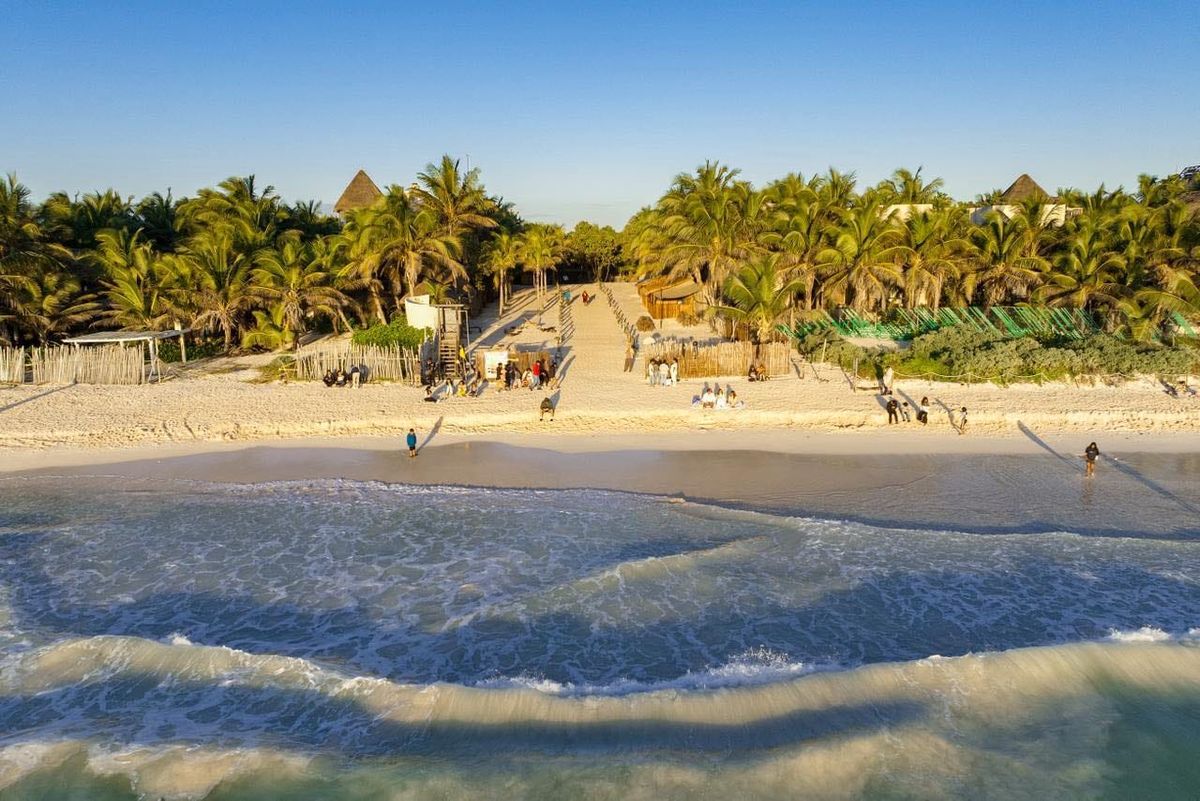
As Tulum continues to promote newly opened public beaches as part of its broader effort to guarantee open coastal access, disability advocates say a critical omission remains unresolved: the absence of infrastructure that allows people with disabilities to reach and enjoy the shoreline.
Nidia Navarrete, director and founder of Toshonos Tulum Pro Discapacidad A.C., warned that the current rollout of public beach access points failed to consider the needs of residents and visitors with mobility limitations. She said the oversight undermines the principle of equal access to public spaces and should be addressed without delay.
According to Navarrete, there are currently no beaches in Tulum equipped with inclusive access infrastructure. That includes ramps, adapted pathways, or logistical solutions that allow wheelchair users to move safely from parking areas to the water.
“Unfortunately, there is no access to the beaches, much less an inclusive beach,” she said, adding that the distance and terrain between parking zones and the shoreline present the most significant barriers.
Distance from parking areas remains the main obstacle
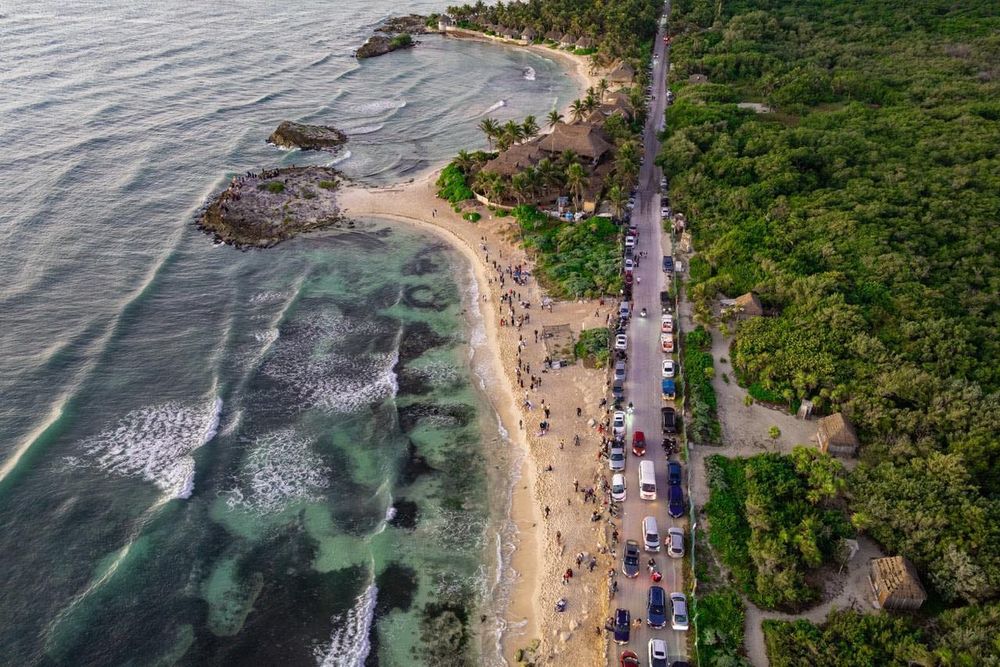
One of the core problems, Navarrete explained, is transportation from designated parking areas to the beach itself. Even when visitors attempt to bridge the gap by renting golf carts, those vehicles are typically not adapted to carry wheelchairs.
“You arrive by car, and you cannot take your vehicle onto the beach,” she said. “You think, well, I’ll rent a golf cart. But how do you load a wheelchair if it does not have the necessary adaptations?”
This lack of continuity between parking access and beach entry effectively excludes many people with disabilities, she noted. While able-bodied visitors may view the walk to the shoreline as minor, for wheelchair users the sandy terrain makes independent movement nearly impossible.
Navarrete emphasized that standard wheelchair wheels do not rotate properly on sand, making it unrealistic for families or caregivers to push chairs long distances across beach access paths.
Call for special vehicle access permits
As a potential short-term solution, Navarrete suggested allowing vehicles with disability plates or official mobility permits to enter designated beach areas. Such permits already grant access to reserved parking spaces, and she argued the same logic should apply to beach access points.
“I think vehicles with disability plates or transit permits should be authorized to enter the beach area because of the person’s disability,” she said.
She also pointed out that Tulum lacks a sufficient number of designated accessible parking spaces near beach entrances, further compounding the problem.
The combination of limited parking, long distances, and unadapted terrain, she said, discourages many families from attempting beach visits at all.
Families excluded from a defining feature of the destination
Navarrete shared a personal example to illustrate the human impact of the lack of inclusive infrastructure. She said her own daughter has not been able to visit the beach in years due to the absence of accessible routes.
“In my daughter’s case, it has been years since we’ve been able to go to the beach because there are no access points,” she said. “They cannot enjoy the beaches of Tulum.”
She added that the emotional toll of this exclusion is often overlooked. For families living in or visiting a coastal destination, the inability to access the sea represents more than a logistical inconvenience.
“What is most painful is that because of a disability, people cannot enjoy what a tourist destination like Tulum offers,” she said.
Public beach openings raise expectations
The criticism comes amid heightened attention on public beach access in Tulum, where authorities have emphasized that beaches are federal public property and must remain open to all.
Recent actions to reopen or formalize public access points have been widely publicized, creating expectations that access would be universal. Disability advocates argue that without inclusive design, those efforts remain incomplete.
From their perspective, physical accessibility is not an optional enhancement but a legal and ethical requirement tied to the right to public space.
While Navarrete did not reference specific regulations, her comments align with broader national and international standards that recognize accessibility as a core component of urban and tourism planning.
Accessibility gaps persist in tourism infrastructure
The situation in Tulum reflects a broader challenge across many tourist destinations, where accessibility is often addressed piecemeal or after infrastructure has already been built.
Navarrete said that retrofitting access after the fact is more difficult and costly than incorporating inclusive design from the outset. She stressed that beach access planning should account for diverse mobility needs rather than assuming a single type of user.
Although some destinations in Mexico and abroad have introduced accessible beach models using modular walkways, amphibious wheelchairs, and trained support staff, she said no such systems are currently available in Tulum.
As a result, people with disabilities are effectively excluded from one of the area’s defining public amenities.
A call for urgent action
Navarrete closed her remarks with a call to local and state authorities to implement concrete accessibility measures that ensure equal enjoyment of public beaches.
She said the issue should not be framed as a special accommodation but as a matter of rights and inclusion.
Without accessible routes, parking, and transportation options, she warned, the promise of public beaches remains unfulfilled for a significant segment of the population.
From an editorial standpoint, the situation highlights a disconnect between public access policies and lived accessibility. Opening a beach gate does not automatically translate into access if physical barriers remain in place.
As Tulum continues to position itself as an inclusive destination, the question of who can actually reach the shoreline remains unresolved. What is at stake is whether public space policy will move beyond symbolism and address the practical realities faced by people with disabilities.
We’d love to hear your thoughts. Join the conversation on The Tulum Times’ social media.
How should beach access policies change to ensure people with disabilities are not left behind?