

In Tulum, a beach is never just a beach. It’s sacred land, woven into the fabric of the region’s ecology and culture. So when a deal unravels, especially one involving public access, the cracks don’t just appear, they widen fast.
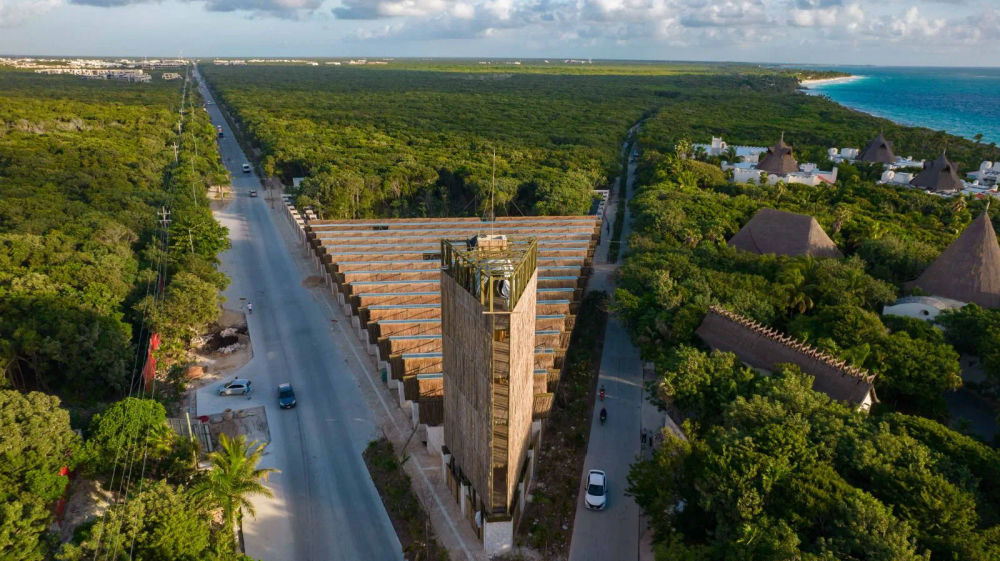
Diego Castañón Trejo, the municipal president of Tulum, is no longer holding back. He’s openly accusing Grupo Mundo Maya, previously known as GAFSACOMM, of breaking a public promise. At the heart of the issue is access to the Parque del Jaguar, a protected natural reserve that runs along the town’s fragile and revered coast.
“We had an agreement,” Castañón Trejo stated, frustration heavy in his voice. “Show your ID, and you enter free. Simple as that. But they’re not honoring it.” This isn’t just political posturing. It’s personal. For many locals, Parque del Jaguar isn’t a tourist destination. It’s their backyard, their inheritance, their pulse. When entry is monetized, what was once shared becomes off-limits.

Where Policy Steps in to Mend Broken Deals
This clash has leapt beyond the park gates and into legislative chambers. In response, Castañón Trejo, together with Quintana Roo Governor Mara Lezama and federal deputy coordinator Ricardo Monreal, is championing a new federal initiative.
Their goal is straightforward: to guarantee free public access to all federally protected natural areas in Mexico at least one day a week, either Saturday or Sunday, and on national holidays.
This move is anything but symbolic. Over 30 percent of Quintana Roo is classified as protected land. For the people who live there, access isn’t a perk. It’s essential. “It’s urgent,” the mayor explained. “We’re not talking about one beach or one park. We’re talking about a third of our land.”
This proposed legislation, spearheaded by Monreal and backed by growing municipal and state support, could shift the national conversation on natural access rights. It’s not yet law, but it’s heading to the federal Chamber of Deputies. From there, the fight scales up.
Broken Trust Behind Closed Doors
You can hear the weariness in Castañón Trejo’s voice. “We met with them. Not once. Not twice. Over ten times,” he said of Grupo Mundo Maya. “Agreements were reached. But today, they’re ignoring the local people. And people are tired.”
What began as a negotiation now simmers with tension. Collaboration has morphed into confrontation. The mayor has made it clear, if the situation doesn’t improve, he’s ready to take a stand. “If I have to protest, I will. That’s how seriously we take this.”
The issue at stake isn’t just access. It’s trust. When promises tied to public rights start to unravel, the question becomes louder: who are these protected areas really for?
A Call for Fairness, Not Disorder
Despite the rising friction, Castañón Trejo emphasizes that this isn’t about disregarding conservation efforts. “We respect them. We abide by them,” he affirmed. His demand is not for chaos, but for fairness. Free access must coexist with ecological responsibility. It’s a balance, not a trade-off.
And when he speaks about the future, the mayor’s tone shifts. A touch of hope returns. “I’m proud of the work we’re doing. And I believe it’s going to happen. Monreal’s been supportive. The governor, too. This initiative could be a game-changer.”
Still, there’s an unspoken caveat in the air. A bill is not a law. And a law, unenforced, is just paper.

Beyond Tulum: A National Reckoning
What began as a dispute in Tulum now echoes across the nation. The debate touches on fundamental values: access, equality, and the right to the natural world. In a place where the line between paradise and profit is as fine as white sand, that conversation is more urgent than ever.
There’s an old coastal saying, the beach belongs to everyone. Whether that ideal endures will depend on what unfolds next in Mexico’s political corridors and whether Grupo Mundo Maya chooses to return to the table.
At The Tulum Times, we believe the conversation must continue. Follow us on social media and let your voice be part of the story.