
Last year, local authorities and the Tulum municipal government unveiled an ambitious vision for public beaches. They announced new pedestrian paths, rest areas, public bathrooms, and access points that, in their words, would belong to everyone. “These are for all people,” they said. A reimagined coastline open to residents, tourists, and anyone who wanted to experience Tulum’s natural beauty with dignity.
What they didn’t say, what no one could have imagined back then, was that to access those “public” improvements, you’d eventually have to pay. And not just in pesos.
Today, residents, service providers, and visitors are reporting what feels more like a privatized park under federal branding than a public treasure. Despite verbal agreements between local communities and federal agencies, the harassment inside Tulum National Park hasn’t stopped. Instead, it’s evolved.
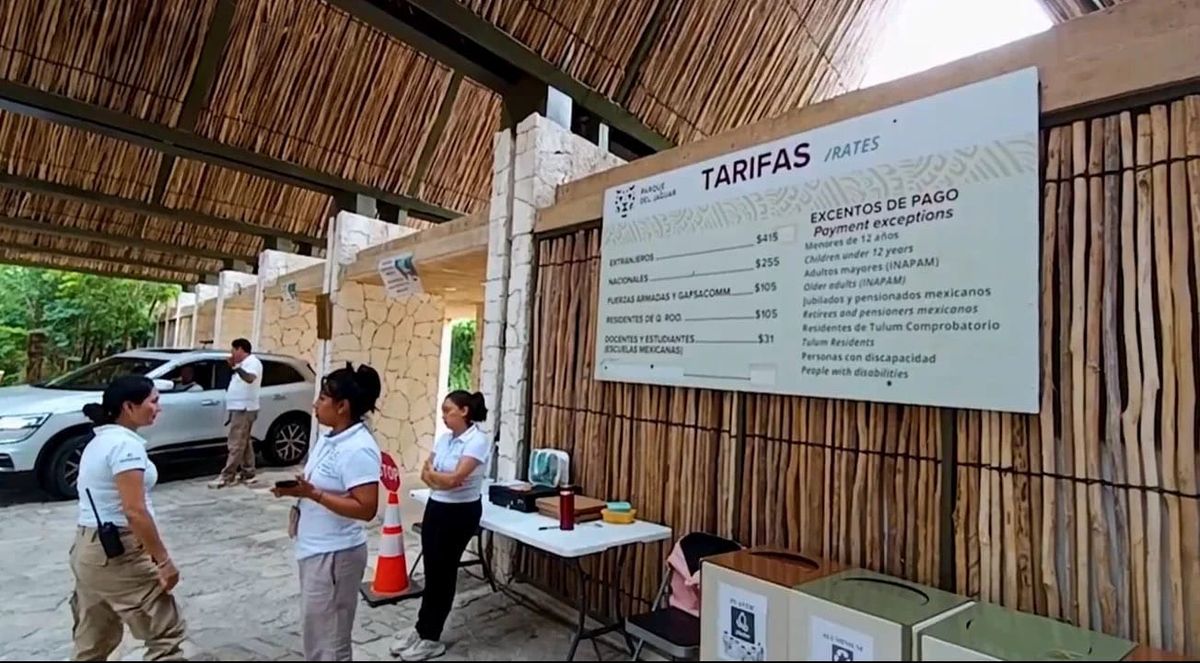
Tourists, even those entering on foot, are being required to wear wristbands to access essential services: bathrooms, internal shuttles, or private restaurants. The backlash is growing louder.

A message from José Juan Domínguez Calderón, director of the Caribbean Mexican Biosphere Reserve, confirmed what many feared: any tourist activity, renting a bicycle, lounging at a beach club, even stopping for a drink, requires a wristband issued by CONANP and the operators of Parque del Jaguar. It’s as if these federal agencies and private concessionaires now act as landlords over land that was meant to be free.
Locals and entrepreneurs accuse the federal government, through CONANP and GAFSACOMM (now operating as Grupo Mundo Maya), of attempting to recover investments by exploiting the destination’s image, while allegations of corruption and illegal charges mount. The streets buzz with one word: betrayal.
Those affected are now organizing new demonstrations, demanding what was promised in bold headlines and speeches: free access to beaches and public services, without paying for a wristband.
The Setup: What Was Said vs. What’s Really Happening
What was once promoted as a historic agreement to guarantee dignified, cost-free access to Tulum National Park has, according to local business owners, become a tightly controlled setup that benefits just one player, Gafsacom.
Testimonies from the ground are clear: the company operating Jaguar National Park was absent from the roundtables with protestors and officials. Now, they claim to be unaware of any commitments made during those talks.

In practical terms, visitors can technically enter, but only on foot. No cars. No motorcycles. Not even bicycles. Once inside, they’re on their own under the blazing sun, walking long distances and paying for every amenity: shade, a bathroom break, soft drinks, tours, beach access. Every service, without exception, requires a wristband.
And here’s the kicker: even though the beach is nominally public, people are not allowed to use the bathrooms or access any of the facilities that were once “built for all.” The improvements announced with such fanfare are still there, but behind a velvet rope made of bureaucracy and fees.
“Visitors don’t just come to swim,” says one frustrated boat operator. “They want food, boat rides, access to ruins, or even just a place to sit. But every one of those things now requires a wristband. What public park charges you to rest under a tree?”
Echoes of Exclusion
These grievances point to a pattern that’s becoming all too familiar in Quintana Roo: the conversion of federal land into a commercial franchise. It’s not just about access, it’s about erosion. Not of the shoreline, but of public trust.
Although the beaches are technically still “free” for those who don’t use the services, locals say that distinction is meaningless. Without bathrooms, without access points for families with elderly members or small children, and without basic infrastructure, the idea of free access exists only on paper.
The outrage isn’t abstract. It’s rooted in something very real. People remember the promises made not long ago: legal reforms, free public beach zones, and expanded infrastructure for everyone. These weren’t vague suggestions; they were specific, measurable commitments from elected officials and federal agencies.
The mayor of Tulum, Diego Castañón, even spoke openly of reforming national laws to guarantee free entry to beaches and protected areas, and of coordinating with INAH and CONANP to open new routes to Playa Mangle. But now? The very group assigned to protect and manage the park stands accused of denying access to those same services unless a fee is paid. And worse, denying access even to residents, despite presenting credentials.

A New Kind of Border
This situation doesn’t just affect vacationers. It directly hits small business owners, tour guides, artisans, and families who rely on beach traffic to survive. Every wristband sold is one less drink ordered at a local stand, one less tip to a fisherman’s boat crew. It chips away at the informal economy that has long supported Tulum’s working class.
The area’s reputation, once a bohemian escape, full of open beaches and barefoot freedom, is now curdling into something more exclusive. More sterile. A curated experience where nature can be enjoyed, but only if you’re holding the right color-coded band.
This creeping privatization is being felt across the Riviera Maya, but Tulum, with its unique blend of ecological wonder and indigenous heritage, feels the loss more acutely. The soul of the place, once rooted in communal access to sacred land, is being sold off in fragments.
And for what?
What’s at Stake
In a place where access used to mean walking barefoot through a mangrove trail to find the sea, we now find fences, checkpoints, and rising fees. Promises made just months ago are now whispers carried off by the Caribbean wind.
The citizens of Tulum are not just asking for convenience. They’re asking for dignity. For the fulfillment of commitments. For the right to walk, rest, and breathe in their own land without needing a wristband to justify their presence.
We’d love to hear your thoughts. Join the conversation on The Tulum Times’ social media.
How much should we pay to enjoy what was once ours?