
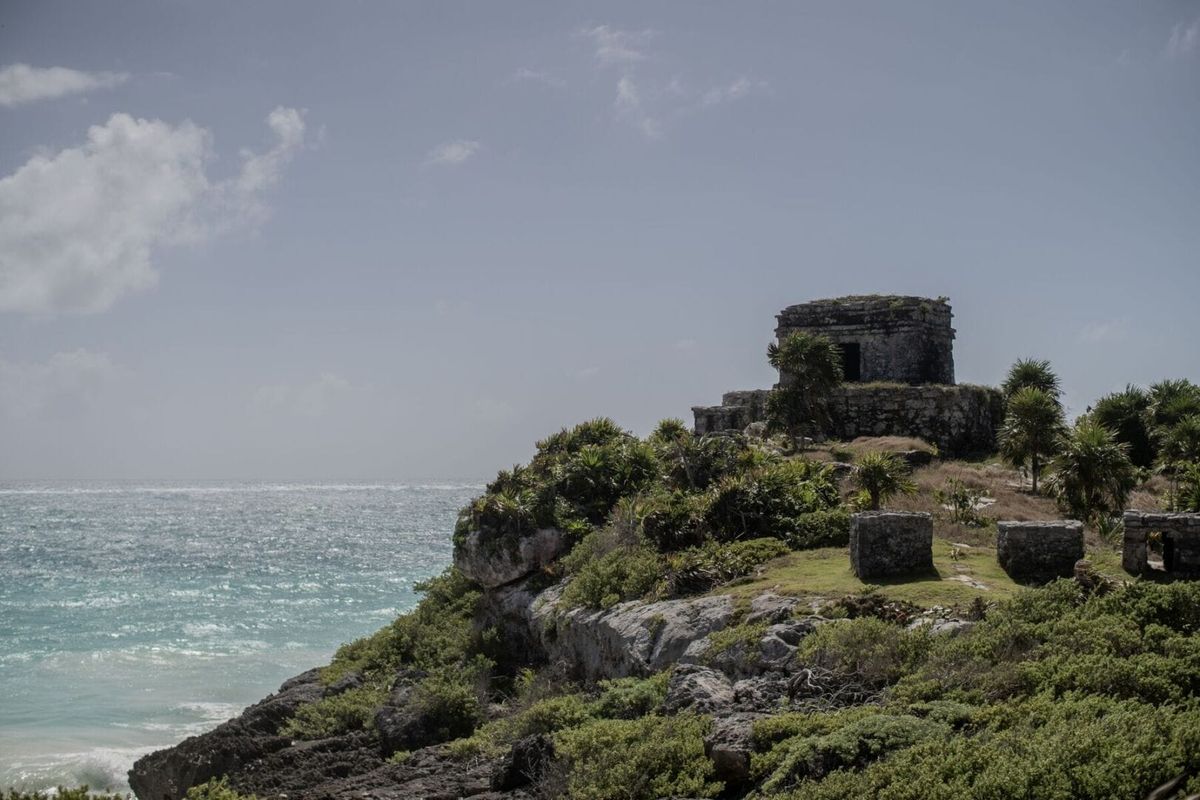
You feel it before your eyes even open. That hollow stillness that doesn’t belong here. No chatter from the cafés. No traffic rumbling down Avenida Tulum. Just a quiet that clings like grief in the air.
And if you live here, truly live here, you know exactly what that silence means. It’s not peace. Its absence. The sound of a town slowly bleeding out, while the world keeps scrolling.
They’ll say it’s just the low season that the tourists will come back. The seaweed is temporary. But anyone still echoing those lines either just landed, or hasn’t looked a waitress in the eyes lately.
This isn’t a season. It’s a slow, quiet collapse.
The Illusion of Occupancy Is the Town’s New Costume
The Numbers Look Good, Until You Look Around
Municipal officials like to say hotel occupancy is at 70%. It sounds reassuring, doesn’t it? But behind the PR gloss, the real picture peeks through the cracks: boutique hotels sit half-empty, staff are sent home early, and bicycle shops wait for customers who never come.
Miguel, who runs a small eco-lodge on the jungle side, says it with disbelief: “Last year by July, we were nearly full. Now, we’re lucky to book two rooms a week.” His voice doesn’t rise. It just folds inward.
According to AirROI data, actual short-term rental occupancy in Tulum now hovers between 32% and 34%, with many listings plunging below 16%. It’s not just a dip, it’s a descent. One that translates into families skipping meals, small businesses shuttering, and a future put indefinitely on hold.
So why pretend? Because image sells. High numbers calm investors, politicians, and even tourists. But illusions don’t feed children or fix sewage pipes.
Even Regidor Jorge Portillo Mánica broke the silence: “There are hotels with just one or two rooms booked. Some zones barely reach 20% real occupancy.”
The path forward? A public, independently audited tourism dashboard. Updated monthly. Because without truth, there is no trust. And without trust, no future.
The Soul of Tulum Is Being Evicted
Locals Are Being Priced Out by the Same System They Helped Build
Lucia, a teacher born and raised in La Veleta, has lived in the same house for 34 years. Now, her landlord wants to double the rent or sell to a developer who’s never set foot on her street. “Where am I supposed to go?” she asks, half whisper, half scream.
Her story is not a tragedy, it’s a pattern.
The short-term rental boom has ignited prices. According to AirROI, the average nightly stay in Tulum is now $100 USD. Families are being priced out by weekenders with Wi-Fi and no ties.
The Mexican middle class, national tourists, small business owners, long-term residents, is vanishing. Tulum is becoming an expensive stage, with locals pushed into the wings.
Tourism advisor Eleazar Mas Kinil has warned that inflated entrance fees and rising prices are pushing people away. A 40% drop in tourist volume confirms what everyone already feels: Tulum is becoming unlivable.
We need to act: Implement rent control in central neighborhoods. Tax speculative investment. Protect housing for those who call this place home.
Or we’ll lose not just residents, but the very soul that drew the world here.
The Sargassum Is Just a Symptom, Neglect Is the Disease
Nature Has Been Warning Us for Years
Ask Omar, a beach worker. He doesn’t dramatize. He just tells you what’s changed. “We used to set up chairs at sunrise. Now we just shovel rot. Tourists come, stare at the water, and leave.”
In May 2025, satellite reports showed 37.5 million tons of sargassum drifting in the Atlantic. Quintana Roo hit its highest alert. In Tulum, the result was predictable: brown waves, canceled reservations, and beaches full of silence.
Other cities, Puerto Vallarta, Mahahual, Cancún, responded with sea barriers, compost projects, even barges. Tulum? It collected 850 tons by July and only recently began exploring biogas conversion. Promising, yes. But far too late.
Officials mention circular economies and water treatment plants, but these are still in their infant stages. Meanwhile, beach erosion accelerates. Cenotes grow more polluted.
We need more than promises. We need a permanent, scientifically-led Coastal Protection Unit. Not managed by influencers or marketing teams, but by ecologists, oceanographers, and the people who fish these waters.
Because nature won’t wait for a press release.
When Airlines and Artists Leave, You Know Something’s Broken
When the Felipe Carrillo Puerto International Airport opened in December 2023, it was marketed as the final piece in Tulum’s transformation into a global luxury destination. Built with a projected capacity of 5.5 million passengers per year, it promised economic dynamism and international exposure. But just months after its inauguration, cracks began to show.
By mid-2024, major carriers like Delta Air Lines, American Airlines, and United began to reduce frequency or withdraw select routes, citing elevated operational fees, lack of basic regulatory clarity, and an unstable investment climate. Some regional airlines, such as Viva Aerobus and Aeroméxico, were left carrying the bulk of the load, with occupancy rates lower than anticipated.
Industry analysts pointed out that while the airport brought international access, it also introduced cost structures unsustainable for many carriers, particularly for low-cost routes. Instead of a boom, there was a 14% drop in route retention by Q2 2025, according to civil aviation data.
At the same time, the cultural heartbeat of Tulum has grown faint.
World-renowned event producers and creative collectives, like Day Zero Festival, Zamna, and Art With Me, once turned Tulum into a seasonal creative hub. But many have either scaled down or relocated activities to more sustainable destinations in Costa Rica, Nicaragua, and even Oaxaca, citing rising costs, logistical hurdles, and concerns over safety.
As of 2025, cultural promoters report a 30% decrease in international participation in local festivals. Anecdotally, many artists now avoid Tulum altogether, referring to it as “overexposed and underprotected.”
The message is painfully clear: Tulum had the stage, the spotlight, and the audience, but it forgot to care for the people who made the show possible.
When Greed Becomes the Tour Guide, People Stop Coming
Tulum has long danced on the edge of myth and reality. A place sold as paradise, yet lived as a paradox. But no illusion can last forever, not when greed becomes the currency of daily life.
Ask any seasoned traveler why they’ve stopped coming to Tulum, and you’ll hear a quiet but recurring answer: “It’s just not worth it anymore.” Not because the sea stopped glowing, or the jungle lost its magic, but because the prices became absurd, and the experience, hollow.
A growing number of visitors, both Mexican and foreign, have begun to turn away. What once felt authentic now feels extracted. Meals at beachfront restaurants that used to cost a day’s wage now cost a week’s. Taxi rides stretch into the hundreds for mere kilometers. Services that were once generous now arrive with a price tag bigger than their value. The invisible tax of opportunism.
And what’s worse? The infrastructure hasn’t kept up with the pricing. Tourists whisper about potholes, power outages, trash left to rot, and safety concerns. They speak not with anger, but with quiet resignation, “For that price, I’d rather go to Portugal. Or Croatia. Or Costa Rica.”
And many are doing just that.
Meanwhile, the very locals who built this town’s reputation are being priced out of their own lives. Because when greed takes the front seat, everyone else gets pushed to the margins.
This isn’t just an economic issue, it’s an ethical one.
Greed doesn’t just inflate prices. It deflates trust, erodes culture, and drives away the very people who once carried the soul of this place in their eyes.
Tulum isn’t losing tourists because it’s no longer beautiful.
It’s losing them because beauty can’t survive where exploitation thrives.
If we want them to return, not just as consumers, but as witnesses, allies, and storytellers, we need to make space again for fairness, for hospitality, for humility.
Or soon, we’ll be left with overpriced menus, half-empty clubs, and the echo of a paradise that priced itself out of existence.
The Sound of a Place That’s Forgetting Itself
There was a time when Tulum had a pulse: Spanish, Mayan, and Italian voices blending in the streets. Domino games. Salsa. Kids are running barefoot. It was messy and alive.
Now? The quiet feels haunted.
We whisper a question more and more: Is it still worth staying?
Costs rise. Dignity doesn’t. We feel like background noise in our own home.
But we haven’t left.
We share meals. We patch each other’s roofs. We hold the last access points to the sea like sacred altars. That quiet resistance, that stubborn refusal to let go, is where real hope lives.
Can We Still Choose Another Future?
Yes. But we need to act like a community, not just on paper, but in the streets, in meetings, in each other’s lives.
Tulum can still lead. Not in luxury. In resilience.
This town could become a blueprint for post-tourism recovery, a place that refused to become a parody of itself.
We need:
- Rent control that protects residents, not speculators
- Guaranteed access to public beaches for everyone
- Fair pricing and tourism taxes that benefit the community
- Real solutions to corruption, not just speeches
- Reliable, dignified public infrastructure
- Strict environmental zoning that puts nature first
- Genuine partnerships with NGOs, scientists, and local leaders
And above all: a new question. Not when will things go back to normal?
Because that normal got us here.
Let’s build something better.
The Evictions That Broke the Illusion
Just days ago, 170 families were evicted in Tulum. Caught in a land conflict, facing armed police, now sleeping in tents in the rain.
This isn’t a side story. It’s the center of the collapse.
This is what it looks like when progress forgets its humanity.
The Bottom Line
Tulum is bleeding. Quietly. Relentlessly.
But not without resistance. The jungle still hums. The sea still sings beneath the rot. And the people? We’re still here. Tired. Angry. But here.
If you once loved this place, don’t come just to enjoy it. Come to witness. To listen. To stand with those who never left.
We still have a choice.
Let’s choose each other.