
The summer heat in Tulum doesn’t pull punches. It scorches, simmers, sears the concrete and the conscience alike. And under that unforgiving sun, where tourists snap selfies near cenotes and sip $20 cocktails, a quieter crisis unfolds, one that the local government no longer wants to ignore. Child labor. It’s there, tucked behind the glitter of beach clubs and boutiques, hiding in plain sight.
So now, Tulum has decided to fight back, not with fanfare, but with something harder to come by: commitment. The municipality, led by Mayor Diego Castañón Trejo in coordination with the municipal DIF and a web of government entities, has kicked off a permanent campaign aimed at prevention and public awareness. Its mantra is blunt and unpretentious: “Child labor is not for children, here in Tulum, adults do the work.”
A Problem That Wears Many Faces
Walk down Avenida Tulum or head toward the federal maritime zone, and you might see them, kids barely ten years old, selling trinkets or juggling at red lights. During just the first six months of 2025, the Procuraduría de Protección de Niñas, Niños, Adolescentes y la Familia (PPNNAF) responded to 32 cases of minors engaged in child labor across Tulum.

Many of these children aren’t even from the area. They come from Chiapas, Mérida, and the deeper reaches of Quintana Roo. Some arrive with family. Others, it’s less clear. But what’s painfully obvious is that their presence isn’t incidental, it’s systemic.
“It’s a violation,” said one official on-site, “not just of laws, but of lives.”
Because that’s the real cost, it’s not just missed school days, it’s fractured futures. It’s stunted development, physical and psychological. Childhood becomes something transactional. Something disposable.
Calling It Out: A Public Plea for Protection
From the microphone, Mayor Castañón wasn’t mincing words.
“We have to teach them to play, to study, to live alongside one another. Children deserve to grow up in healthy environments,” he said, not so much delivering a speech as issuing a charge to the community.

His sentiment was echoed by Belia Beltrán Aguilera, head of the DIF in Tulum. “It’s on all of us,” she insisted. “Each girl, each boy, every child, deserves the chance to grow up in a safe and nurturing world.”
But talk is only as good as what follows.
Raising Eyebrows and Awareness
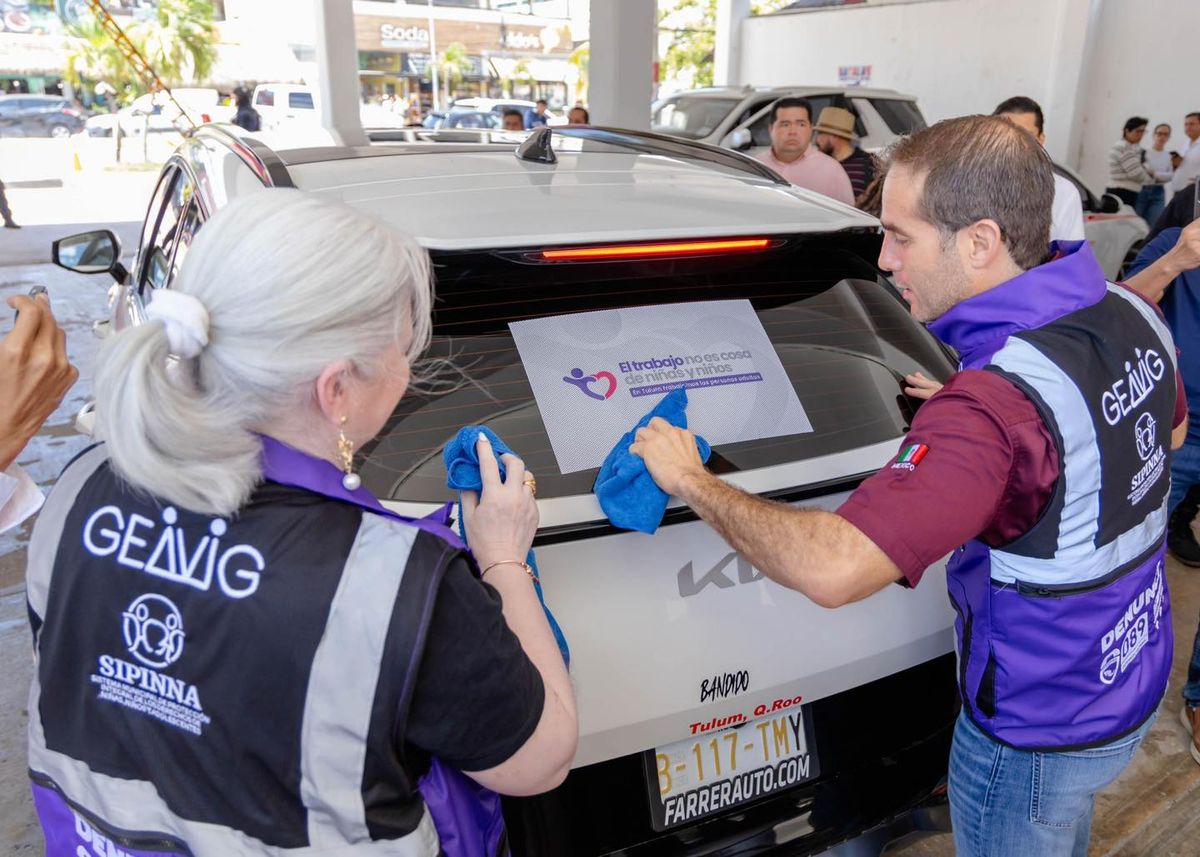
The campaign isn’t just official declarations and forgotten press releases. It’s tactile. Visible. Strategic. In the first wave of action, the government, in collaboration with the GEAVIG task force, SIPINNA, PPNNAF, and even the local taxi union, began placing microperforated decals across transportation units. The messages? Direct. Multilingual. Impossible to miss. Whether you’re a local running errands or a visitor on your way to a beach rave, the point is made: child labor exists, and it won’t end with silence.
It’s a rare move in a town more accustomed to aesthetic distractions than civic confrontation. But maybe that’s why it matters.

A Fight with No Finish Line
What Tulum’s doing isn’t trendy. It’s not the kind of initiative that wins easy applause or generates Instagram buzz. There’s no glamorous ribbon-cutting when you’re tackling generational poverty, legal loopholes, and cultural blind spots. But that’s precisely why the campaign is designed to be permanent. No expiration date. No PR stunt.
Because the goal isn’t optics, it’s protection. It’s dignity. It’s the radical idea that kids should be free to act their age, not carry the weight of an adult’s burdens.
There’s a metaphor somewhere in the way these children stand on corners, small figures against the sprawling backdrop of paradise, trying to sell their way into survival. But maybe now, with this campaign, the story starts to change. Maybe Tulum stops being just another postcard-perfect town and starts becoming a place where the most vulnerable actually matter.
We’d love to hear your thoughts, join the conversation on The Tulum Times’ social media.