
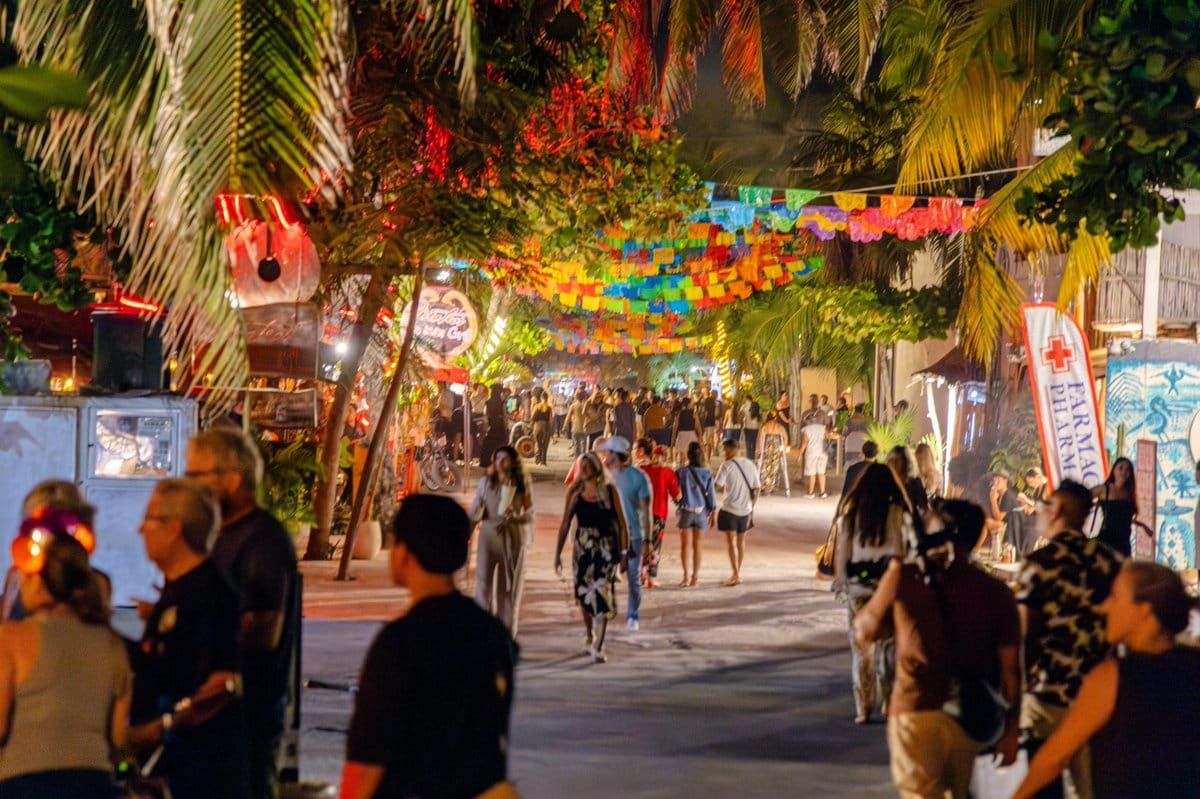
Tulum’s Pueblo Mágico designation remains in place, and local officials are now working through a renewed federal process to secure the updated brand-use agreement required by Mexico’s tourism authorities. The confirmation comes as new line-by-line requirements from the Secretaría de Turismo Federal, or Sectur, prompted a full review of existing documents and raised public questions about the program’s continuity. The clarification matters for a destination that depends on certainty, especially in a region where tourism patterns shift quickly.
A designation questioned after federal restructuring
Ahead of the Tianguis Nacional de Pueblos Mágicos taking place from November 13 to 16 in Pachuca, Hidalgo, Tulum’s general director of Tourism, Carla Patricia Andrade Piedras, addressed the confusion head-on. She said changes at the federal level, along with new administrative procedures, led some observers to speculate that Tulum might have dropped from the program. That impression appears to have grown during years of transition, particularly as Quintana Roo adjusted to new national tourism priorities and an evolving regulatory environment.
But the designation never lapsed. Tulum continues to meet the official criteria, which include cultural value, community participation, tourism infrastructure, and ongoing preservation commitments. Andrade Piedras stressed that Tulum did not lose its standing within the national program. Instead, officials were asked to update the entire file so the municipality could align with updated procedures. The next step is the renewal of the brand-use agreement that certifies the right to promote the Pueblo Mágico label.
“Seguimos siendo un Pueblo Mágico. Solo tocó actualizar reglas y renovar la documentación,” she said. It is a sentence that could easily circulate on social media because it responds directly to a question that concerned local businesses for months.
What the renewal means for Tulum and its tourism profile
The process appears technical, yet it touches a broader conversation about how Tulum presents itself to domestic and international travelers. The Pueblo Mágico brand carries weight within Mexico, and it influences travel decisions for visitors who look for cultural experiences in addition to the beaches that define much of the Riviera Maya. For a municipality that often makes headlines for construction growth or environmental debates, the reaffirmation offers a moment of stability.
Sector insiders say the renewed agreement could also help the tourism office secure participation in promotional platforms, industry fairs, and cross-regional networks that rely on official Pueblo Mágico registration. Those opportunities can be influential at a time when Mexico’s tourism competition is intense across states, including Yucatán, Oaxaca, Chiapas, Guanajuato, and Baja California Sur.
The Tulum Times gathered that local stakeholders see this process as a chance to reframe the town’s image. Many argue that the Pueblo Mágico label should not be limited to its archaeological site or beach zone. They want the program to reinforce community heritage, craft traditions, Maya history, and the gastronomic scene that now stretches from downtown to the hotel corridor.

Seeking a broader identity beyond sun and beach
During her remarks, Andrade Piedras highlighted a strategic emphasis on cultural and culinary offerings. The shift might appear subtle, but it responds to a long-running concern that Tulum’s brand has become too centered on coastal resorts and nightlife. Municipal officials want to reposition the area as a place where heritage and local expression play a stronger role.
Her team has been preparing for national and international events by promoting workshops, local chefs, and community-based projects. Some of these initiatives are meant to anchor Tulum in the broader regional narrative of Quintana Roo, where history, nature, and culture intersect. One small example she offered comes from a recent community-led artisan showcase in the town center, where a local family displayed embroidered textiles and told visitors how the craft has passed through three generations. It is the kind of micro-story that reveals how identity and tourism overlap.
And there is a strategic calculation behind this approach. Travelers who focus on cultural meaning tend to stay longer and visit different areas of the municipality. They might also be less sensitive to price fluctuations during peak seasons. Still, officials know that Tulum’s growth creates tension between commercial success and cultural preservation, and they acknowledge the need for consistent planning.
Federal support programs remain limited after funding changes
One recurring concern for local authorities is the level of federal support. The special budget for Pueblos Mágicos was suspended in 2017, and since then, municipalities have relied on scattered programs instead of a unified national fund. Andrade Piedras said there are still maintenance resources for specific projects, such as façade rehabilitation and improvements in emblematic zones. In the coming days, the tourism office is expected to announce which avenues and public spaces will receive upgrades.
These programs could influence visitor experience, especially in central areas that reflect the older structure of Tulum. Improvements in lighting, accessibility, and urban image tend to shape a visitor’s first impression. The municipality hopes to attract as many federal initiatives as possible in the upcoming cycle, although the process often moves slowly and competition remains high across Mexico.
Officials in Quintana Roo have repeatedly said that coordination with federal institutions is essential for long-term sustainability. The state’s rapid growth means local budgets cannot cover all necessary infrastructure. Tourism, while economically important, places pressure on roads, public services, and environmental protection. In this sense, any additional program support could help reduce local strain.

Hotel occupancy signals steady demand for Tulum
Despite administrative questions around the Pueblo Mágico label, visitor numbers appear stable. Andrade Piedras reported that hotel occupancy last weekend reached about 70 percent, not including all-inclusive resorts. That rate suggests solid movement in the central zone and along the beaches. Operators say the figure aligns with typical November patterns, a period that often precedes a stronger push in December and early January.
Hoteliers in the Riviera Maya consider 70 percent a healthy pre-season benchmark. It allows staff to prepare for winter crowds and provides an early look at traveler behavior. Some managers note that guests are asking more questions about alternative attractions, cenote routes, town markets, and Maya community experiences. This trend could support the cultural strategy that the tourism office wants to strengthen.
But Tulum’s appeal also creates challenges. Growth brings revenue, yet it also increases pressure on limited resources. Residents and long-term business owners regularly debate what direction the town should take. Some worry about overtourism, while others argue that managed growth could bring better economic opportunities. Local authorities appear aware of this balance, and the Pueblo Mágico renewal might help signal a more structured path forward.
A moment of reflection on Tulum’s future
The renewed process arrives at a time when many Mexican destinations are redefining their tourism models. Tulum stands at a crossroads, shaped by environmental concerns, cultural preservation, and the arrival of new infrastructure projects across the Caribbean coast. One short editorial reflection emerges here. A designation alone cannot define a place. How the community interprets it over time might prove more important than the label itself.
Officials say that maintaining the Pueblo Mágico status is not only a procedural task. It is part of a broader attempt to connect history with modern demand, while managing the fast-paced development that continues across Quintana Roo. As Tulum prepares its updated agreement, the question is whether this moment will help set a clearer identity for the years ahead.
In the end, the process reinforces one idea that shapes much of Mexico’s tourism conversation. A place can grow, change, and modernize, but its meaning depends on how it connects past and present for both visitors and residents.
Tulum’s Pueblo Mágico designation moves into its renewal phase with updated requirements, sustained visitor demand, and a municipal strategy that aims to strengthen cultural identity. The outcome could influence how the town positions itself within the competitive tourism circuit of Mexico. We’d love to hear your thoughts. Join the conversation on The Tulum Times’ social media.
What changes do you believe could help Tulum balance development and heritage in the coming years?