
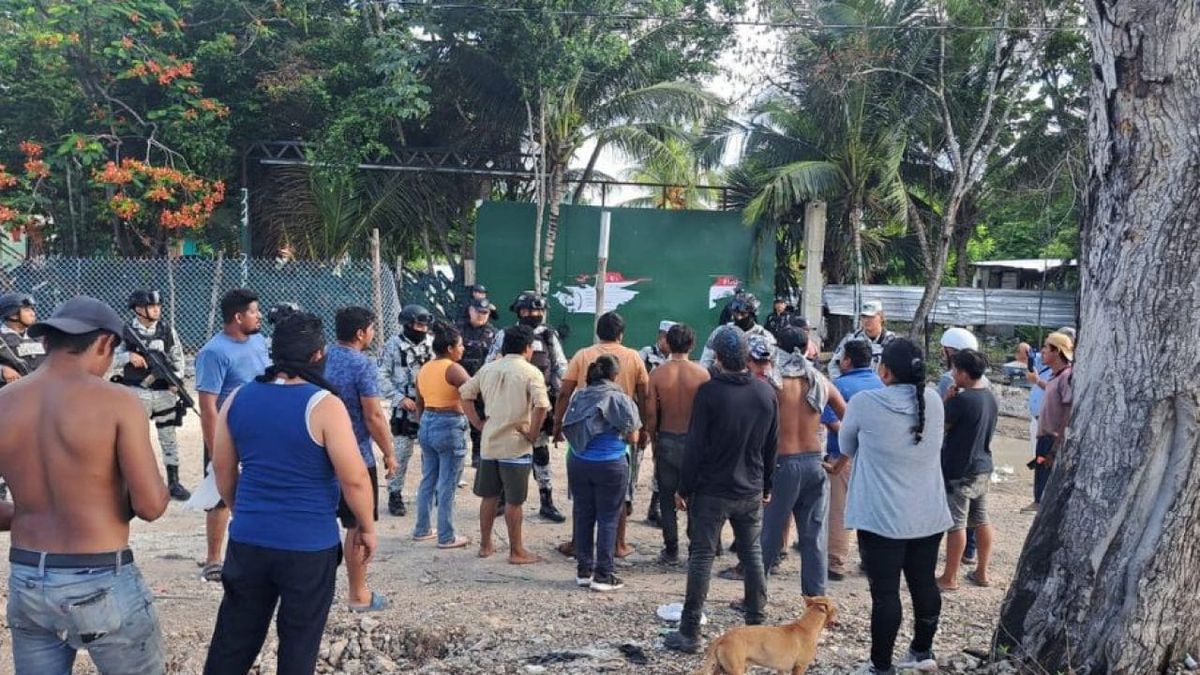
Just before dawn on July 31, the southern edge of Tulum shook, but not from the usual thrum of trucks barreling down Federal Highway 307. This time, it was the crack of gunfire that broke the silence.
In the shadowy hours around 3 a.m., a coordinated eviction turned violent in a disputed zone locals refer to as Tren Maya. Contrary to what the name suggests, this isn’t a rail station or a transit hub. It’s an informal settlement stitched together by necessity and long-standing legal ambiguity, a place where families have carved out a life amid legal gray zones and bureaucratic silence.
“We woke up to gunshots,” said one woman, her voice still trembling hours later. She says she’s lived there for more than a decade. “They didn’t give us a chance. We just ran and hid with our children.”
Residents describe the chaos in harrowing detail: armed men storming in from multiple directions, some wielding machetes, others brandishing guns. In the darkness, resistance meant grabbing sticks, throwing stones, and shielding children with their bodies.
By the time the assault ended, two people had been shot, several more injured, and over 170 families had been violently removed from the only homes they’d known.
Land in Legal Limbo Becomes a Flashpoint
The land in question lies just off Highway 307, near the corridor linking Tulum with Felipe Carrillo Puerto. For years, it’s existed in a strange liminal space, claimed, contested, and ultimately occupied. Courts are still debating ownership. Meanwhile, real people have built lives there, raising children under roofs made from whatever materials they could find.
And here lies the most jarring contradiction: according to Tulum’s municipal police chief, Edgar Aguilar Rico, the individuals targeted in this week’s eviction had already been granted possession rights by the Quintana Roo Attorney General’s Office. Not only does this raise legal concerns, it raises moral ones. What happens when state recognition is followed not by protection, but by force?
This was not the first sign of trouble. On July 23, authorities attempted a similar eviction, which failed. Tensions have been simmering ever since. This latest operation marked a dangerous escalation, where failed paperwork gave way to armed confrontation.

Authorities Respond, After the Fact
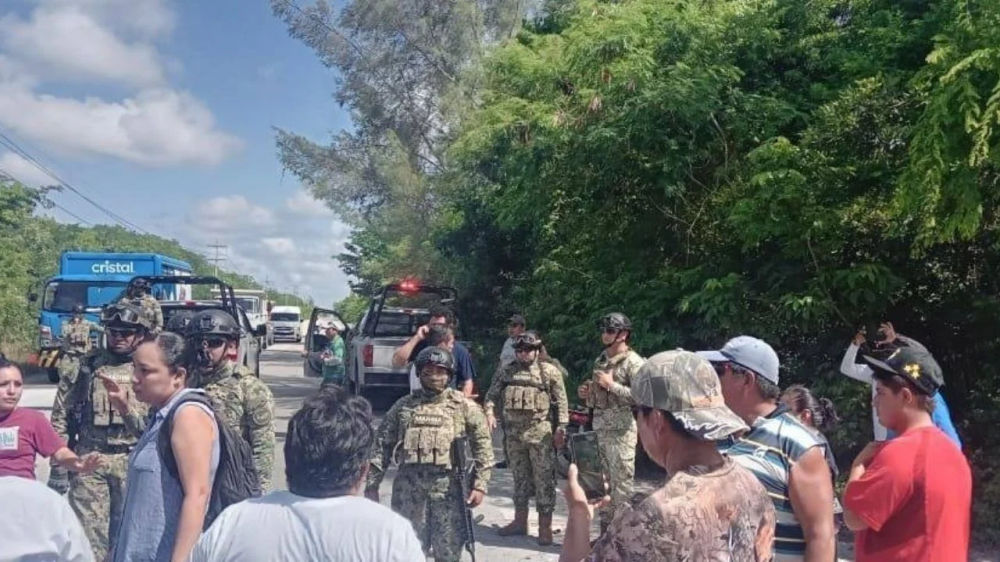
As reports of violence spread, the response from security agencies was swift but belated. Officers from the National Guard, the State Police, and Tulum’s own Department of Public Safety eventually arrived, dispersing the aggressors.
But by then, the damage was irreversible. Homes had been destroyed. Lives disrupted. Trust shattered.
No arrests have been announced. No names have been released. Officials from the Fiscalía General del Estado later arrived to conduct forensic sweeps and begin an investigation. But for families left standing among the wreckage, these procedural steps came as cold comfort.
Police Chief Aguilar Rico was quick to clarify: his department’s role was limited to containment. “It’s up to the competent authorities to investigate and resolve the legal dispute,” he stated. In other words: this isn’t our mess to clean up.

Protest and Silence: Displaced Families Demand Answers
In the aftermath, dozens of families camped near the ruins of their homes. Others, unsure where to go, packed up and left, carrying mattresses, cookware, and memories on their backs.
In a desperate attempt to gain attention, residents attempted to block traffic on Highway 307. Police intervened almost immediately, quashing the protest before it could gain momentum.
Despite the scale and violence of the eviction, no government body has offered a relocation plan. No alternative housing has been provided. No legal clarity has been communicated.
So far, the response has been silence.
170 Families Left in the Shadows of Bureaucracy
For now, over 170 families remain in limbo. No longer welcome on the land they were told they could inhabit. Not yet been offered any alternative by the institutions that displaced them.
This is not just a housing crisis, it’s a human rights dilemma unfolding in real time. Tren Maya has become less a place and more a metaphor: a symbol of how easily people can be erased when the law comes not with a verdict, but with a battering ram.

A Question Echoes in the Jungle: What Now?
The eviction may be over, but the story is far from finished. Courtrooms remain undecided. Local leaders remain silent. And those displaced remain exactly where the law has left them, nowhere.
What happens when survival collides with legality? When recognition is reversed by gunfire? When the state, instead of offering shelter, sends in armed men before dawn?
These aren’t just questions for a judge. They’re questions for all of us.
We want to hear your voice. Join the conversation on The Tulum Times’ official social media channels.