
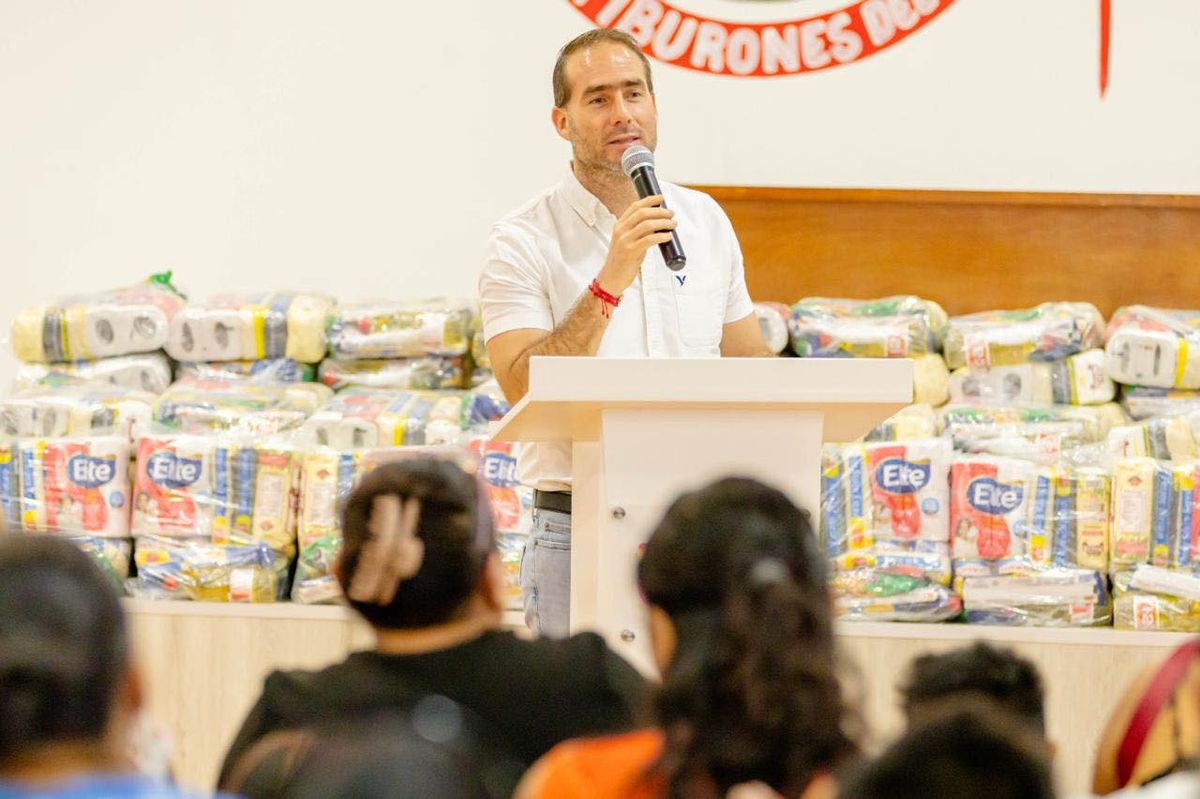
It was more than a morning of speeches and polite handshakes. Under the sweltering heat that clung to the walls of the Sindicato de Taxistas, a different kind of exchange was taking place. This transaction was measured not in pesos, but in dignity.
President Municipal Diego Castañón Trejo stood alongside Belia Beltrán Aguilera, the Director General of DIF Tulum, their arms filled not with papers or plaques, but with commitments, apoyos alimentarios destined for the women who keep Tulum’s heartbeat steady.
Over two hundred canastas básicas changed hands that day, traveling from municipal leaders to grandmothers whose eyes carry decades of resilience, to mothers raising children on their own, to heads of households juggling the chaos of work and home. Each basket had more than rice and beans. For some families, it was a small sigh of relief in a household where every peso is counted twice before it is spent.
More Than a Gesture: Words Backed by Action
The Mayor’s Commitment to Tulum’s Women
In his brief remarks, Castañón did not hide his conviction that the backbone of Tulum’s growth is shaped by the quiet, constant labor of its women. He spoke about jefas de familia, women whose daily routines stretch from sunrise breakfasts to late-night balancing of the household budget, and promised that these food supports would not be a one-time political flourish. They would arrive regularly, as a deliberate effort to encourage healthier diets and more stable household finances.
A Vision for Consistent Support
Beltrán Aguilera, whose work often takes her into the quieter corners of the municipality, reinforced that vision. She outlined a plan that might sound simple but carries real weight: monthly deliveries reaching deeper into neighborhoods and rural communities, with nutrition at the heart of the strategy. The goal is not just to fill stomachs, but to fuel lives.
The Bigger Picture: Food as Economic Stability
If you look past the formalities of the event, the underlying reality becomes clear. For many in Tulum, especially women who must balance caregiving with earning a living, apoyos alimentarios are not a luxury. They are the safety net that prevents a weak from collapsing into debt or scarcity.
And perhaps that is the deeper story here: sometimes policy takes the form of a politician’s speech, but other times it is a bag of beans and a bottle of cooking oil passed from one pair of calloused hands to another. The symbolism is powerful, nourishment as both a practical resource and a political currency.
Moving Forward: Turning Promises into Reality
The real test now is in the follow-through. If monthly deliveries become a consistent reality, this initiative could reshape household stability for many Tulum families.
Because in the end, it is not just about food distribution, it is about dignity, opportunity, and the quiet but powerful acknowledgment of the women who keep this community alive.
We invite you to share your views and be part of the conversation. Follow The Tulum Times on social media and let us know what you think.