

They came while the city slept. Gravel crunched under boots, the low grumble of engines broke the stillness, and just past 3 a.m., the informal settlement known as Tren Maya began to collapse, not from age, but from the weight of a legal order carried out with unforgiving precision. By sunrise, what had once been a living neighborhood was a field of twisted tin and ash.
This wasn’t just another enforcement action. It was a forced eviction, and it felt like a rupture. Sudden. Violent. Unforgiving.
The Night Everything Was Taken
Locals recall the hour vividly. Around 3 a.m., more than 200 agents, allegedly from the State Attorney General’s Office (FGE), moved into the Tren Maya community with heavy machinery. The mission: execute an eviction order issued by the same institution. Over the course of two hours, dozens of homes were flattened, their skeletal remains scattered beneath a sky that hadn’t yet begun to lighten.
There was no time to pack. No chance to speak. Just the sound of splintering wood and rooftops caving in.
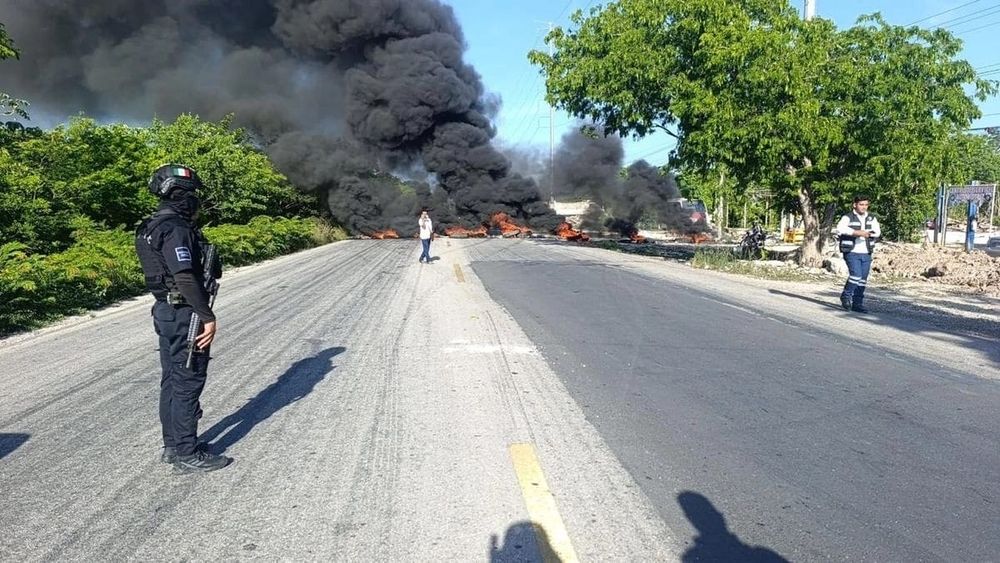
Residents say they were met with force. Some tried to resist, among them, reportedly, minors, and were detained. Others stood frozen as their belongings were buried under rubble. The aftermath sparked immediate protest. Tires were set on fire and rolled onto the federal highway. Thick, black smoke billowed high, visible for kilometers.
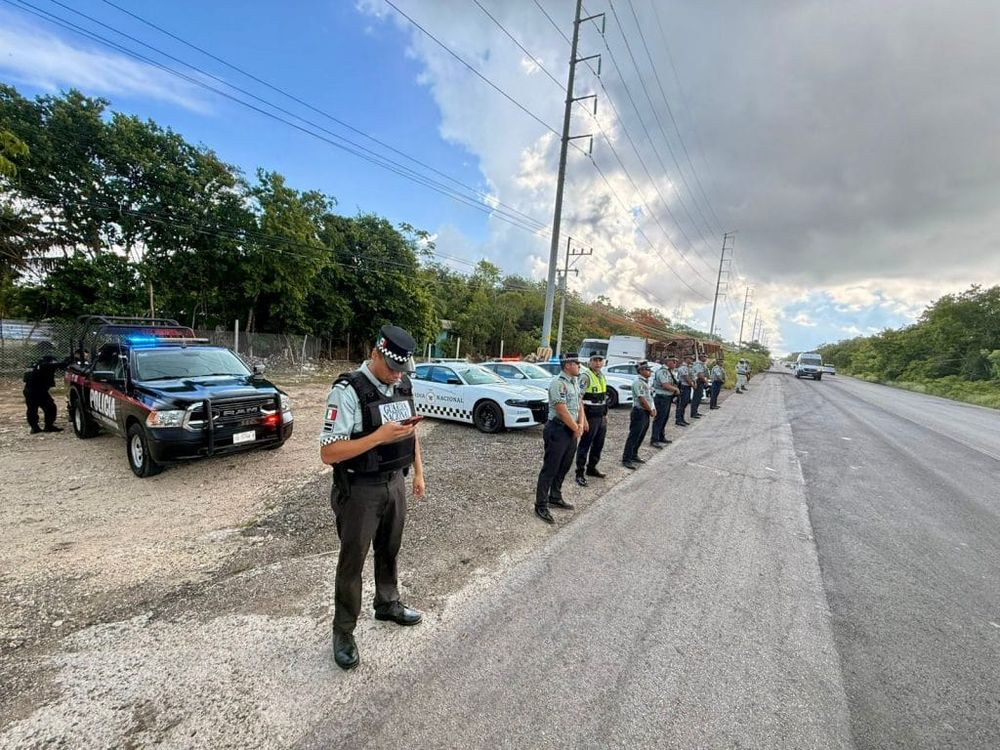
By dawn, firefighters, Civil Protection crews, Navy personnel, the National Guard, and municipal police were deployed to restore order.

A Familiar Pattern of Violence
This wasn’t the first time.
In fact, it’s the fourth forced eviction reported in this same area since 2024. The script has become chillingly predictable: a pre-dawn raid, structures demolished, families displaced, roads blocked by fire and frustration.
Residents now speak of a cycle, one where state-sanctioned demolitions arrive like seasonal storms, leaving chaos in their wake. Many believe these actions are linked, directly or indirectly, to the rapid expansion of infrastructure in southern Quintana Roo. Development, it seems, has no patience for the poor.
According to several affected families, the latest eviction included not only official agents, but also alleged shock groups. Witnesses claim these individuals used physical violence and, in some cases, looted personal items, cash, electronics, even food.
And still, there is no official number of arrests. No list of injuries. No clear explanation from the FGE.
The Road in Flames
In protest, dozens of residents blocked Highway 307 heading toward Felipe Carrillo Puerto. Tires burned, thickening the already tense atmosphere.
Some drivers, desperate to move on, risked navigating between the fires, an act that could have ended in tragedy. Others sat stunned, watching the smoke rise while children clung to parents who had lost everything hours earlier.
Authorities eventually cleared the road around 9 a.m. But what had been erased was far more than traffic.
No Shelter, No Plan, No Answers
By midmorning, Secretary of Public Safety and Citizen Protection Edgar Rico Aguilar arrived at the scene. He walked the charred paths between demolished homes, listened to complaints, and checked on the wounded. His presence was noted. His answers, less so.
As of this writing, the FGE has not released an official statement. No agency has explained the legal grounds for the operation, nor clarified whether any support or relocation alternatives will be provided to those displaced.
The area, once guarded, now lies open. The lots are bare, abandoned. The silence from state institutions is louder than the machinery that tore everything down.
What a Forced Eviction Really Means
In legal terms, a forced eviction is the removal of individuals from land or housing without proper legal safeguards or the provision of alternative accommodation.
But in practice, especially here in southern Mexico, it often means something more visceral. It means being woken by boots and spotlights. It means losing your shelter, your memories, and your safety all before breakfast. It means wondering where your children will sleep, and why no one in power seems to care.
In places like Tulum, forced evictions aren’t policy; they’re a pattern. A method. A message.
The Hidden Cost of Progress
It’s impossible to ignore the broader context. The expansion of the Tren Maya project and other development plans in Quintana Roo have triggered a land rush, and informal settlements like this one are collateral damage.
The people evicted are not outsiders. They are workers. Builders. Cooks. Cleaners. The invisible backbone of the tourism machine that keeps Tulum glittering. And yet, their homes are treated like debris.
They don’t want charity. They want dialogue. A seat at the table. A future that doesn’t involve sleeping under tarps or fleeing bulldozers in the dead of night.
The Question That Remains
So what now?
Where do these families go? What protection do they have from the next raid? And who decides which lives are allowed to remain in paradise, and which are simply swept away?
Forced eviction is more than an urban issue. It’s a human one.
And if we fail to answer these questions, if we let this pattern continue, we risk becoming a city where only the wealthy can live in peace, and the rest must run.