

In a rare alignment of public policy and private initiative, Tulum’s shoreline became more accessible in 2025. From the federally administered Jaguar Park to a wave of beach clubs lifting cover charges, locals and tourists alike found new, open doors to the sand. But the question looms: when the high season arrives, will those doors stay open, or quietly close again?
Beaches in Mexico Are Public, But That’s Just the Start
Beaches in Mexico are, by law, public spaces. A 2020 reform to the General Law of National Assets even introduced fines for anyone who blocks or restricts access. The reform reframed shoreline access as not just a cultural right, but a legal one. This legal backbone continues to shape policy debates across Quintana Roo, and is especially relevant in Tulum, where beachfront development, tourism dollars, and public expectations clash every winter.
In 2025, lawmakers proposed a bold move: at least one day per week of free access to beaches and protected areas, a proposal sparked in part by debates over fee collection at Jaguar Park. The policy would still allow for regular entrance fees on other days to sustain operations, but it would formally guarantee weekly access for everyone.

What Changed at Jaguar Park This Year
On August 31, 2025, Jaguar Park, a sprawling protected area hugging Tulum’s archaeological zone, began offering free admission every Sunday. The move followed local government pressure and a heated public conversation. The gesture was welcomed, but it’s not without complications. Entry remains paid Monday through Saturday, and some services inside the park still come with fees. The policy is clear, but its execution remains fragile.
There are still disputes over how access to the archaeological site is routed through the park, and whether fee structures are being clearly communicated. As it stands, the free Sunday initiative could be a model, or a mirage, depending on how it survives the coming season.

When Prices Spike, Will Free Sundays Survive?
High season in Tulum begins to rev its engine in November and roars by December. That’s when everything tightens: beach access, table reservations, and taxi fares. Will Jaguar Park maintain the open-door policy when crowds double or triple? Will signage and staffing scale to match demand, or will confusion take hold?
More than anything, will visitors and residents know exactly what’s included in “free access”, and what isn’t? Clarity will matter more than ever as lines grow longer and patience wears thinner.
Beach Clubs Signal Openness, But For How Long?
In September 2025, something unexpected happened. Over a dozen beach clubs and hotels in Tulum announced that they were removing entrance fees and minimum consumption rules. The messaging was generous, even celebratory. Business owners framed it as a gesture to the community and a practical way to maintain foot traffic during the quiet summer slump.
But history suggests another rhythm.
Come December, the landscape often transforms. Many clubs shift back to policies requiring minimum spends, often between 1,000 and 2,500 pesos per person. Add a lounger or a beachfront bed, and the tab easily hits 100 USD. These are not fringe cases, they’re the norm during peak periods, according to years of travel guide coverage.
The real test this winter is whether those public promises hold. Will locals still be able to access the sand without paying for a cocktail and a cabana? Or will beach access quietly revert to “clients only”?

Parallel Pressure: Taxis and the Cost of Getting to the Beach
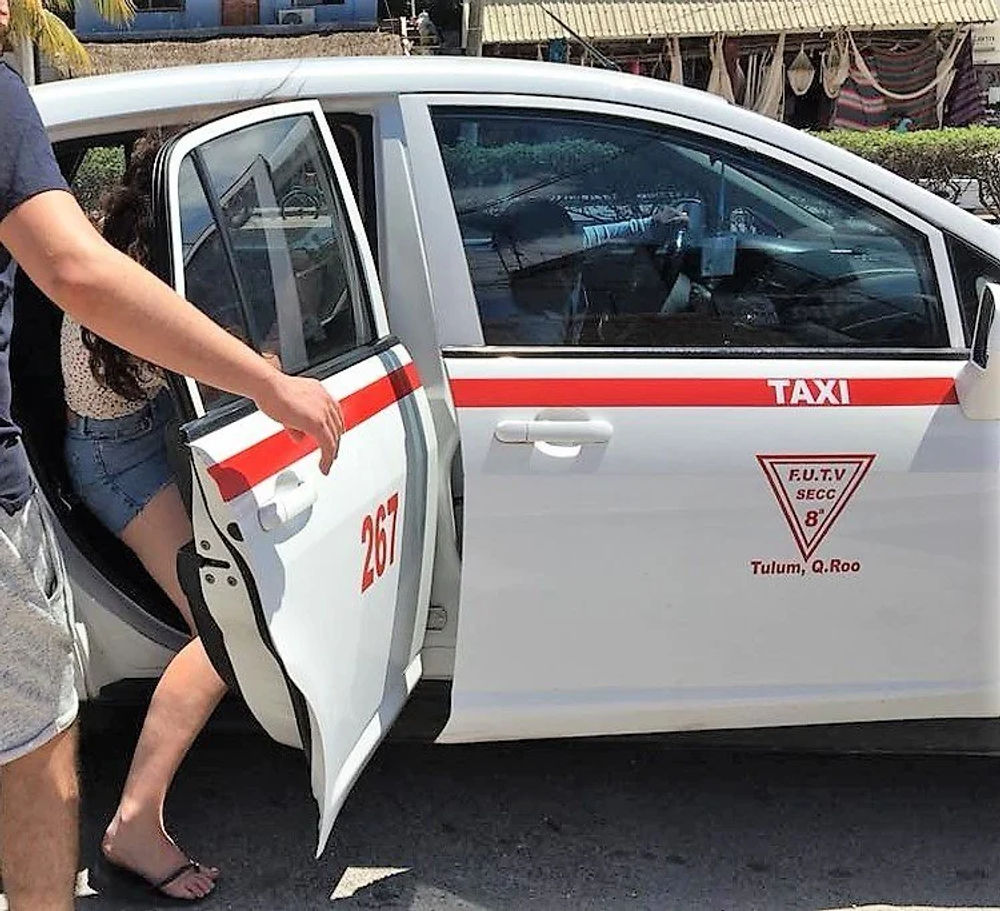
The journey to the shoreline can be as costly as the day spent on it. In Tulum, taxis don’t use meters. Prices are set by zone tables negotiated by local unions. In practice, that often means 400 pesos or more for a short trip from town to the beach, and that’s in the off-season.
During peak months, prices soar. And with no posted rates or fare calculators, visitors and residents alike are left guessing. This isn’t just a transportation problem. It’s a beach access issue. When it costs too much to get to the shore, free entry at the park or waived club minimums mean little.
Quintana Roo’s mobility institute has piloted metered systems in Cancún. There’s talk, only talk so far, that lessons learned there could guide future reforms in Tulum. But for now, riders are left at the mercy of unregulated pricing.
What Summer 2025 Revealed About Local Priorities
The soft summer season turned out to be a quiet disruptor. Low occupancy pushed clubs to loosen access rules, and city officials became more vocal about the gap between legal rights and practical restrictions. The Tulum Times covered growing local frustration, not just with club policies but with the symbolic weight of locked gates and inflated taxi fares.
The summer revealed something else, too, a glimpse of what a more inclusive shoreline could feel like. Families arrived earlier. Locals stayed longer. Beach access was suddenly less of a transaction and more of a ritual again.
Three Possible Futures for Winter 2025–2026
Scenario A: Soft Continuity
Jaguar Park maintains free Sundays, maybe with better signage. Some clubs continue no-cover policies but introduce modest minimums for loungers. Taxi fares stay high but become more transparent at posted stands.
Scenario B: The Rebound
Everything reverts. Covers and minimums return full force. Public access becomes more symbolic than real. Transport remains expensive and opaque.
Scenario C: Coordination and Clarity
Local government and clubs publish a joint protocol: clear access paths, no-cover windows, and posted prices. Mobility pilots add QR codes with reference fares. Trust builds. Repeat visits follow.
Most signs today point to Scenario B. But Scenario C isn’t fantasy, it just takes work, will, and a bit of pressure before the first wave of holiday tourists arrives.

What Tulum Could Do Now, Before the Crowds Hit
The solutions aren’t mysterious. They’re measurable.
Start with signage. A city map showing all public shoreline entrances would help both visitors and clubs avoid conflict. At Jaguar Park, clarify exactly what “free Sunday” includes. Clubs could post chair prices clearly, separate public paths from service zones, and offer time slots with no minimums for locals.
Taxi fare tables should be visible at beach stands. A meter pilot, learned from Cancún, could launch in time for New Year’s. And drainage repairs near beach roads would make access safer after the rains.
But above all, Tulum needs one clear, advertised channel to report blocked access, illegal charges, or aggressive behavior, with responses guaranteed in 72 hours. Public access needs public accountability.
A Glimpse Into the Human Side of All This
One afternoon this September, a local father and his daughter were seen walking barefoot from the free path behind a beach club. She carried a bucket full of shells. He carried her sandals. No one asked them to buy anything. No one told them to leave. It was their beach too, for that day, at least.
That’s the version of Tulum many locals still believe in. And it’s the one worth protecting.
The Bottom Line
Beaches in Tulum are public. That’s the law. But what the law guarantees and what daily experience delivers can be miles apart. The recent gestures, free Sundays, no-cover beach clubs, offer hope. But experience warns us: when demand spikes, so do the walls.
If Tulum wants stable tourism with strong local backing, it must keep shoreline access open, prices transparent, and transport fair. Trust is what brings people back. And repeat visitors are the lifeblood of any sustainable paradise.
We’d love to hear your thoughts. Join the conversation on The Tulum Times’ social media.
What kind of beach access do you want to see this high season?