
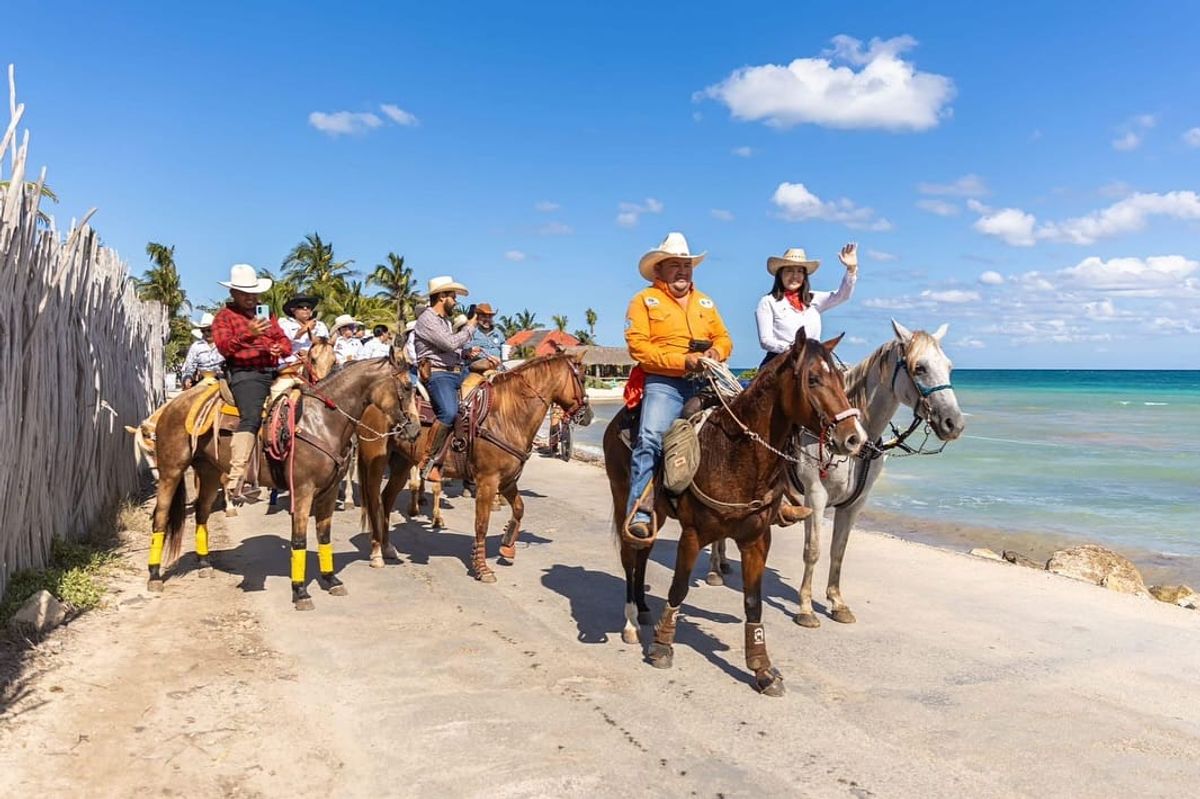
They won’t be riding into the sunset just yet, but come 2025, over 600 riders are expected to saddle up in Tulum for the third edition of “Tulum a Caballo.” It’s not just a spectacle. It’s a statement.
Set against a backdrop more often associated with yoga mats and boutique beach clubs, this horseback cavalcade aims to shift the narrative. The event, backed by local, state, and business sectors, is designed to reveal a side of Tulum often overshadowed by its sand-and-sea fame.
“This year, it’s about showing the other face of Tulum,” said Adriana Palma, spokesperson for the organizing group, Tulum a Caballo. “We’re more than beaches. We are cenotes, traditions, rural life, and community.” That sentiment is quietly revolutionizing how visitors and residents alike see the region.
Not just another beach town
While past editions of the cavalcade leaned into charity causes, the 2025 event shifts gears toward tourism promotion. The route, carefully designed to snake through natural and cultural landmarks, will highlight the diversity of the region’s inland beauty. From community ranches to cenotes and lesser-known trails, the experience is meant to blend spectacle with substance.
This isn’t Tulum’s first rodeo. But it might be the most ambitious yet.
More than 600 riders are expected, up from roughly 400 in previous years. Participants will include equestrian associations from Chiapas, Aguascalientes, Yucatán, the State of Mexico, and others. Some are registered with the Federación Mexicana de Cabalgantes, while newer civil groups will ride with hopes of formal recognition.
And for the first time, the cavalcade will include official tourism modules and interaction points to bring riders and visiting families together, not just in spirit, but in real-time experiences.
Why horses, why now?
In an age of drone shows and digital festivals, organizing a horseback parade might sound like a nod to nostalgia. But in Tulum, it’s strategic. The Riviera Maya is known for its ecological fragility, over-tourism, and strained infrastructure. Events like “Tulum a Caballo” offer a slower, land-based alternative, a way to disperse tourism benefits across a wider region and population.
Palma puts it plainly: “This is a living culture. We’re not staging a show. We’re inviting people into our rhythm.”
That rhythm includes support from local businesses, rural families offering hospitality, and an increasingly organized network of equestrian associations eager to elevate their visibility on a national stage.
In past editions, the event has already proven its economic impact. Restaurants, cenote operators, and beach clubs all saw a bump in revenue, according to organizers. This year, with increased participation and better coordination, expectations are even higher.
Tradition in the making
It’s not often that Tulum gets to shape a new tradition instead of merely preserving one. But “Tulum a Caballo” might just pull it off.
One scene from last year lingers: a young boy from a nearby village watching the parade roll past, eyes wide as a local ranchero lifted him onto a horse for the first time. That’s the kind of moment no travel influencer can replicate.
Still, challenges remain. Logistics, safety, and environmental considerations are all being reviewed by municipal and state authorities. But Palma remains confident. “This is a collective effort,” she said. “Private, public, and social sectors are coming together because we believe in this.”
The Tulum Times will be tracking the event closely, not only for its immediate spectacle but for what it might signal about the town’s evolving identity.
The rural renaissance of Riviera Maya?
Compared to the high-rise bustle of Cancún or the beach bar crawl of Playa del Carmen, Tulum’s rural soul still breathes quietly just inland. It’s here, in the saddle, in the dust, in the shared tamales after a long ride, that an alternative vision for tourism in Quintana Roo might be taking root.
Could Tulum lead the charge for more grounded, community-based tourism in Mexico?
That’s a question this cavalcade might begin to answer.
We’d love to hear your thoughts. Join the conversation on The Tulum Times’ social media.
Will Tulum’s rural revival catch on, or will it remain a niche within the beach-hungry Riviera Maya?