
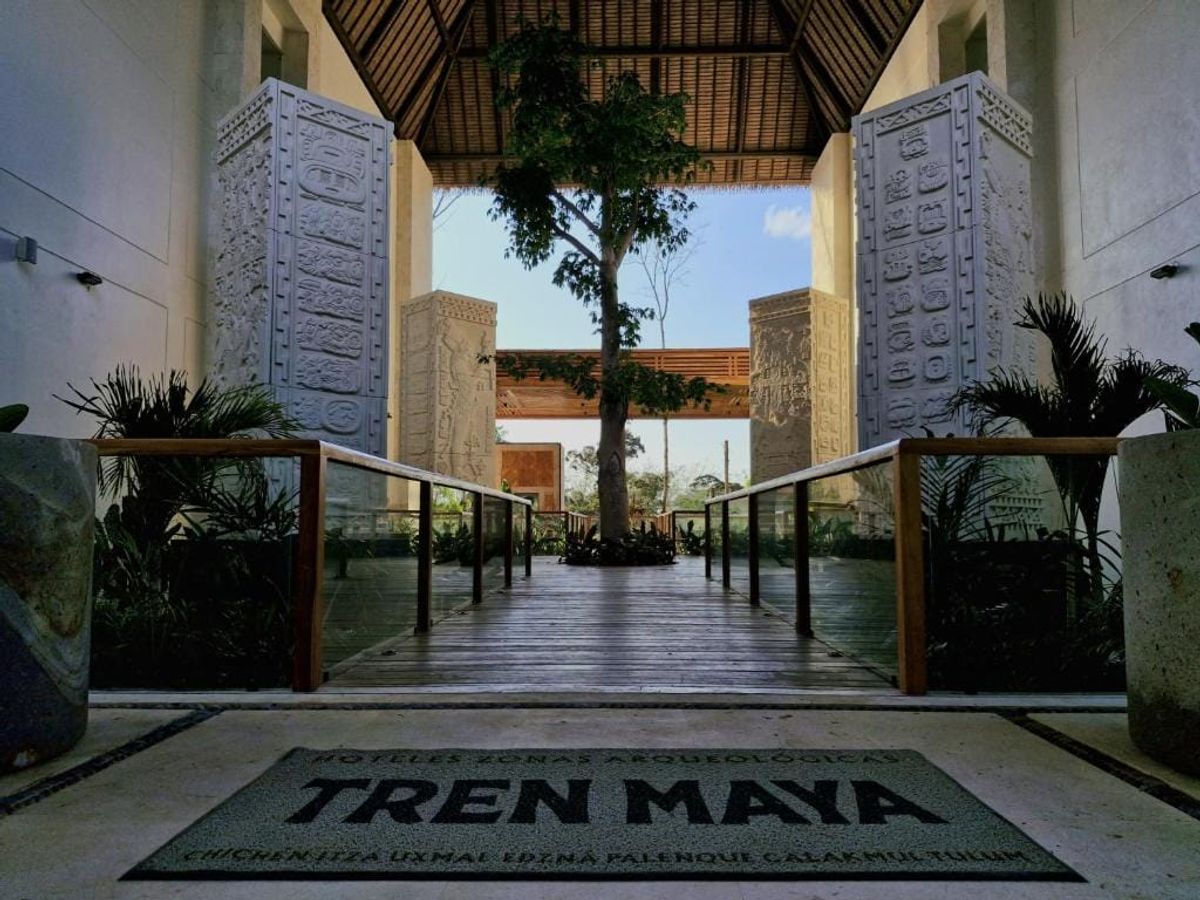
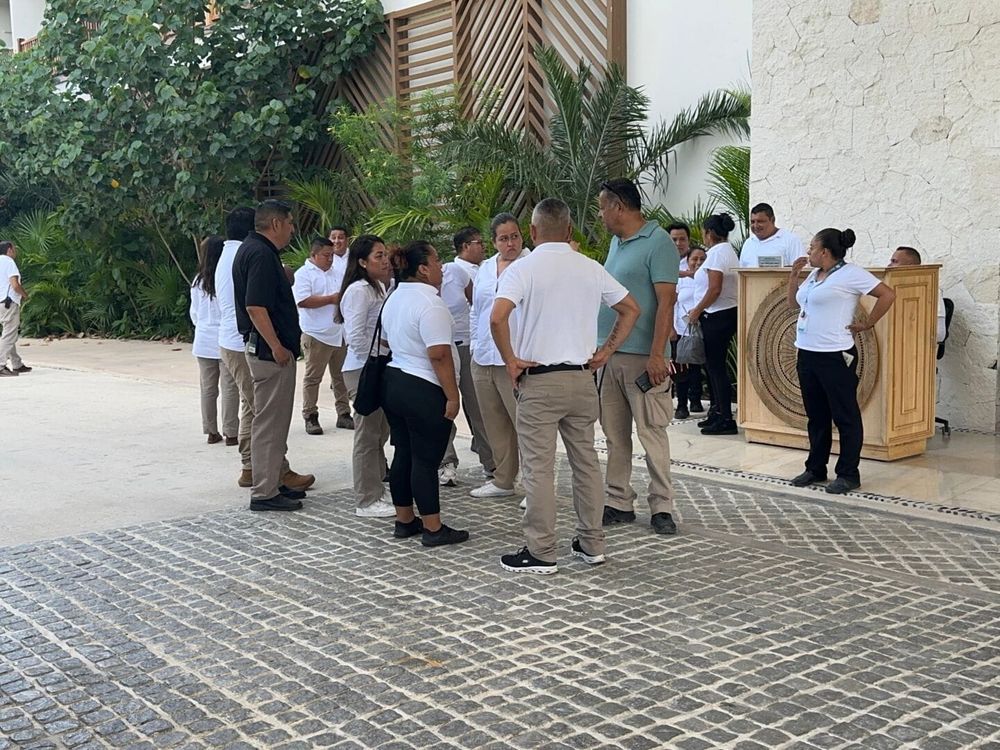
It began with a protest, a quiet but firm show of resistance outside the Mundo Maya Tulum hotel, a military-run facility nestled near the flash-new Tren Maya station. Staff gathered not to shout, not to block roads, but to tell the truth. To say, “We’ve had enough.”
But by Monday, those voices were no longer employed.
According to workers, the cost of speaking up wasn’t just intimidation. It was erasure. One by one, protestors say they were called into back offices, stripped of their cell phones, and coerced into signing ‘voluntary’ resignations, a bureaucratic trapdoor that cut off their right to severance or legal recourse. All, they claim, under direct orders from the hotel’s general director, General Adolfo Héctor Tonatiuh Velazco Bernal, a former military officer now overseeing civilian tourism labor.
For Tulum, a town built on hospitality, this isn’t just a labor dispute. It’s a warning.
“We are not animals”
It started with a voice, María del Carmen Ruiz López, a staff member in public services, who refused to stay quiet about what she experienced under assistant rooms manager Marco Antonio Torres Martínez. She was sent to a mandatory training despite notifying him that she was on the brink of an asthma attack. Minutes in, she nearly collapsed.
“There isn’t even an ambulance here,” she said, her voice shaking. “We are not animals, and I am not a child to have to ask for permission if I feel unwell.”
Her words echoed through the small gathering of coworkers that Saturday. But instead of prompting reform, they allegedly triggered retaliation.
“They called us in one by one,” said another employee who spoke on condition of anonymity. “They told us if we didn’t sign, they’d accuse us of stealing. They used fear like a weapon.”
And in a building run by military figures, fear doesn’t feel hypothetical.
Hospitality Meets Hierarchy
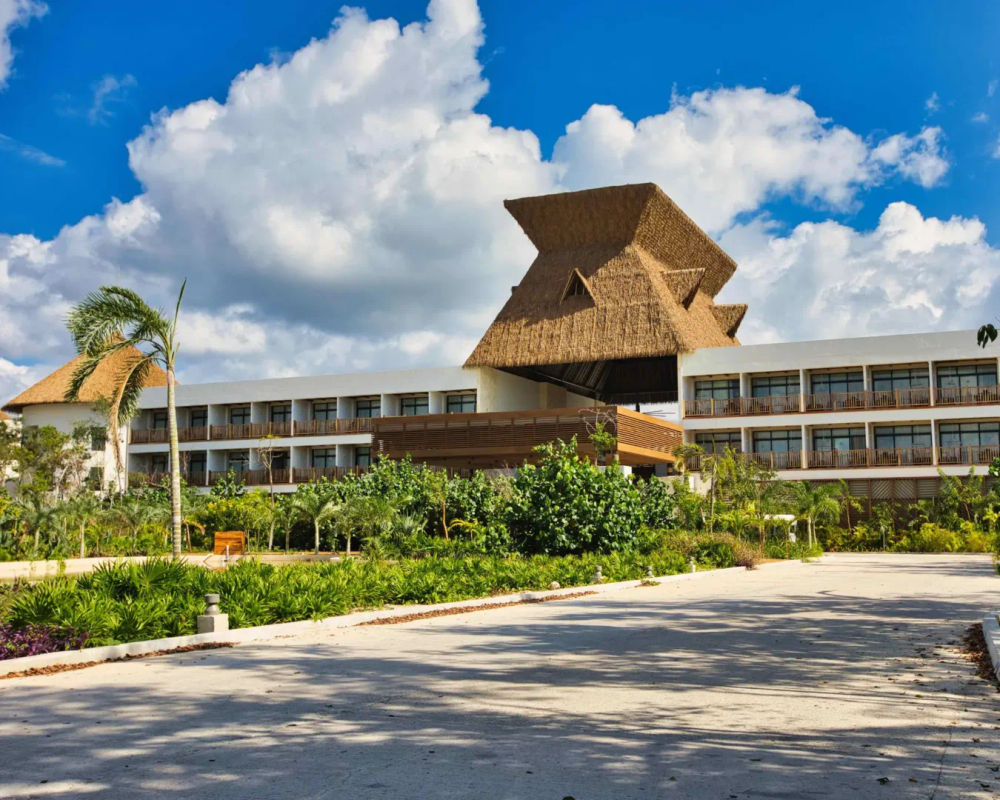
Mundo Maya Tulum is more than a hotel. It’s part of a broader web of military-administered tourism infrastructure expanding across the Riviera Maya. The same hands running defense operations now run check-ins, housekeeping, and park gates. Grupo Mundo Maya oversees both the hotel and nearby Parque del Jaguar, projects under the arm of what was once Sedena, now rebranded as DEFENSAMEX.
But when generals manage front desks, what happens to workers’ rights?
“There’s no human resources here, just orders,” one worker said. “And the orders don’t come from someone trained in tourism. They come from someone trained in command.”
That command, they claim, has been abused.
Staff accused Torres Martínez of humiliating subordinates, threatening layoffs as a casual tool of control, and punishing employees arbitrarily. Worse, they say General Velazco Bernal himself engaged in verbal insults and dismissive treatment, crushing the last hope of internal resolution.
Constitutional Rights vs. Chain of Command
Protesting isn’t just a right in Mexico, it’s protected under Articles 6 and 123 of the Mexican Constitution. Yet the workers say those rights were systematically ignored.
Forced resignations, threats of false theft accusations, denial of severance, all allegedly ordered by a state actor in a civilian setting.
Labor lawyers familiar with the case describe this as a “textbook violation” of the Federal Labor Law, particularly concerning coercion and intimidation in resignation processes.
It’s not just about bad bosses. It’s about civilian labor law being pushed aside under military rule.
And unlike private hotels in Cancún or Playa del Carmen, where labor unions and media pressure can offer some balance, Mundo Maya’s critics say it operates with impunity.
The Human Cost of Speaking Up
One woman, who had worked at the hotel for more than a year, said she had endured months of verbal abuse. When she finally joined the protest, she felt liberated, for one afternoon.
“Then the door closed,” she said. “They told me to give up my phone, sit down, and shut up.”
She didn’t want to sign, but the threat came quickly: “Sign it, or we’ll accuse you of theft.”
What began as a story about harassment has now become a story about injustice, retaliation, and fear. And it’s playing out not in a back alley or underground factory, but in a hotel that welcomes thousands of guests a year.

Who Watches the Generals?
At the heart of this is a troubling question: Should military officials be managing civilian hotel workers?
The Tulum Times posed this to several tourism observers, who declined to comment on record, perhaps a sign of how sensitive the issue has become. But off the record, one noted, “You can’t expect transparency from an institution built on secrecy and hierarchy. This model might make sense on paper, but on the ground, it’s already collapsing.”
The affected workers are now calling not just for local intervention, but for federal attention. Several have appealed to President Claudia Sheinbaum, urging her to investigate a problem they say has been festering for over nine months.
Their request is simple: oversight. Protection. The right to work without being dehumanized.
What’s at Stake for Tulum?
Tulum is changing fast. Luxury developments rise alongside Maya ruins. Tourists pour in. The Tren Maya roars nearby. But behind the five-star fantasy, stories like this one reveal a grimmer truth.
When power consolidates without accountability, it’s not just rights that get trampled, it’s people.
The question is no longer whether there was abuse. The question is whether anyone will do anything about it.
“They told us to smile at guests, while treating us like dirt.”
It’s not the quote a tourism brochure wants. But it’s the one Tulum needs to reckon with.
We’d love to hear your thoughts. Join the conversation on The Tulum Times’ social media.
Should Mexico’s military be allowed to run civilian tourism projects without civilian oversight?