
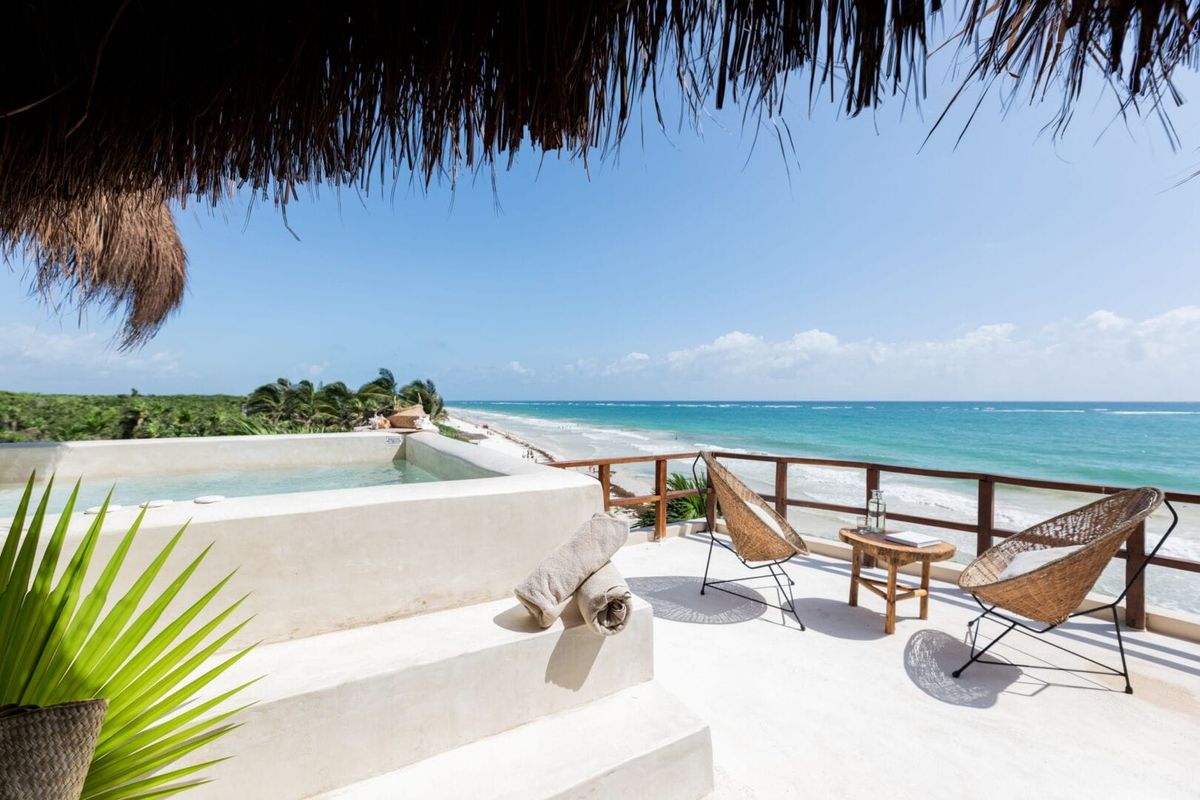
It used to be the kind of place people whispered about in airports and rooftop bars. Tulum, with its bleached sands and a sea that didn’t just sparkle, it pulsed. But lately, the talk of paradise carries a different tone. The beaches are still there, sure, but now they lie buried beneath a brown, rotting blanket. And the crowds? They’ve thinned. Some locals say they’ve all but disappeared.
In the midst of this slow unraveling, one phrase keeps floating through conversations among hoteliers and restaurant owners: turismo nacional. If international visitors are hesitating, maybe Mexican families will come. But even that sliver of hope is tangled in red tape and rising costs.
The Toll of Sargassum and an Empty Season
Sargassum. One word, but it’s become the Caribbean’s seasonal curse. This year, it didn’t just arrive early. It came in monstrous volume. According to municipal data from the Zofemat office, more than 2,000 tons of the pungent seaweed were hauled off Tulum’s beaches between January and June of 2025. That’s over twice as much as the same period last year.
And with that, the heart of Tulum’s economy, tourism, has started to skip a beat.
“I think we’ve hit rock bottom,” said Antonio Paparella, a hotel owner who’s watched the town rise and now stagger over the past ten years. “At least in the decade I’ve lived here, I’ve never seen it this bad.”
Paparella’s concerns go beyond dwindling bookings. At the core, it’s about access. He believes that during this contingency, the least the government could do is remove the fee that blocks people from the beach.
“We need free public beaches,” he said. “It’s not fair that tourists can’t just bring their umbrella and cooler and enjoy the sea without having to pay.”
And he’s not alone.
The Jaguar’s Gates and a Closed Welcome
A lot of the frustration is being aimed at the Parque Nacional del Jaguar. This coastal reserve, rich in biodiversity and archaeological memory, was meant to preserve nature and invite respectful tourism. But lately, for many, it feels more like a locked gate than a protected haven.
Normally, access to the park’s beaches requires a fee. But now, in the middle of a perfect storm, low season, environmental disaster, economic downturn, that cost might be doing more harm than good.
Verónica Genovaly, director of the park’s Environmental and Labor Unit, confirmed that a request has been submitted to the federal government to suspend the fee. Whether the request is granted is still uncertain, but the pressure is mounting.
In a town where the economy rises and falls with the tide, even a small policy change could have a big impact.
Betting on Domestic Tourism
With international arrivals in steep decline and many foreign tourists deterred by the seaweed, Tulum is pivoting. Locals are pinning their hopes on turismo nacional, Mexican families who might still be drawn to the coast, if the beaches are open and affordable.
But hope alone won’t fill empty hotel rooms. There needs to be action. Without it, the dream of a revived Tulum risks becoming just another lost postcard.
Some say the seaweed is a symbol. A town drowning in problems it didn’t cause, struggling to breathe again. Tulum was never meant to be a gated paradise for the elite. At its best, it was raw, open, imperfect. That spirit is still there, locals insist. You just have to cut through the algae to see it.
So, what would it take for Tulum to become that place again?