
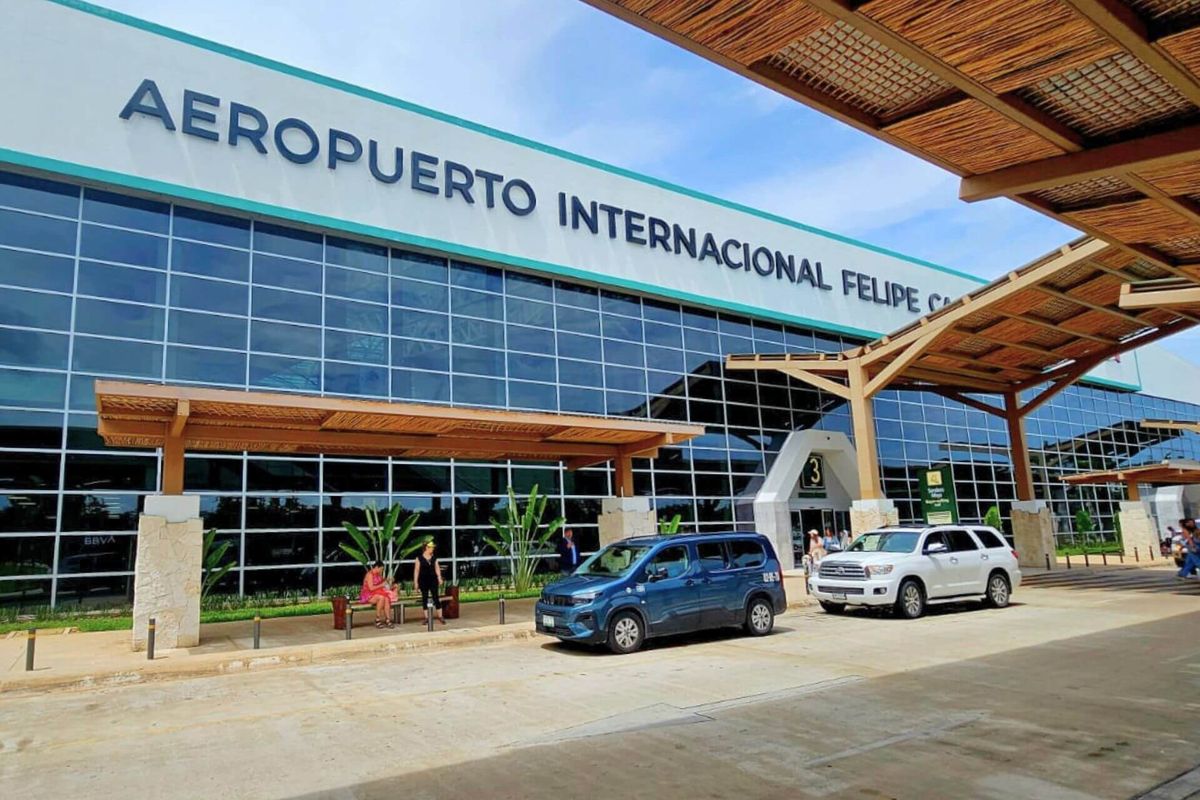
You could call it a gamble, but really, it’s a long game. The Tulum International Airport, officially named Felipe Carrillo Puerto, is doubling down on its strategy to become a magnet for international and domestic airlines alike. The move? Extending its incentive program by another three years in a bold bid to bring more planes, more passengers, and more eyes to the heart of Quintana Roo.
At first glance, the incentives might sound like a simple discount, but they cut deeper than that. We’re talking reduced Airport Use Fees (TUA) and slashed rates for the services planes rely on once they touch down, the behind-the-scenes choreography of ground handling that airlines quietly factor into every route decision. And when you’re running an airline, where margins are razor-thin, and fuel isn’t getting any cheaper, even modest savings can tip the scales. That’s exactly the point, according to Bernardo Cueto Riestra, the state’s Secretary of Tourism.
“These incentives make it more viable for airlines to open new routes into the Mexican Caribbean,” Cueto said, “not just to Tulum and the Riviera Maya, but also further south, into areas like Maya Ka’an, Mahahual, Bacalar, and the deeper Maya zones of the state.”
It’s a layered strategy. On one level, it’s economic calculus. But on another, it’s a message: Tulum isn’t just a beach town anymore. It’s a node, a growing hub that wants to stitch together forgotten regions and overlooked communities into the flight paths of the future. Think of it like laying down a track for a train that hasn’t arrived yet, an invitation to connect.
Incentives and the Broader Vision for Tulum International Airport
Currently, passengers flying out of Tulum pay 310 pesos for domestic TUA and 558 pesos for international routes. For airlines eyeing expansion, those numbers matter. But when those costs shrink under a multi-year incentive program, suddenly the map opens up.
It’s not just about cheaper flights, either. The extended incentives are meant to reinforce the promotional push spearheaded by Quintana Roo’s Tourism Promotion Council. That effort has focused heavily on expanding existing routes and opening up new ones, especially from strategic feeder cities across the Americas.
But beneath the marketing polish is a more structural shift in how the airport is managed. In November 2023, the Federal Ministry of Infrastructure, Communications, and Transport handed over formal control of Tulum’s airport to the Olmeca-Maya-Mexica enterprise, since rebranded as Grupo Mundo Maya. The handover came with a curious caveat: the airport could now operate under “specific tariffs” that deviate from standardized pricing. In other words, flexibility is baked into the business model.
The Federal Civil Aviation Agency (AFAC), according to Mexico’s official government gazette, now holds the authority to adjust rates “when reasonable conditions of competition do not exist,” especially for contracts involving complementary services like those signed with airlines. It’s a bureaucratic clause with potentially massive implications: pricing leverage in a market with limited players.
Turbulence on the Horizon?
Not all skies are clear. As of May, some early entrants to the Tulum aviation scene, including Panama’s Copa Airlines and Colombia’s Avianca, announced temporary pauses in their operations from Panama City and Bogotá, respectively. The reasons aren’t entirely clear, but they hint at the growing pains of a fledgling hub trying to scale fast.
Still, Cueto and his team appear undeterred. Their focus is long-term. They’re not chasing a boom, they’re building a foundation.
And if it works? Tulum could very well evolve from a boutique destination into a strategic artery for tourism throughout southern Mexico. It’s no longer just about getting travelers to the beach. It’s about getting them beyond it.
We’d love to hear your thoughts, join the conversation on The Tulum Times’ social media.