

Every corner of Mexico is dressing up to welcome the souls of the departed this Día de Muertos. In Tulum, the celebration takes on a particularly meaningful form through the Janal Pixan Festival, a deeply rooted Maya tradition that continues to unite communities and visitors around memory, food, and spirituality.
Janal Pixan, literally “food for the souls”, reflects a belief that the deceased return each year to enjoy the earthly pleasures they once loved. The festival, which unfolds across the Riviera Maya, is not just a cultural event but a living act of remembrance, inviting both locals and travelers to share a sacred encounter between the past and the present.
“The beauty of Janal Pixan is that it turns mourning into reunion,” said a local cultural promoter. “It reminds us that love transcends time.”
Ancient Maya roots that still shape the heart of Tulum
In Maya cosmology, the bond between the living and the dead was never severed. The Janal Pixan Festival preserves this link through rituals, food, and offerings known as ofrendas. These practices are especially visible in Quintana Roo, where traditional beliefs continue to coexist with modern tourism.
The celebration begins on October 31 with U Hanal Palal, the “food for the souls of children.” November 1 is U Hanal Nucuch Unicob, honoring deceased adults, while November 2 culminates with U Hanal Pixanoob, a collective farewell to all souls before they return to the afterlife.
Each day carries its own emotion. The first brings tenderness and nostalgia, the second reflection, and the last, a quiet sense of continuity. In Tulum, families and visitors alike prepare altars adorned with photos, candles, cempasúchil flowers, and traditional dishes, most notably mucbil pollo, a corn tamale baked underground that embodies the spirit of the Yucatán Peninsula.
A celebration of color, aroma, and memory by the Caribbean Sea
This year, the heart of Tulum’s hotel zone will host tributes to the faithful departed on November 1 and 2, featuring live performances, local artisans, and community rituals. The scent of copal will fill the air, mingling with the salt breeze of the Caribbean.
Visitors walking along the beachfront will find altars glowing softly in the night, each telling a story of devotion and identity. Some belong to long-time local families, others to new residents who have made Tulum their spiritual home. The mix reflects the town’s growing diversity and its enduring respect for ancient customs.
At the same time, hotels, restaurants, and cultural centers across the Riviera Maya are preparing exhibitions and culinary events that reinterpret ancestral flavors for contemporary audiences. Yet even amid this modern reinterpretation, the festival retains its soul: the act of welcoming the dead as honored guests.

The symbolic language of Janal Pixan’s rituals
To understand Janal Pixan is to enter a world where symbols speak louder than words. Each altar element carries a meaning rooted in Maya philosophy. Water quenches the souls’ thirst after their long journey. Fire, represented by candles, illuminates their path. The smoke of copal purifies and connects the material and spiritual worlds.
Food, sweet tamales, atole, and pan de muerto, is not merely sustenance but a message of love. Families prepare dishes once favored by their ancestors, believing that scent and memory are the bridges that unite them again.
Even the placement of items follows a cosmic order: four candles for the cardinal points, a glass of water for reflection, and photographs that capture what words cannot. These gestures, humble yet profound, express the essence of Mexican spirituality: that death is not an end but a transformation.
How Tulum balances both worlds
For a destination often defined by its turquoise waters and luxury resorts, Tulum’s embrace of Janal Pixan represents a deeper narrative. Local authorities and cultural groups have worked to ensure that the festival does not lose its authenticity amid the pressures of mass tourism.
Events are increasingly organized in collaboration with artisans and Maya families, not just as attractions but as acts of preservation. The local government has promoted workshops on traditional crafts, altar-making, and oral storytelling to keep the original spirit alive.
Still, questions remain about how commercialization could reshape cultural expressions across the Riviera Maya. Some residents express concern that as the town grows, sacred traditions risk being simplified for visitors. Others argue that visibility might actually protect them by keeping younger generations engaged.
As one artisan put it, “If people come to learn, not just to look, then our ancestors are truly remembered.”

A moment to pause and reconnect with meaning
Beyond its visual splendor, Janal Pixan carries a universal message about remembrance and continuity. It reminds the living to pause, reflect, and honor the invisible ties that hold communities together.
For travelers, it offers a window into the spiritual depth of Mexico, one that transcends festivals and decorations. For locals, it is a reaffirmation of belonging in a place where the past still breathes beneath the surface.
In a time when many traditions fade under the weight of modern life, Tulum’s Janal Pixan stands as a quiet resistance, proving that ritual can still unite the human spirit across generations and cultures.
The Tulum Times will follow this year’s festival closely, bringing stories from artisans, elders, and families who keep this sacred cycle alive.
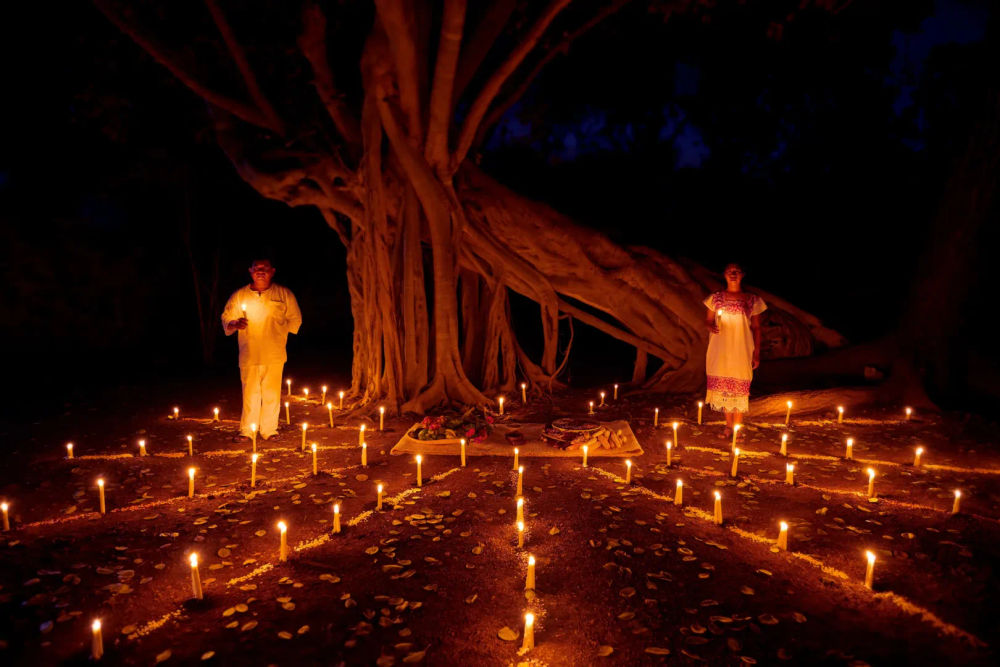
The eternal return of the souls to Tulum
As night falls on November 2, candles flicker across courtyards, beaches, and plazas. The air thickens with music, memory, and the scent of marigold. For a brief moment, time feels suspended.
Janal Pixan is not only a tradition, it is a conversation between worlds. And in Tulum, that conversation continues to echo against the Caribbean waves.
We’d love to hear your thoughts. Join the conversation on The Tulum Times’ social media.
What memory or tradition connects you most to those who came before you?