
What happens to a coastal town when the sea starts to feel off-limits?
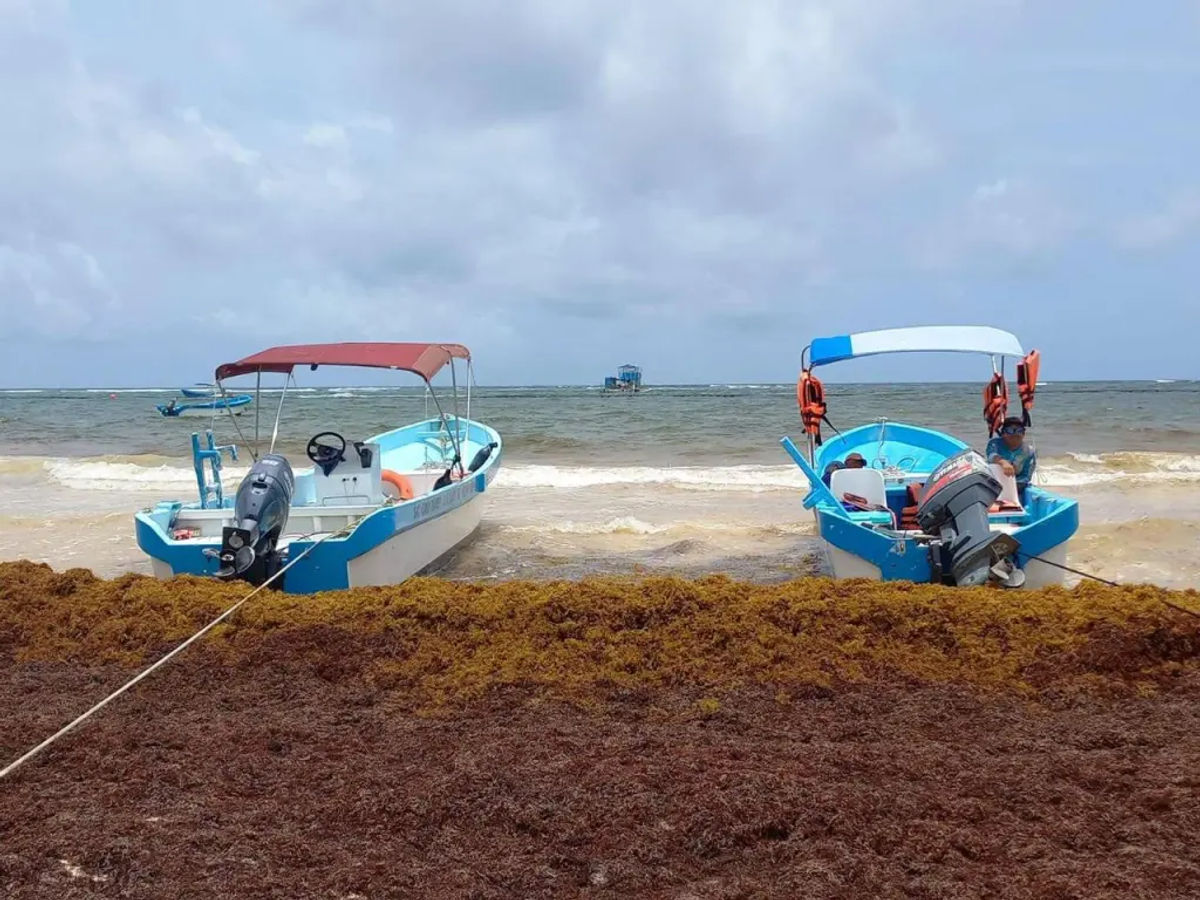
This question haunts the fishermen and boat operators, lancheros, who’ve spent years carving out a life on the sunlit waters near the shores of Tulum. Now, their livelihoods are being threatened by something they can’t quite see, and no one seems willing to explain.
Earlier this week, rumors hardened into dread. Word spread among the cooperatives: Grupo Mundo Maya, formerly GAFSACOMM, might soon be launching new tour boats inside Parque del Jaguar, the sprawling nature preserve that has already redrawn the map of access and opportunity in this part of Quintana Roo.
For local lancheros, it’s not just about boats. It’s about being erased.
“We’re starving, that’s the truth”
The anxiety reached a boiling point on Wednesday, when a group of boat operators gathered at the park’s southern access point. They’d been invited to a meeting, one that, at the last minute, was moved without notice. When they finally assembled, they were told to turn off their phones. No photos. No recordings. No answers.
The meeting started an hour late and ended in silence. Retired Colonel Fortino Aquino Torres, the current park administrator, arrived briefly, said little, then vanished into another room without facing the press. His only comment? Tulum residents would continue to enjoy free entry to the park. Nothing about the alleged arrival of new commercial boats in January 2026. Nothing about the mounting fears of displacement.
Lenín Pacheco Aguilar, vigilance secretary for the cooperative Dorados de Playa Maya, didn’t hold back.
“Since this park project began, our business has dropped to the floor. People go to cenotes, to public beaches… Tulum beach is done. We have no work. We’re starving, that’s the truth,” he said.
Only 5 of the cooperative’s 18 boats are currently operating. And those, he added, are running at barely 30% capacity.
The problem isn’t just competition. It’s access.
“There’s the Guardia Nacional everywhere. Tourists can’t even bring a soda or a bottle of water. It’s become useless,” Pacheco added.
And now, as whispers of Grupo Mundo Maya’s entry grow louder, the fear is no longer hypothetical.
“We’ve been hearing this since last year. Now it looks real, and that has us really worried.”
“We’re next”
The fear isn’t isolated to the sea.
Across Tulum, lancheros have watched as taxi drivers, artisans, street vendors, and even small restaurateurs have been pushed to the fringes of tourist zones, sidelined in favor of larger, often government-aligned players.
“We see it happening all around. They moved the taxi drivers. The artisans. Next, it’s us,” said Pacheco, his voice tight with frustration.
This isn’t just a story about boats. It’s about identity, about survival in a place reshaped by tourism’s newest face: privatized access, militarized “order,” and glossy corporate partnerships.
“Parque del Jaguar didn’t help us,” Pacheco said flatly. “It hurt us.”
He’s not alone in that sentiment.
A meeting without answers
Nelson Barrera, another longtime lanchero, spoke of the gathering’s eerie tone and the lack of clear answers.
“This feels like a broken telephone. We just want to know if that publication is true, so we can figure out where we stand. There’s no certainty,” he said.
Some lancheros had heard that Grupo Mundo Maya was already advertising snorkel tours inside the park. Others recalled how, early in the project’s rollout, there had been talk of possible cooperation. That, Barrera said, evaporated quickly, modules were shut down under orders from CONANP, Mexico’s National Commission of Protected Natural Areas.
“There’s no agreement with Grupo Mundo Maya,” Barrera emphasized. “If they’re operating in there, it’s without us.”
He and others plan to approach the Capitanía de Puerto, the harbor master, to investigate whether any new permits have been filed by the company.
Wednesday’s meeting wasn’t official, Barrera noted. It was an emergency self-convening by the lancheros themselves. A last-ditch effort to get clarity before decisions are made behind closed doors.
The stakes: not just boats, but families
Every boat represents more than a vessel. According to the cooperatives, at least four families depend economically on each of the more than 50 boats currently active in the area.
Do the math.
“This isn’t just our problem. If they push us out, entire communities feel it,” Barrera said.
The damage is already visible. As uncertainty swirls, the number of tourists venturing out on local boats has plummeted. The lancheros aren’t asking for privileges. They’re asking for survival.
“All we want is clarity,” Barrera said. “We follow the rules, we take the training. We’ve done everything asked of us. We just want to know if we’ll still have work in the park or not.”
His voice, like many others that day, carried the weight of exhaustion.
The silence of authority
The role of Colonel Aquino Torres is central, and yet, almost spectral. Present but unreachable. A man who governs a public park with military formality, yet speaks to the very people it affects with vague reassurances or none at all.
He told reporters that access for Tulum residents remains free. Yet multiple lancheros say otherwise. This contradiction, subtle but revealing, deepens distrust.
As one lanchero muttered after the meeting, “Free access doesn’t mean anything if you have no work to access.”
A protest on the horizon
Tulum’s frustration isn’t staying quiet. A protest has been announced for Sunday, August 31, backed by local citizens and surrounding communities.
The goal: defend public access to Tulum’s beaches and denounce the policies of Governor Mara Lezama and President-elect Claudia Sheinbaum. For lancheros like Pacheco and Barrera, it might be the last chance to be heard.
In the words of one protester-to-be:
“We’re not against progress. We’re against being left behind.”
And that’s the line that echoes through the bay.
As Tulum transforms into a polished product for international tourism, its local backbone, boatmen, artisans, street vendors, is being asked to disappear. Quietly, politely, invisibly.
But this Sunday, they plan to make noise.
We’d love to hear your thoughts. Join the conversation on The Tulum Times’ social media.
What does equitable tourism look like in a place like Tulum, and who gets to decide?