
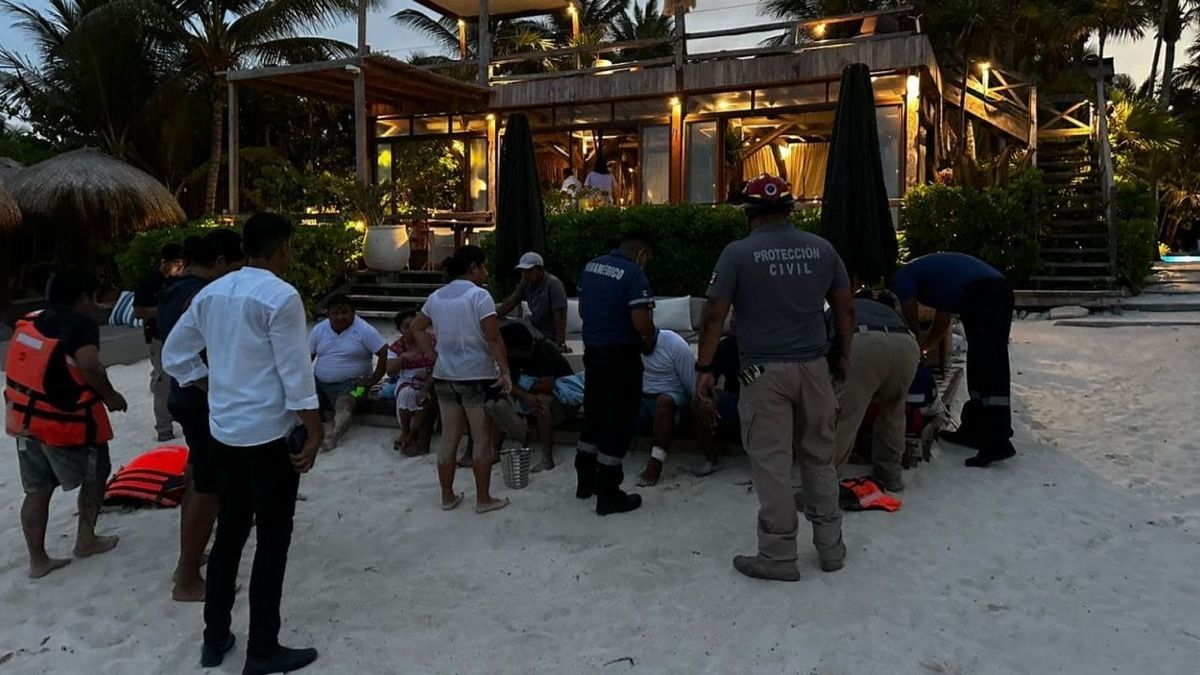
The silence, when it falls, can be deafening. It was not the usual morning din of an awakening coastal town, but a different kind of quiet – an uneasy hush that settled over the shoreline after the news began to ripple out. Just days ago, a maritime incident off the coast of Tulum sparked a security alert, a quiet tremor that hinted at deeper currents beneath the surface. It wasn’t about a rogue wave or a sudden storm; this was something altogether different, something that touched upon the delicate balance of a community grappling with its own rapid evolution. The details, as they emerged, painted a picture not of nature’s caprice, but of human intervention, of something deliberately, brazenly out of place.
It began, as these things often do, with a sighting. Not a casual glance, but a focused observation by security forces patrolling the waters. They identified a vessel, specifically described as a pleasure boat, moving through the federal maritime zone in a manner that immediately raised suspicions. This wasn’t a charter returning from a dive; its trajectory, its very presence, signaled an anomaly. The boat appeared to be carrying multiple individuals, but their purpose, at that initial moment, remained shrouded. The time was just before 8:00 AM, the hour when the morning light begins to sharpen the edges of the horizon, revealing what the night had obscured. This was when the discovery was made, near the area known as Punta Piedra, a stretch of coast recognized for its natural beauty and, now, its unintended notoriety.
What followed was a swift and decisive response born of training and acute awareness. Elements of the Mexican Navy, specifically units from the Ninth Naval Region headquartered in Isla Mujeres, were mobilized. Their task was clear: intercept the suspicious craft. It wasn’t a chase scene from a film; it was a calibrated, professional operation. The interceptors moved with purpose, closing the distance, their presence alone a formidable deterrent. On board the target vessel, the occupants decided their odds were better on land than at sea. In a desperate maneuver, they ran the boat aground. It was a futile attempt to evade capture, a rash decision that traded one set of problems for another.
The grounding was not clean. The vessel, now beached, disgorged its human cargo. Eight individuals disembarked, striking out onto the sand, attempting to melt into the landscape. Among them, critically, were six foreign nationals and two Mexican citizens. Their identities, eventually ascertained, painted a broader picture. One was from Colombia, another from Ecuador, two from the United States, and two from Cuba. The Mexican citizens were identified as the boat’s operator and his assistant. The diversity of nationalities underscored a chilling reality: this was not an isolated local event, but potentially part of a larger, transnational network. The beaching became a foot chase, uniformed personnel pursuing the fleeing individuals through the sandy terrain. The outcome was swift. All eight were apprehended within minutes, their dash for freedom quickly curtailed.
Back at the beached vessel, a more ominous discovery awaited. Navy personnel conducted a thorough inspection. What they found inside the pleasure craft removed any lingering doubt about its true intent. Packages, meticulously wrapped, containing what appeared to be illegal substances. The exact type and quantity were not immediately disclosed, but the implications were clear. This was not a leisurely cruise gone awry; it was a clandestine operation, disrupted. The vessel itself, along with the contraband, was immediately secured. It was then transported to the Naval Search, Rescue, and Maritime Surveillance Station in Tulum, a designated facility for processing such seizures. There, it would undergo a more detailed examination, the contents weighed and analyzed, the boat itself logged as evidence.
The detained individuals found themselves in a familiar pipeline. They were transferred to the custody of the Federal Ministerial Police. This agency, part of the Attorney General’s Office, would begin the complex process of investigation. Every detail, from their identities to their travel origins, their intended destination, and their role in the operation, would be meticulously cross-referenced. The Mexican citizens faced charges related to their direct involvement, while the foreign nationals would likely contend with not only criminal charges but also immigration violations. The case would then be handed to the Federal Public Ministry for formal prosecution. The legal wheels would begin to turn, grinding through the evidence, seeking justice.
This incident, while seemingly contained, resonates beyond the immediate arrests. It sends a ripple through the community, a reminder that the seemingly tranquil waters off Tulum are not immune to the currents of illicit activity. It speaks to the ongoing vigilance required of security forces, the constant, unseen work that defends a coastline and its people. It highlights the vulnerability of seemingly idyllic places when confronted with the determined, often sophisticated, operations of organized crime. The pleasure boat, now beached and seized, serves as a stark metaphor for the challenges faced by a region balancing natural beauty with the pressures of global connectivity and criminal enterprise. It prompts reflection on the broader implications, the subtle shifts in the landscape of security that define our times.
What are your thoughts on how these incidents impact our community? Share your opinions on The Tulum Times’ social media channels.