

The south entrance of Parque del Jaguar in Tulum is no longer just a gateway to greenery. As of this week, it’s also a door flung open to the Caribbean, free, public, and fiercely protected. After months of tension and decades of quiet erosion of access rights, Playa Mangle is once again reachable by foot, no ticket or tour required.
It’s not just a beach. It’s a battleground.
Behind the soft crash of waves and rustle of coastal flora, there’s a murmur of resistance. The opening of Playa Mangle marks what could be the beginning of a broader shift in how coastal access is handled in Quintana Roo, one where community voices challenge centralized control, and where the right to enjoy the sea doesn’t depend on resort wristbands or federal passes.

“This Is for Everyone”
The announcement came via the official channels of the National Commission of Natural Protected Areas (Conanp), stating that from now on, anyone, tourist, resident, foreigner, or local, may access Playa Mangle for free through the park’s southern path. Open hours run from 8 a.m. to 5 p.m., and with that, a small but significant curtain lifted.
Mayor Diego Castañón didn’t mince words. “Anyone who wishes may enter. It doesn’t matter if they are residents or tourists, nationals or foreigners.” His tone was as defiant as it was inclusive. In a municipality that has seen privatization creep like tidewater over once-public sands, this moment felt like pushback.
But freedom comes with boundaries. Playa Mangle is a protected turtle nesting site. Strict rules prohibit single-use plastics, loudspeakers, bonfires, drones, pets, and even sunscreen. It’s not a party zone, it’s a sanctuary. A wild stretch of nature trying to survive the crush of progress and promotion.

Tulum Talks, and Tensions Rise
This wasn’t an overnight decision. On September 1st, local officials and citizens, some outraged, others cautiously hopeful, gathered in a working session to hash out a compromise. Two issues dominated: access to the coastal ruins through an official servitude of passage agreement between INAH (National Institute of Anthropology and History) and Conanp, and a request to meet with Grupo Mundo Maya, the private company managing the surrounding infrastructure.
The demands are not radical. Locals want the freedom to reach their own beaches and archaeological sites without checkpoints or commercial hurdles. But in Tulum, that’s become a revolutionary ask.
One activist who attended the talks, Cinthya Peraza of the Playas Libres collective, underscored the urgency. “We won’t stop fighting for our constitutional right to free beach access.” For many, it’s not just about recreation. It’s about reclaiming a birthright eroded by security barriers and tourism-driven exclusivity.

Micro-Win, Macro-Fight
This opening may look like a victory, but it’s only a fragment of a bigger story.
Control of much of Tulum’s coastline currently rests with Gafsacomm, the Olmeca-Maya-Mexica state-run entity managed by the military and responsible for federal tourism and infrastructure projects. Gafsacomm still oversees access via the Tulum archaeological zone, an area locals also hope to reclaim.
So far, the company has been silent. Despite invitations and outreach, representatives have not shown up to negotiations. The silence rings louder with each passing day.
In the meantime, the local government is moving ahead. Another path, south of the archaeological site and outside the National Park’s boundary, is being considered for official public access using the legal mechanism of “servidumbre de paso”, an easement for public right of way.
Secretary of Government Cristina Torres Gómez and Mayor Castañón even walked the area on Monday. They weren’t in suits. They weren’t making speeches. Just walking. It was a quiet, deliberate gesture that said more than a press release ever could.

Between Ruins and Reality
The backdrop to all this is as complicated as it is historic. Tulum is no longer a sleepy fishing village. It’s a global brand. With that fame has come pressure, from developers, from tourists, from security forces. But also from its own people.
While Cancún and Playa del Carmen have long embraced polished resort tourism, Tulum has wrestled with its identity. Jungle-chic villas coexist with fragile mangroves. Boutique wellness retreats sit a stone’s throw from makeshift protest camps. In many ways, this fight for beach access is a proxy for a deeper existential question: Who is Tulum for?
In the immediate sense, it’s for artisans, street vendors, and tour guides who depend on foot traffic to survive. It’s for families who want to show their children the same sea they grew up with, not through a fence, but under the sun.
A Social Tide Turning
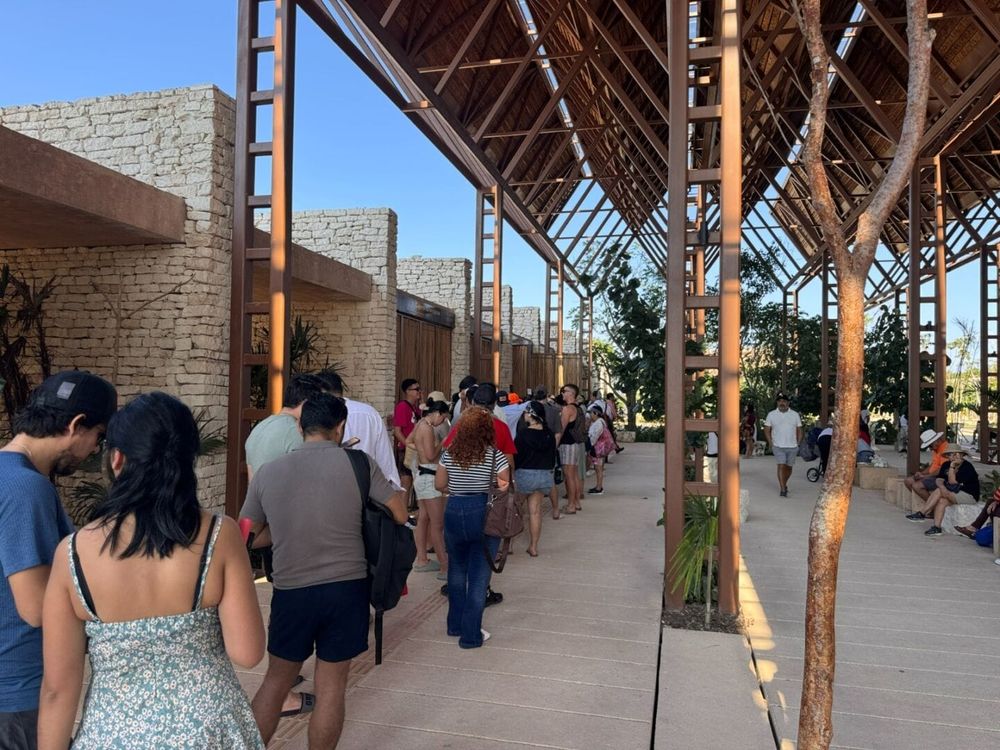
What’s different this time? Maybe it’s the timing. Or maybe it’s the collective memory of recent protests, like the roadblock that paralyzed the federal highway last Sunday for several hours. Residents are no longer asking politely. They are organizing. Blocking. Demanding.
“This isn’t just about a beach,” said a woman in the crowd on Monday. “It’s about who decides what we have access to. It’s about whether we matter in our own home.”
That quote wasn’t part of any official communiqué. But it captures the sentiment spreading across Tulum, a social tide rising just below the surface.

What’s Next?
The next official round of talks is set for Friday at 6 p.m. at Tulum’s City Hall. Media is invited. Transparency is the goal. But the stakes are higher than ever.
A single open access point is a small start. The real test will be whether it leads to systemic change, one where federal and military entities like Gafsacomm don’t act as gatekeepers to natural heritage, and where “access” isn’t a word negotiated, but a right respected.
The Tulum Times will be following every step of this developing story.
Because in Tulum, the line between public and private is written in the sand, and every wave of resistance redraws it.
We’d love to hear your thoughts. Join the conversation on The Tulum Times’ social media.
Should access to Mexico’s beaches be protected by law, or managed by federal and private partnerships? What do you think?