
With the aim of positioning Tulum as an inspirational and luxury tourism destination, the municipal government, led by Mayor Diego Castañón, is participating in the International Tourism Fair, known as FITUR 2026, taking place in Madrid, Spain, from January 21 to 25.
The strategy focuses on strengthening international visitor attraction while consolidating partnerships with key global tourism industry players. Municipal officials view the event as a platform to reinforce Tulum’s presence in priority markets and to align with broader state and national tourism objectives for the year ahead.
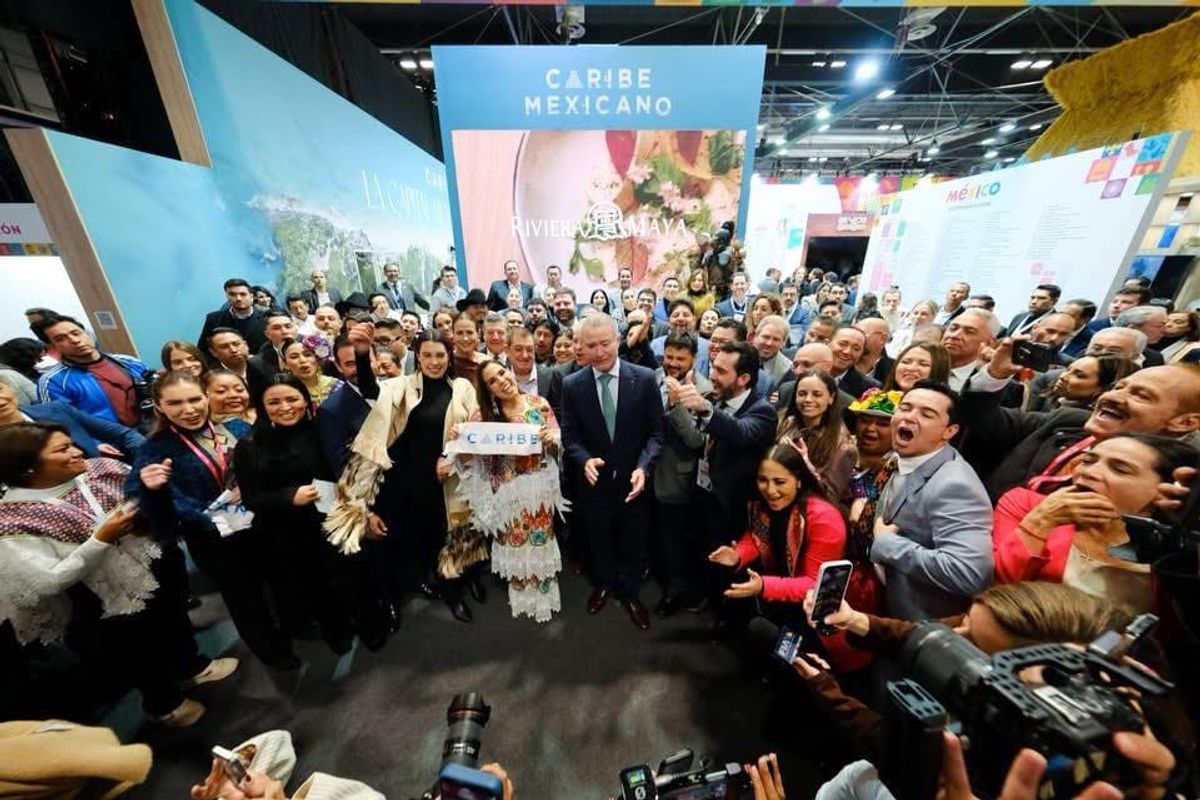
During the opening day of the fair, the Tulum delegation, headed by Hayde Hernández Pastrana, director of Tourism Promotion, joined the governor of Quintana Roo, Mara Lezama, at the inauguration of the Mexican Caribbean pavilion. The opening marked the official start of promotional activities for destinations across the region at one of the world’s most influential tourism events.
Municipal leadership targets global tourism alliances
Participation in FITUR 2026 forms part of a broader effort by the administration of Mayor Diego Castañón to elevate Tulum’s profile within the competitive global tourism market. Officials have emphasized that visibility at high-level international fairs is essential for maintaining relevance among tour operators, travel agencies, and investors seeking established yet evolving destinations.
According to municipal representatives, the presence in Madrid is intended not only to attract leisure travelers but also to open channels for collaboration with airlines, hospitality groups, and travel service providers. These alliances are seen as a mechanism to support sustainable economic growth tied directly to tourism activity throughout 2026.
The municipal government has framed its participation as a continuation of long-term destination management, rather than a one-off promotional appearance. By aligning with state-level initiatives, the municipality aims to present a coordinated image of the Mexican Caribbean to international markets.

State and municipal coordination at the Mexican Caribbean pavilion
The inauguration of the Mexican Caribbean pavilion served as a focal point for coordinated promotion among destinations in Quintana Roo. Hayde Hernández Pastrana represented Tulum alongside Governor Mara Lezama, underscoring the role of collaboration between municipal and state authorities in international tourism promotion.
Officials indicated that such coordination allows individual destinations to benefit from collective branding while still highlighting their unique attributes. For Tulum, this approach seeks to balance its established reputation with new messaging centered on quality, experience, and selective growth.
The pavilion’s opening also marked Mexico’s status as the invited country at this year’s edition of FITUR, a designation that significantly increases exposure for participating destinations. This status provides Mexican tourism representatives with additional visibility across the fair’s programming and media coverage.

Relaunch plan emphasizes incentives and local participation
Within the context of FITUR 2026, Hernández Pastrana stated that Tulum has launched an ambitious destination relaunch plan for the year. The initiative includes collaboration with local hotels and businesses to offer incentives designed to attract travelers from diverse international markets.
While specific details of the incentives were not disclosed, municipal officials described them as part of a coordinated effort to encourage visitors to consider Tulum not only as a leisure destination but as a place offering curated experiences rooted in its natural and cultural assets.
The relaunch plan reflects an acknowledgment that global tourism demand continues to evolve. By involving local enterprises, the municipality aims to distribute the benefits of increased visitation more evenly across the local economy, while maintaining standards associated with a luxury-oriented destination.

FITUR’s scale offers broad international exposure
FITUR is widely regarded as one of the most influential tourism fairs worldwide. Organizers expect attendance to exceed 250,000 industry professionals, including travel agencies, tour operators, and international media outlets. The event typically draws representatives from more than 150 countries, offering participating destinations access to a highly diversified audience.
This year’s edition includes representation from 156 nationalities, reinforcing its role as a central meeting point for global tourism stakeholders. For destinations like Tulum, such scale provides opportunities to engage directly with decision-makers responsible for travel flows in multiple regions.
Mexico’s designation as the invited country further amplifies this exposure. National and regional destinations benefit from heightened attention, which can translate into increased interest from markets that may not traditionally prioritize travel to the Mexican Caribbean.

Expectations for economic and tourism impact in 2026
The administration of Diego Castañón has expressed confidence that participation in FITUR 2026 will produce tangible results for Tulum. Municipal officials anticipate that meetings and presentations held during the fair could lead to agreements that support tourism and economic development throughout the year.
These expectations are tied to the belief that early-year promotional efforts are critical for shaping travel demand in subsequent seasons. By securing commitments from partners during FITUR, the municipality hopes to influence booking decisions and promotional campaigns in key source markets.
There is also an implicit expectation that international exposure will reinforce Tulum’s positioning within a competitive regional landscape, where destinations increasingly compete on experience quality rather than volume alone.

A measured approach to destination promotion
While officials have highlighted optimism surrounding FITUR 2026, the municipal messaging has remained measured. The emphasis has been placed on strategic positioning and partnership-building, rather than on immediate tourism volume increases.
This approach suggests an awareness of the challenges associated with rapid tourism growth, including infrastructure pressure and community impact. By framing FITUR participation as part of a structured relaunch and alliance-building effort, municipal leaders appear focused on longer-term outcomes.
The presence of Tulum at FITUR 2026 reflects a broader trend among destinations seeking to refine their international image while adapting to changing traveler expectations.
As the fair continues through January 25, attention will remain on whether discussions held in Madrid translate into concrete agreements that shape the destination’s tourism trajectory. What is at stake is not only visitor numbers, but how Tulum defines its place within the global tourism market during 2026 under the banner of Tulum FITUR 2026.
We’d love to hear your thoughts. Join the conversation on The Tulum Times’ social media.
How should Tulum balance international promotion with local priorities as it moves through 2026?