

Is Tulum still a playground only for the wealthy, or is the narrative finally cracking? As the winter season approaches, travelers planning their escape to the Riviera Maya may find themselves surprised by what’s really going on behind the glossy Instagram façade.
For much of 2025, Tulum held steady as one of Mexico’s most expensive destinations, particularly in terms of lodging and dining. August and September saw it clinging to the top of the pricing charts in the region. But here’s the twist: the boom may have boomeranged. Prices are dropping, quietly but steadily, and the reasons tell a deeper story about supply, demand, and the shifting soul of this once-bohemian outpost.
Tulum is magic, not just for its beaches or ruins, but for its ability to become something different for everyone who visits. It offers a vast, almost overwhelming range of possibilities that adapt to every kind of traveler, whether local or international. From where you stay, to the beach club you choose, to the cenote you swim in or the dish you try under the stars, no two people experience Tulum the same way. And that extends to prices, too. There are countless ways to live Tulum, from rustic and low-cost to lavish and luxurious, all coexisting in the same vibrant, evolving place. That’s why trying to define Tulum with a single label misses the point entirely. It’s a destination where contrasts don’t clash, they coexist. It’s accessible and exclusive, wild and refined, chaotic and serene. And as it grows, quickly, sometimes chaotically, it may confuse, it may shift, but it never loses its essence. Tulum is never the same twice. It changes, it learns, it missteps. But it always remains Tulum.

A saturated market brings unexpected deals
While the myth of Tulum as a luxury-only destination lingers, the streets tell a different story. Ask Daniel, a backpacker from Argentina who landed in mid-September with a limited budget and no reservations. “I found a private room for 600 pesos (~$30 USD) a night, with air conditioning and Wi-Fi. I expected to camp,” he laughs. “I stayed two weeks.”
That’s the kind of anecdote that locals are hearing more often. The reason? The number of available accommodations now far exceeds actual demand. The jungle is thick with options: boutique hotels, eco-cabins, private homes, high-end resorts, hostels, serviced apartments, all competing for the same slice of tourist attention. Some properties have slashed rates by up to 30% in recent months, trying to stay afloat through a season that no longer guarantees full bookings.
Currently, average rates for mid-tier hotels (three or four stars) hover between 2,000(~$100 USD) and 3,500 pesos (~$175 USD) per night, still higher than Playa del Carmen (800–1,500 pesos) or Cancún (1,500–2,700 pesos). Yet deals abound. Travelers willing to dig a little deeper are scoring apartments for under 1,800 pesos (~$90 USD) or hostel rooms for as low as 500 pesos(~$25 USD).
Yes, beachfront luxury hasn’t gone anywhere, suites with plunge pools still command 4,000 pesos (~$200 USD)and up, but the price spectrum has widened dramatically. There’s now room for all kinds of travelers, from digital nomads to short-term splurgers, and that’s no small shift for a town that once prided itself on exclusivity.

Transportation: a costly maze or a chance to explore?
Mobility in Tulum has always been part of the puzzle, and the price tag. Taxis remain infamously expensive, even for quick hops. A ten-minute ride can cost more than a meal. It’s no wonder many opt to rent cars, with daily rates between 800 (~$40 USD) and 1,200 pesos (~$60 USD), giving them freedom to reach spots like Sian Ka’an or the cenotes without depending on scarce public transport.
But for those looking to stay budget-conscious, alternatives exist. Local ride apps help control taxi costs, while colectivos, shared vans used by locals, cover much of the tourist zone affordably. Long-distance buses connect Tulum with Valladolid, Bacalar, and Playa del Carmen without draining your wallet.
Then there are the two-wheeled heroes. Bikes and scooters, available for 200 (~$10 USD) to 500 pesos (~$25 USD) a day, offer a breezy way to navigate Tulum’s sprawl. Considering the town’s uneven streets and notorious traffic, many seasoned travelers wouldn’t move around any other way. One recent visitor described her rented bicycle as “the best 300 pesos I spent in Mexico.”

Food for every kind of wallet
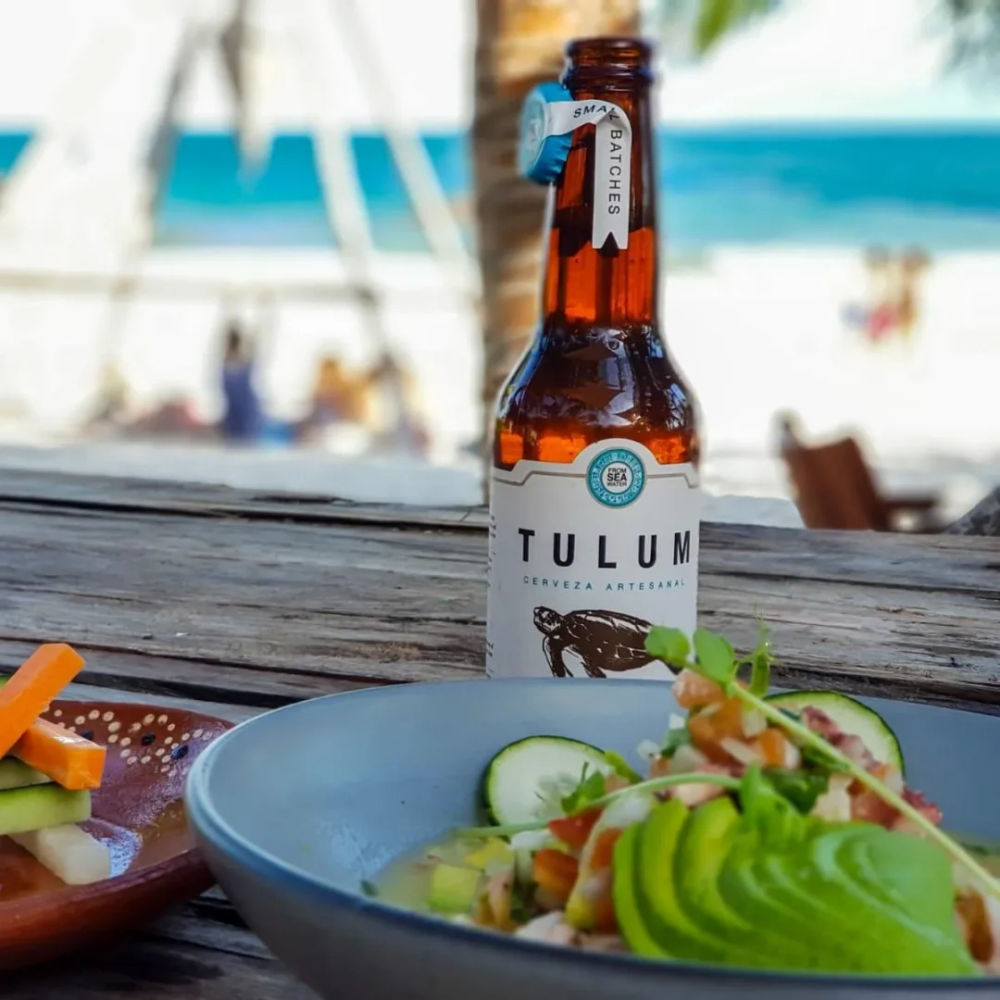
Tulum’s food scene has always walked the line between rustic and ritzy. In recent years, the spotlight’s been on high-end dining and beach clubs where a meal could run more than a week’s groceries in most parts of Mexico. But scratch the surface, and there’s a different flavor waiting.
On average, a meal at a tourist-friendly restaurant goes for around 500 pesos per person. That can double in beachside establishments where ambiance is part of the markup. However, venture inland to town, and you’ll find excellent meals for half that price, from Yucatecan plates to vegan cafés and taco stands buzzing late into the night.
The beach clubs are another beast. A main course ranges from 300 to 600 pesos, with cocktails typically 200 to 300 (~$10 to 15 USD). Minimum consumption requirements, often ranging from 800 to 2,000 pesos (~$100 USD) per person, can turn a casual afternoon into a mini splurge. Still, for some, it’s worth the price of lounging on a shaded sunbed with waves at your feet.
Compared to its neighbors, Playa del Carmen holds the most budget-friendly dining: meals average 330 pesos(~$17 USD) , beach clubs have lower or no consumption minimums, and drinks tend to cost less. Cancún sits somewhere in the middle, though its Zona Hotelera mirrors Tulum in pricing for tourist hotspots.
So is Tulum expensive to eat in? It can be. But it doesn’t have to be.
Can more flights drive down costs to Tulum?
Tulum’s new international airport, Felipe Carrillo Puerto (TQO), has been a focal point for airlines keen to expand connectivity to the Riviera Maya. Already, Aeroméxico and Viva Aerobus offer domestic routes, and major U.S. carriers like United, American, Delta, and JetBlue have launched or announced direct services from key hubs.
In fact, United now offers 22 nonstop flights weekly to Tulum from cities including Newark, Houston, Los Angeles, and Chicago, with fares beginning around USD 222 for round-trip tickets from Chicago. Delta is also expanding: starting this winter, it plans to operate a new route from Detroit to Tulum, increasing its U.S.–Tulum network.
The airport itself is targeting growth: it aims to handle 1.3 million passengers in 2025 and is working to attract European and South American routes through airline incentives. Meanwhile, new international connections have already materialized, Tulum now hosts direct flights to Bogotá and Frankfurt, expanding its reach to South America and Europe.
Still, the picture isn’t uniformly optimistic. Several U.S. carriers have reduced seat capacity to Tulum for the upcoming winter, citing lower-than-expected demand. Discover Airlines has pulled its planned service to Tulum in favor of Cancún.
What does all this mean for you? As airlines jockey for routes and adjust their capacity, there’s real potential for more competitive pricing, as long as demand responds. At The Tulum Times, we’ll continue tracking every new route, fare drop, and route cancellation so that our readers are the first to know when flights to Tulum become truly accessible.
The perception lags behind reality
Tulum’s reputation has long outpaced its evolution. For many, it still conjures images of influencer retreats, $25 smoothies, and velvet ropes to beach clubs. And to be fair, some of that still exists. But today’s Tulum is more layered.
The sheer volume of options, in stays, in food, in transport, is reshaping who can afford to come. The high prices are still there, but they now sit beside their affordable cousins. For travelers willing to plan ahead or veer slightly off the tourist path, Tulum has become surprisingly accessible.
It’s a rare case where perception is more inflated than reality. And that’s a narrative The Tulum Times believes is worth breaking down.

A question of value, not just price
This shift isn’t just about pesos and price points. It’s about the kind of experience travelers seek, and what they get for their money. While Playa del Carmen and Cancún offer larger resorts and smoother infrastructure, Tulum trades on its atmosphere. Jungle vibes, boho design, raw beaches, and a certain kind of freedom. For many, that’s priceless.
But as competition tightens and local businesses fight for survival, Tulum may have to ask itself hard questions about sustainability, balance, and fairness. Can a destination remain exclusive while courting mass tourism? Can it protect its fragile ecosystem while offering cheap stays? Those answers are still unfolding.
What’s clear is this: the town is in flux. And that gives travelers an opening, to experience Tulum without breaking the bank, and perhaps to rediscover its essence in the process.

Final thoughts before high season
With the winter high season on the horizon, the time is ripe. Prices are still deflated, promotions are running, and the chaos of peak tourism hasn’t yet arrived. Booking early could mean locking in deals before December’s rush.
For all its contradictions, Tulum remains magnetic. It still offers the magic of sunrise on the beach and jungle sounds at night, whether you’re in a 5,000-peso suite or a 600-peso hostel room. That’s the beauty of what Tulum is becoming, not just a destination, but a spectrum of experiences.
We’d love to hear your thoughts. Join the conversation on The Tulum Times’ social media.
Are you planning to visit Tulum this winter? What kind of experience are you hoping to find?