
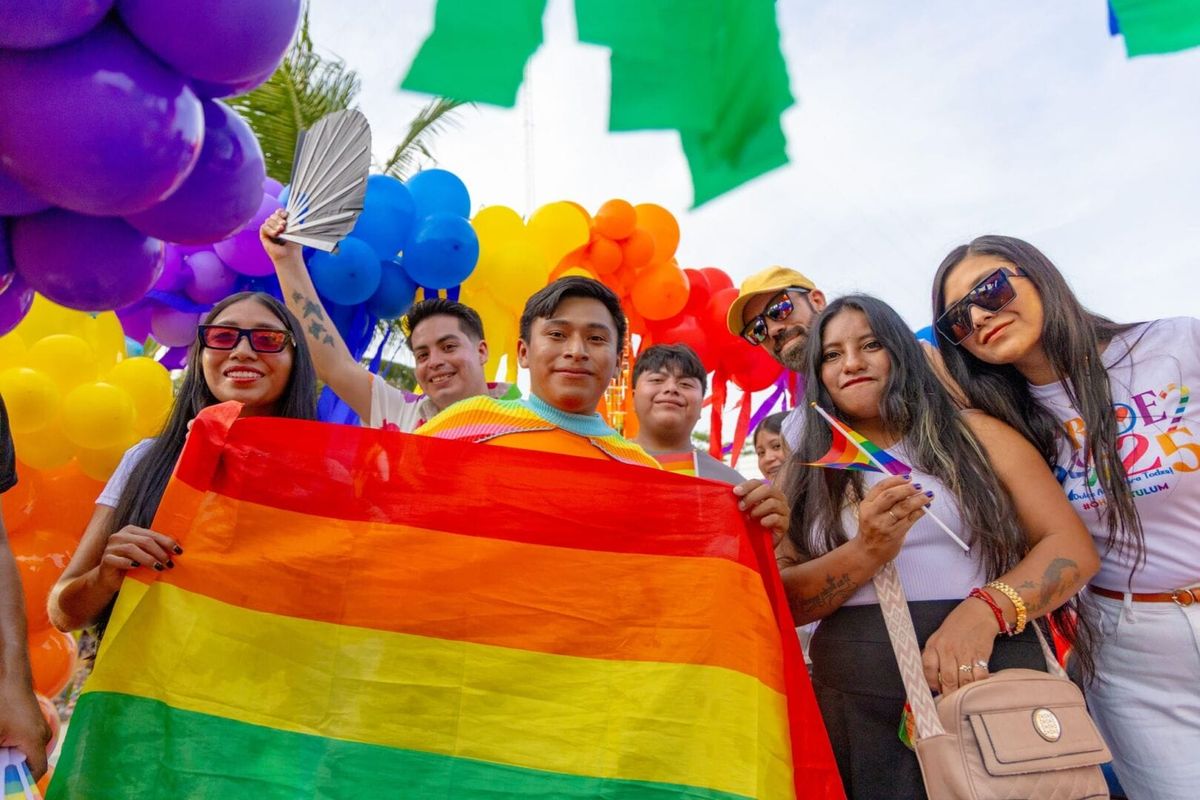
The drums didn’t just beat, they roared. Beneath a sky smeared with tropical heat and resilience, Tulum’s main avenue pulsed with music, glitter, and a radiant defiance this past weekend. At the heart of it all? The Pride Parade, more than a march, it felt like a living heartbeat of a community refusing to be quiet.
You could taste the joy in the air. Not the polished, sterile kind, but raw, jubilant joy, scratched from decades of silence and fear. Families, lovers, travelers, and locals swayed together beneath rainbow flags that flickered like bonfires of resistance. And when someone shouted, “El amor no se esconde,” the crowd didn’t just cheer, they howled. Because in Tulum, love is no longer something to be hidden behind curtains or whispered about after dark.

Pride Parade as Cultural Reclamation
This wasn’t just about visibility. It was reclamation, of streets, of narratives, of space. The Pride Parade in Tulum aligned itself with a deeper lineage, echoing back to the Stonewall riots of 1969, when bricks and voices first shattered the illusion that silence was safety. This year’s celebration carried that legacy forward, not in protest alone, but in art, in movement, in laughter that refused to be censored.
Local activists and civil groups, those who work quietly when the music stops, were the backbone of the event. They orchestrated cultural performances, mural interventions, speeches that rang like psalms for the disenchanted. Tulum’s municipal authorities showed up too, not just in uniform, but in solidarity, backing this cascade of color and calling it part of the town’s future, not a deviation from it.

A City of Many Skins
What makes a place like Tulum fertile ground for a Pride Parade isn’t just its beaches or international draw. It’s the convergence, the unspoken agreement that cultures, genders, histories can cohabitate without hierarchy. One marcher, barefoot and painted in sequins, said it plainly: “Tulum is free. Diverse. We don’t just welcome difference, we live it.”
And maybe that’s the metaphor here. If cities are like bodies, then Pride is a pulse, the proof that a city’s alive, feeling, responsive. And in Tulum, that pulse thundered.

Beyond the Celebration
The march wrapped without incident, but the message echoed long after the music faded. It wasn’t about spectacle. It was about permanence. Pride in Tulum isn’t a seasonal export for tourist cameras. It’s becoming part of the town’s DNA, an annual scar turned jewel, a reminder stitched into its cultural tapestry.
So next June, when the world remembers Stonewall and cities flood with color, Tulum won’t just participate. It will blaze. Because here, being who you are isn’t just tolerated, it’s celebrated like a sunrise that nobody asked permission for.
We’d love to hear your thoughts, join the conversation on The Tulum Times’ social media.