
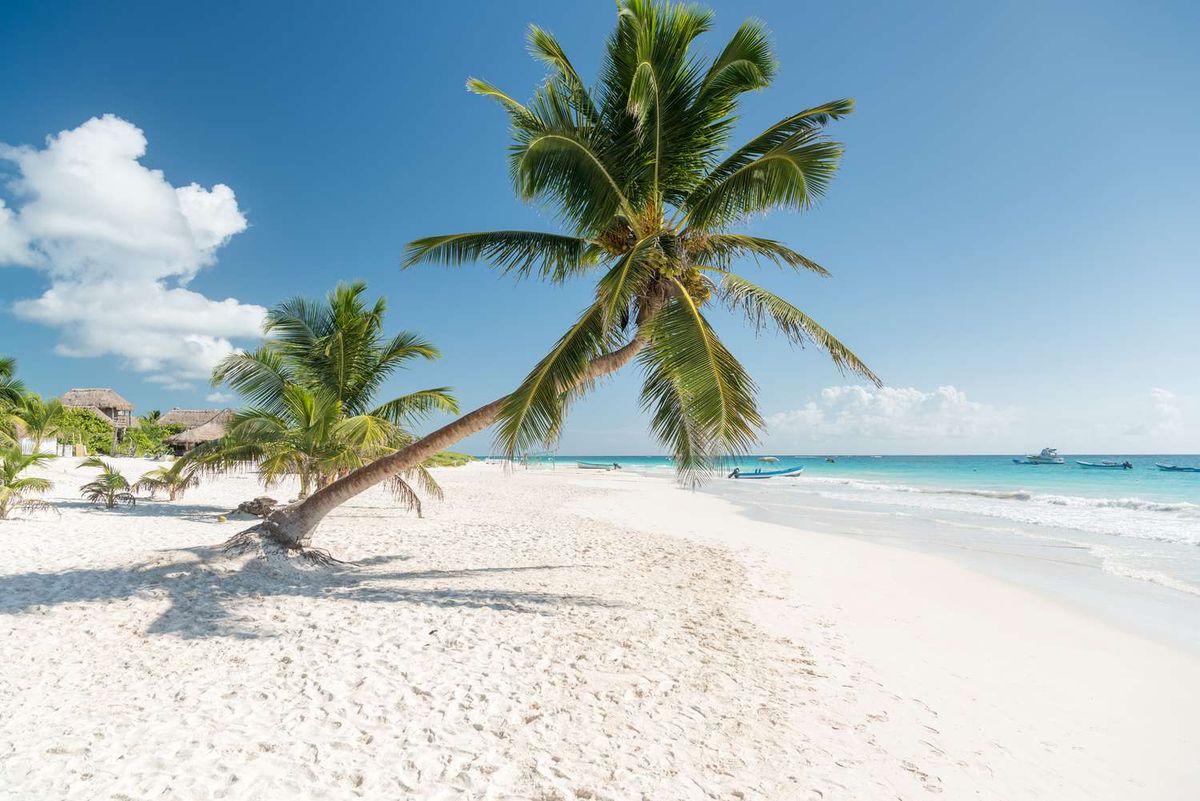
In a bid to attract more travelers and respond to growing criticism, Mexico’s Secretariat of Tourism (SECTUR) announced the opening of four public and free access points to Tulum’s beaches in Quintana Roo. The move ends months of tension over entry restrictions imposed by the military-administered Jaguar Park and signals a shift toward more inclusive tourism in one of Mexico’s most visited coastal destinations.
The decision came after national and international tourists expressed frustration over rising entrance fees and limited access to public areas. Two new points, located in the hotel zone, Playa Conchitas at kilometer 4.5 and Playa Del Pueblo at kilometer 5.5, join the existing south and “traditional” entrances already available to the public.
Sectur Secretary Josefina Rodríguez Zamora said the goal is “to guarantee that access to the beaches remains free and open to everyone, nationals and foreigners alike, every day of the year.” The statement also emphasized that the initiative aims to promote sustainable growth that benefits both the community and visitors to this protected natural area.
The reopening of Tulum public beaches
The new policy marks a turning point in Tulum’s tourism model. Public access had become one of the most contentious issues between visitors, local businesses, and federal authorities after the creation of the Jaguar Park, which granted operational control to Mexico’s armed forces. With these new entrances, Sectur hopes to mitigate discontent and revive local tourism, which has seen a noticeable slowdown in recent months.
Only those who wish to enter the protected area or the archaeological zone will continue to pay admission fees. However, Sectur introduced a unified tariff valid from mid-November through the end of December: 60 pesos for Mexican nationals and 220 pesos for foreign visitors on Sundays. The rates apply only to the archaeological site, while the park remains free that day.
Negotiations and coordination behind the decision
The openings come after weeks of negotiations between federal, state, and municipal authorities. The Secretariat confirmed that the new access points, two within the Jaguar Park and two in the hotel zone, were the outcome of the Mesa de coordinación de acciones estratégicas para Tulum, a federal working group that includes 14 agencies, the Grupo Mundo Maya, and the government of Quintana Roo.
According to Rodríguez Zamora, these agreements reaffirm the principle that beaches in Mexico are a public good and must never be privatized. She highlighted that the changes reflect commitments made during the Conferencia del Pueblo on October 8, which brought together federal representatives, local authorities, and tourism stakeholders in both Tulum and Mexico City.

The Jaguar Park and its role in the new tourism plan
Within the Jaguar Park, three main entrances are now in operation: the North Gate at the Visitor and Interpretation Center (CATVI), the Central or “Traditional” Gate, and the South Gate. A new public corridor connecting these points will also be open for recreational and sporting activities, accessible to both nationals and foreigners without charge.
While the military continues to oversee the park’s management, Sectur has sought to maintain civilian oversight of tourism operations and fee structures. The unified tariff system applies from Monday to Saturday and is expected to remain in place until late December, with similar measures planned for 2026.
Residents of Tulum will continue to enjoy free entry to the protected area year-round. No visitor, domestic or international, is required to pay for beach access at any time, a condition the government says will remain permanent.

President Claudia Sheinbaum’s directive on beach access
The initiative follows a directive by President Claudia Sheinbaum, who instructed federal agencies to guarantee free and permanent access to Mexico’s beaches while respecting environmental protection laws. The move aligns with her administration’s broader commitment to transparency and equitable tourism development in the Riviera Maya.
Authorities say the new policy could help rebuild trust among travelers and tour operators after months of criticism regarding high prices and limited access. It also represents a test of Mexico’s capacity to balance conservation goals with the demands of a rapidly growing tourism sector.
A balancing act between tourism and community benefit
Local authorities and business leaders hope that restoring access will reverse the recent decline in visitor numbers and boost the coastal economy. For small entrepreneurs in Tulum, vendors, guides, and transport workers, the reopening of public beaches could bring relief after a season marked by declining occupancy and uncertainty about future regulations.
The changes also respond to a growing demand for transparency in how tourism revenues are distributed. Federal officials claim that unifying tariffs and removing unnecessary fees will encourage a fairer tourism model, one that includes both residents and visitors in its economic benefits.

Sustainability and regulation in the Riviera Maya
Sectur framed the beach reopening as part of a larger strategy for Tulum that integrates environmental management, urban planning, and sustainable tourism practices. The plan, developed with input from multiple government agencies, aims to ensure that development along the Riviera Maya does not undermine the ecological integrity of its protected areas.
This strategy covers six main priorities: tourism dynamics, urban-environmental management, infrastructure, regulation of services and prices, promotion of the destination, and ongoing monitoring of public tariffs. Officials say that by strengthening coordination among institutions, the government seeks to maintain Tulum’s global appeal while preserving its natural and cultural heritage.
A local reaction that signals cautious optimism
Early reactions among Tulum residents have been largely positive. Several community groups have praised the restoration of free access as a victory for local rights and environmental equity. However, some hoteliers remain skeptical, arguing that unclear management guidelines could still discourage private investment.
For many visitors, the message is clear: Tulum’s beaches belong to everyone. And for residents, this policy represents an opportunity to redefine the balance between tourism growth and social inclusion.
As one local vendor told The Tulum Times, “When tourists can reach the beach without barriers, everyone wins.”
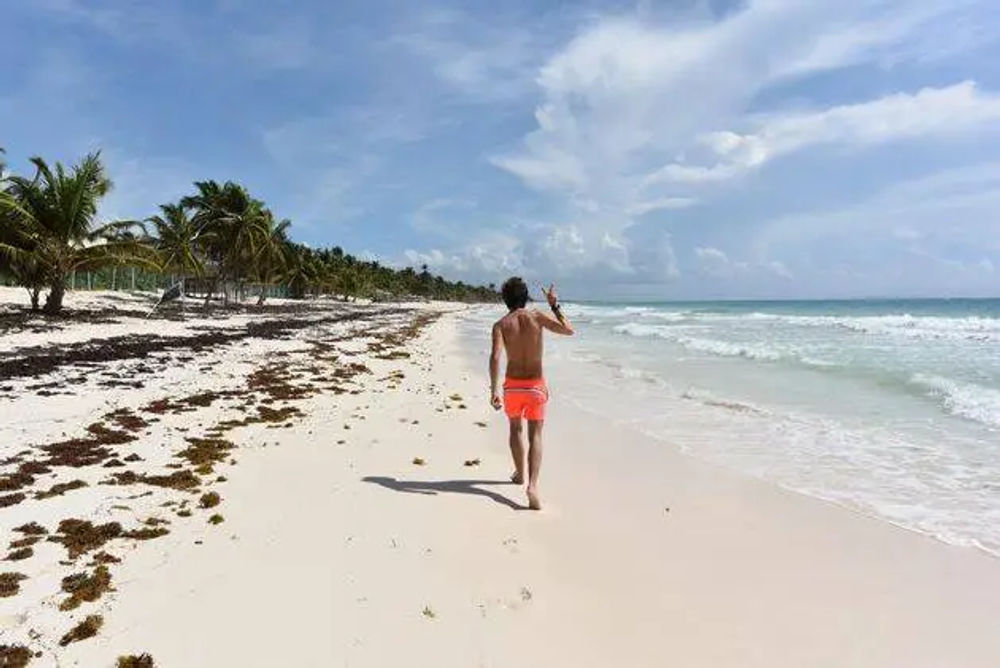
What lies ahead for Tulum’s public beaches
The reopening of Tulum public beaches represents more than just a regulatory change; it is a statement about the kind of tourism Mexico wants to promote. Inclusive access, fair pricing, and ecological responsibility appear to be at the heart of the new approach.
Whether this initiative will fully restore visitor confidence remains to be seen. But for now, the message from both the federal government and local communities is one of shared purpose: ensuring that Tulum’s coastline remains open, protected, and welcoming to all.
We’d love to hear your thoughts. Join the conversation on The Tulum Times’ social media.
Do you think free beach access will change how visitors experience Tulum?