
A 5 percent charge. That’s what it came down to. A quiet line item on electricity bills across Tulum, one that residents had long accepted, until now. In a ruling that could reshape municipal taxation in Quintana Roo, Mexico’s Supreme Court of Justice (SCJN) has declared the charge unconstitutional.
The decision, issued during a Plenary session on September 17, 2025, invalidates key portions of Tulum’s Tax Law, citing a breach of constitutional principles of proportionality and equity. At the heart of the ruling lies a single assertion: Tulum’s additional charge on public lighting was more than just bad policy, it was illegal.
A Municipality Oversteps
The invalidated rule, introduced under the administration of Mayor Diego Castañón, required residents to pay an extra 5% on their Comisión Federal de Electricidad (CFE) electricity bills. Officially, the funds were earmarked for the “service and maintenance” of public lighting. In practice, critics argued, it was a form of double taxation.
According to the SCJN, the municipality’s approach essentially imposed a levy on electricity consumption, an area over which it holds no jurisdiction. That authority belongs exclusively to the federal Congress. The Court concluded that calculating public lighting costs based on electricity use, rather than actual service expenses, not only distorts fiscal logic but also infringes on citizens’ constitutional rights.
In simple terms, Tulum cannot charge you for using electricity just because the streets need to be lit.
The Legal Backbone: Action of Unconstitutionality 19/20
The roots of the decision stretch back to a legal challenge filed by the National Commission of Human Rights (CNDH), known as Unconstitutionality Action 19/20. The challenge targeted a cluster of tax regulations published in Quintana Roo’s Official Gazette on December 21, 2023.
Among the provisions contested were the first two paragraphs of Article 143 of Tulum’s Tax Law, now invalidated. These paragraphs formalized the controversial 5% surcharge.
While technical in language, the ruling draws a clear line: municipalities can recover the real cost of public lighting, but they cannot disguise consumption-based levies as service fees. It’s a distinction with far-reaching consequences.
A Broader Pattern in Mexican Municipal Finance?
Tulum isn’t alone. Across Mexico, local governments have quietly implemented similar fees, often piggybacking on federal utility bills. For some, it’s a clever workaround to fund public infrastructure. For others, it’s an abuse of power hidden in plain sight.
One analyst close to the case put it plainly: “You can’t charge people based on how much electricity they use when the service cost is unrelated. It’s like charging more for garbage collection because someone uses more water, it doesn’t make sense.”
In Tulum, where tourism money flows freely yet infrastructure remains patchy, such fees often land hardest on low-income residents. A few extra pesos per month may not seem like much, until you multiply it by every household, every month, all year.
That’s not public service. That’s quite taxation.
How Residents and Authorities Are Reacting
While the municipal government has remained mostly silent, local voices are growing louder. Some see the ruling as a rare instance of the federal judiciary defending everyday citizens. Others worry it might disrupt funding for real lighting needs, especially in outlying areas where basic services remain precarious.
Businesses in the Riviera Maya, particularly those reliant on well-lit tourist corridors, have taken a more cautious tone. Some are asking whether the municipality will find other ways, perhaps more transparent, to fund lighting without violating federal law.
The Tulum Times has been tracking local reactions closely, with some residents calling for a full audit of how past funds were spent. Others are simply relieved to see one less unexplained charge on their utility bills.
A Micro-Story From the Ground
María, a lifelong resident of Colonia Tumben Kaa, remembers when the streetlights would flicker off for weeks. “We thought that 5 percent was helping fix it,” she said. “But things didn’t change. Now I wonder, where did it all go?”
Her story echoes across neighborhoods where residents paid without question, assuming the cost was justified. The Court’s ruling suggests they were wrong, and that the system was, too.

Dark Streets, Rising Fear: When the Lights Went Out in Tulum
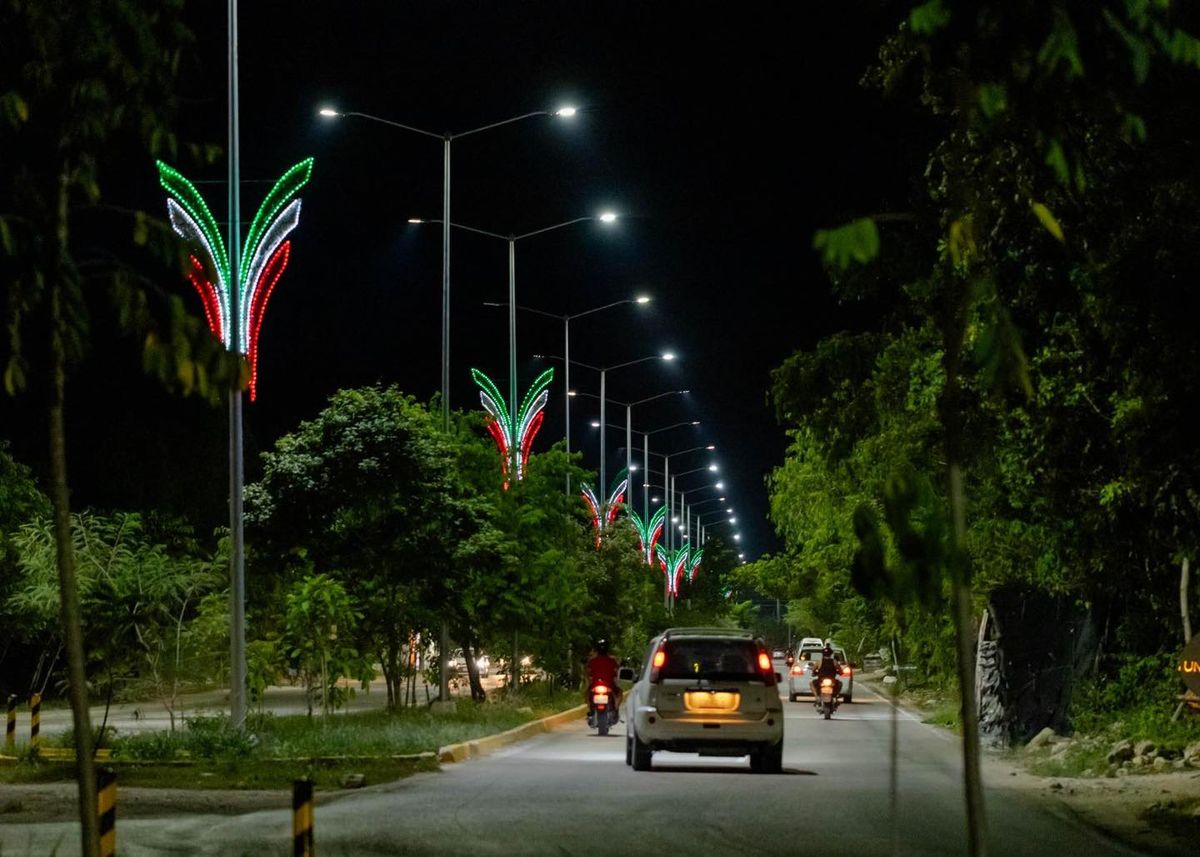
It’s been a while now. Entire streets across Tulum, once well-lit, have slipped into complete darkness. Lamps that used to cast a glow over neighborhoods haven’t worked in months. No one replaces them. No one repairs them. The fixtures remain, but the light is gone, and so is any sense of accountability.
Residents in areas like Villas Tulum, Tumben Kaa, and La Veleta say the blackout has brought more than inconvenience. Walking, riding a bike, or moving through these streets at night has become nearly impossible. The darkness has emboldened crime. Petty theft, harassment, and a gnawing sense of danger now define the nightly routine. And all this unfolded while the municipality continued to charge a 5% fee for a service that, for many, had simply vanished.
What Comes Next for Tulum’s Tax Policy
The invalidation leaves a legal gap and a budget hole. Tulum’s government must now decide how to finance public lighting within constitutional bounds. One option: calculate the true operational cost and propose a flat-rate fee, as other municipalities have done.
But trust has been dented. Any new measure will face scrutiny from watchdog groups and citizens alike. The ruling could also embolden further legal challenges across Quintana Roo, particularly in Playa del Carmen and Cancún, where similar policies may be in place.
From a governance standpoint, the message is clear: legal shortcuts come at a price.
The Stakes for Quintana Roo and Beyond
This isn’t just about electricity or even taxes. It’s about the invisible ways in which power is exercised, and resisted, in Mexico’s fast-growing tourist corridors.
As Quintana Roo grapples with surging development, infrastructure demands, and uneven wealth distribution, how municipalities raise and spend money will define the region’s future. And rulings like this one are drawing the lines.
By declaring that rights cannot be balanced on opaque charges, the SCJN has sent a signal not just to Tulum, but to every town trying to plug budget holes with backdoor levies.
The streets may still be dark in places. But at least now, the law shines a bit brighter.
We’d love to hear your thoughts. Join the conversation on The Tulum Times’ social media.
Should municipalities be allowed to attach service fees to federal utility bills, or is this ruling a long-overdue correction?