
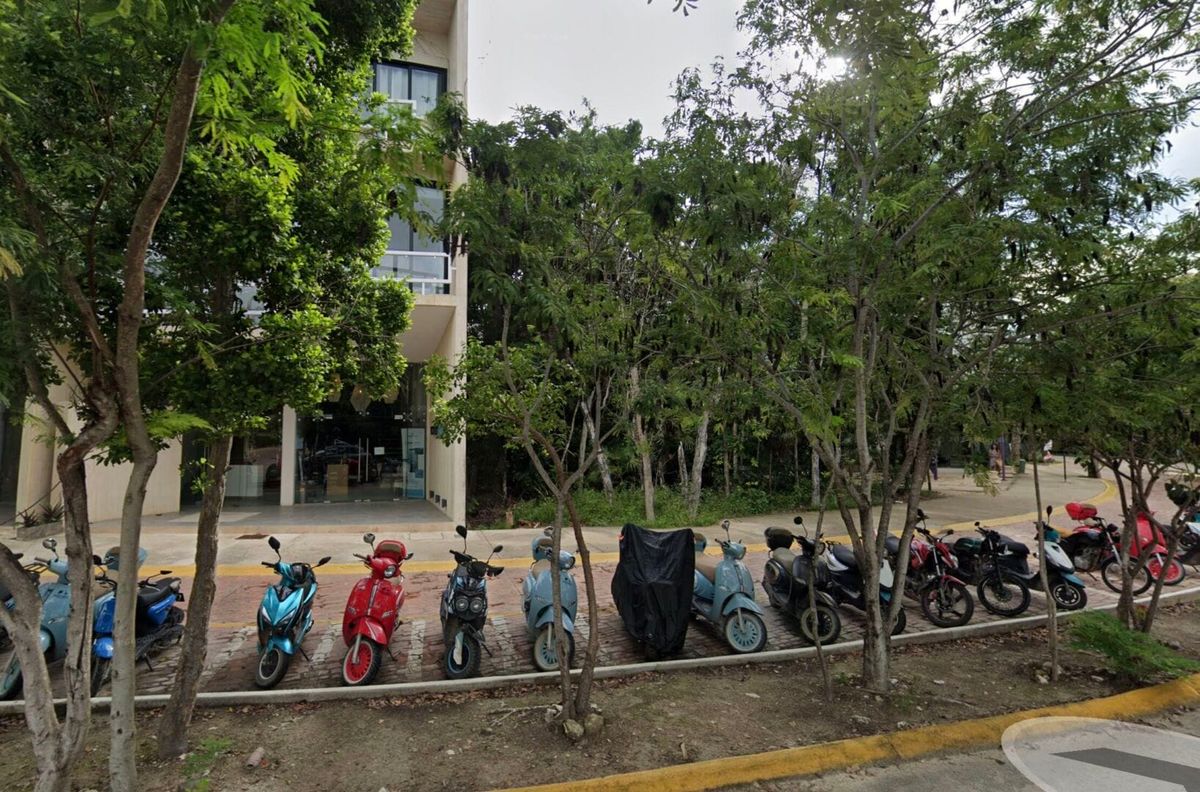
A quiet war is unfolding in Aldea Zamá. Not with weapons or banners, but with tow trucks, citations, and a firm municipal gaze fixed on reclaiming what belongs to everyone: the public streets.
In response to mounting pressure from frustrated residents and business owners, the Tulum Municipal Traffic Department, in coordination with the General Directorate of Inspection, has launched a focused operation to recover obstructed public spaces in the upscale neighborhood of Aldea Zamá. The goal? Clear the sidewalks. Unclog the parking bays. And ultimately, restore order to one of Tulum’s most rapidly urbanizing districts.
“We came because the people asked us to,” said Jessica Orozco Zavala, head of Tulum’s Traffic Department, during the operation’s early stages. “We’ve been here before, dialoguing with renters and owners. But what we saw was troubling, some businesses were taking up two, even three parking spaces just with motorcycles. That’s not sustainable.”
A targeted effort in Aldea Zamá
This is not just about a few motorbikes. It’s about a neighborhood struggling under its own weight. Aldea Zamá, once envisioned as a harmonious blend of nature and urban living, has become a bottleneck of unchecked growth. Sidewalks double as storage. Parking bays are monopolized. And pedestrians, particularly the elderly and disabled, often find themselves navigating traffic instead of safe pathways.
Orozco Zavala emphasized that the operation currently remains in its “exhortation phase”, a sort of official warning to those blocking public space. Property owners and tenants are being urged to voluntarily remove objects, signage, or vehicles that obstruct the flow of pedestrian and commercial traffic.
“We’re asking citizens to begin clearing these spaces. This isn’t about punishment, it’s about cooperation,” she explained.

A broader cleanup is in motion
Though Aldea Zamá is the pilot site, authorities made it clear this operation is only the beginning. The cleanup will soon expand to other neighborhoods across Tulum. If residents fail to comply with initial requests, stricter enforcement will follow.
“We’ll proceed with impounding vehicles and removing objects,” Orozco Zavala stated. “Each department will act within its authority, and we’ll coordinate to make sure no one is above the law.”
This signals a wider shift in how Tulum is managing its rapid growth, tightening the reins on urban development to prioritize accessibility, mobility, and public safety. The message is clear: if your business model depends on dominating public space, it might be time to rethink.
Local voices call for long-overdue order
Manuel Cano, administrator of the commercial zone in block 12 and an urban image representative for Aldea Zamá, sees this as a necessary move.
“This regulation process is something we have to do constantly,” Cano noted. “We’ve been working with Transit and other departments to get the parking situation under control. It’s the right time to do it, for the common good.”
Cano’s view reflects a growing local consensus: residents are tired of the chaos. Tourists, drawn by the allure of Tulum’s jungle-chic brand, might not notice the creeping disorder, but for those who live and work here, it’s impossible to ignore.

What’s at stake for Tulum?
If Tulum wants to avoid the fate of overbuilt destinations like Playa del Carmen or parts of Cancún, actions like this might be a crucial step. The issue isn’t just about blocked sidewalks, but about the kind of urban life Tulum is building.
The Tulum Times has followed the evolution of Aldea Zamá from visionary eco-development to a congested hotbed of real estate speculation. It’s a case study in what happens when high-density growth outpaces infrastructure and oversight. This latest operation could mark a shift, if it’s enforced fairly and consistently.
A small moment, a larger signal
The image was unremarkable, but telling: a young mother trying to push a stroller past a café where the sidewalk was lined with scooters and delivery bikes. She had to step onto the road. That small detour, invisible to most, is the human cost of neglecting public space.
There’s no denying that Tulum is transforming. But whether it becomes a model of modern Mexican urbanism or just another cautionary tale remains to be seen.
“Public space belongs to all of us,” someone said during the operation. That sentence could just as easily be a tagline on a billboard, or a post on social media.

What’s next for enforcement?
Authorities insist that the operation won’t stop with gentle reminders. If businesses and residents ignore the call to clear the way, the tow trucks and inspectors will return, this time, with less patience and more paperwork.
The Traffic Department will continue working with other municipal entities to ensure that reclaimed public space stays that way. There are murmurs that this may evolve into a permanent task force for urban order.
But in the end, the success of this initiative may depend less on official action and more on community will. Are residents willing to give up convenience for the sake of the collective good?
The clean-up in Aldea Zamá might seem like a footnote in the story of Tulum’s evolution. But footnotes matter, especially when they mark the beginning of something larger.
We’d love to hear your thoughts. Join the conversation on The Tulum Times’ social media.
What changes have you noticed in your neighborhood, and what kind of Tulum do you want to see?