
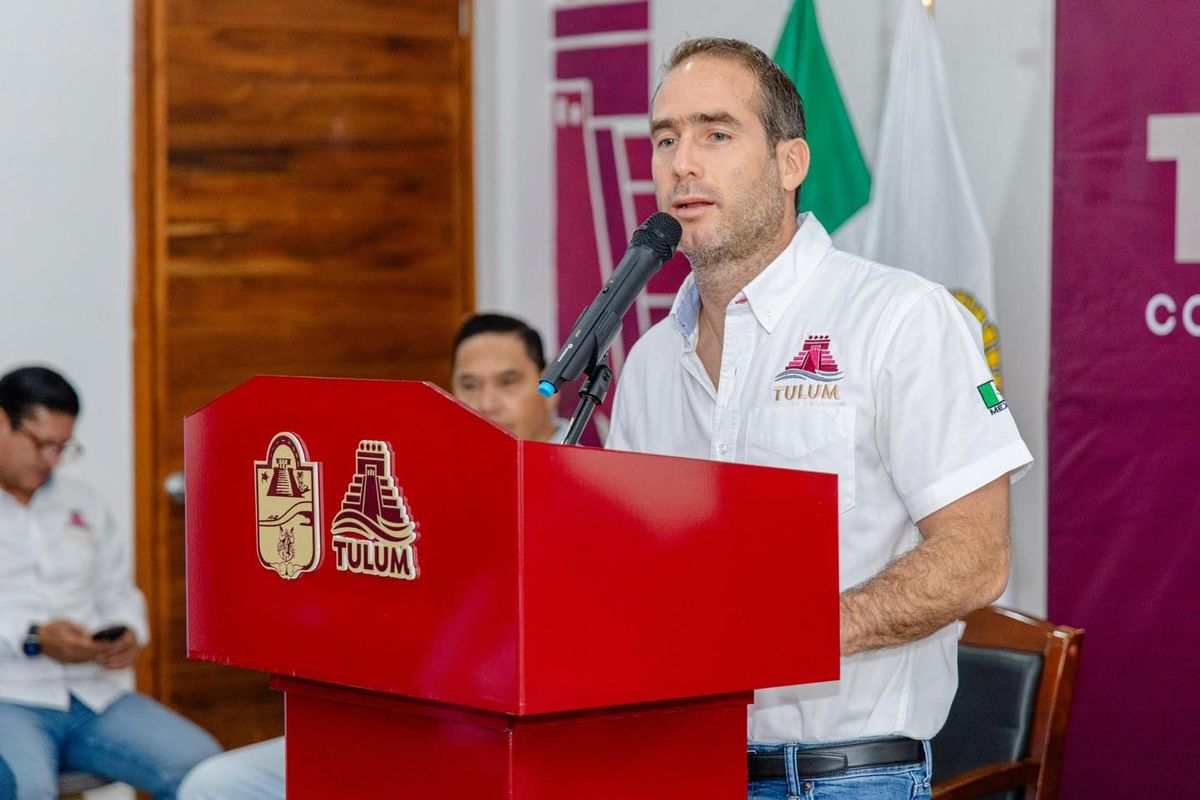
The Municipality of Tulum has announced a new round of appointments across key departments as the local government approaches its first anniversary under Mayor Diego Castañón Trejo. The restructuring affects the Office of the Chief Clerk, the Fiscal Oversight Directorate, and the Fire Department, all areas with direct impact on public safety and administrative efficiency.
Key positions reshuffled ahead of the year’s busiest period
According to official information released by the Tulum City Council, Juan Antonio Garza Pérez, previously head of Fiscal Oversight, will now lead the Office of the Chief Clerk. Sergio Canto Contreras, who had been in charge of Civil Protection and the Fire Department, will move to head Fiscal Oversight. Rafael Domínguez Villanueva will assume command of Civil Protection and the Fire Department.
Mayor Castañón said the reorganization seeks to “strengthen the most critical areas” of the administration as new officials enter service. These changes come at a time when the local government faces increasing demand for efficient responses from both residents and tourists.
Preparing Civil Protection for a challenging high season
Civil Protection has long been one of the most sensitive and demanding departments in Tulum, especially as the Riviera Maya prepares for the end-of-year high season. Tourist arrivals traditionally surge from December through February, putting pressure on emergency services, inspection units, and urban management teams.
Rafael Domínguez Villanueva, the newly appointed director, emphasized the urgency of updating Tulum’s Risk Atlas, a key document that must be reviewed every two or three years. “We have to update it this coming year and work hand in hand with all departments. The municipality is growing and we must be ready to serve not only local residents but also visitors who may face potential risks,” he stated.
His comments point to a renewed focus on prevention and coordination, areas that have been under scrutiny after recent reports of slow emergency response in some neighborhoods and hotels.
Building awareness in the classroom
Domínguez Villanueva also announced plans to collaborate with local schools to integrate basic safety and prevention training into early education. “We want to start teaching risk awareness from childhood,” he said, noting that many emergencies could be mitigated through community education and preparedness.
This initiative aligns with Quintana Roo’s broader civil protection strategy, which encourages municipalities across the Riviera Maya to incorporate school-based prevention programs, especially in areas with growing populations and tourism activity.
A message of cooperation and public trust
For Mayor Castañón, the reshuffle represents more than just personnel changes. During the announcement, he highlighted the importance of collaboration between departments and proximity to the community. “As the high season begins, we are here to serve and to build, not to divide,” he said. “We will work closely with Civil Protection, Public Security, and Fiscal Oversight so that people feel trust, not fear, when approaching their authorities.”
His statement reflects a broader political message aimed at reinforcing citizen confidence after several months of mixed public perception about municipal performance. Tulum’s rapid growth has challenged local infrastructure, public safety, and environmental management, issues that continue to test the administration’s capacity.

Context of renewal and public expectation
The reorganization comes nearly a year after Diego Castañón took office, following a transition marked by fiscal adjustments and administrative audits. Since then, Tulum has seen fluctuating hotel occupancy and economic activity. The high season now represents an opportunity for recovery, but also a stress test for municipal coordination.
Observers suggest that the new appointments could help streamline decision-making, especially between fiscal oversight and civil protection, two departments that frequently intersect in business inspections and event permits. However, success will depend on how quickly the new directors align operational priorities and respond to citizens’ expectations.
What is at stake for Tulum
As one of the fastest-growing municipalities in Quintana Roo, Tulum faces constant pressure to balance tourism development with safety and accountability. The new leadership in key departments might determine whether the city can meet that challenge while maintaining public trust.
The next few months will show whether these changes translate into more efficient services and better coordination across agencies. For residents and visitors alike, the focus remains on feeling safe in a destination that continues to expand beyond its original scale.
The Tulum Times will continue monitoring how these institutional changes evolve as the high season unfolds and whether they improve emergency response and public service delivery across the Riviera Maya.
We’d love to hear your thoughts. Join the conversation on The Tulum Times’ social media.
Do you believe these changes will help Tulum manage its growth more effectively?