
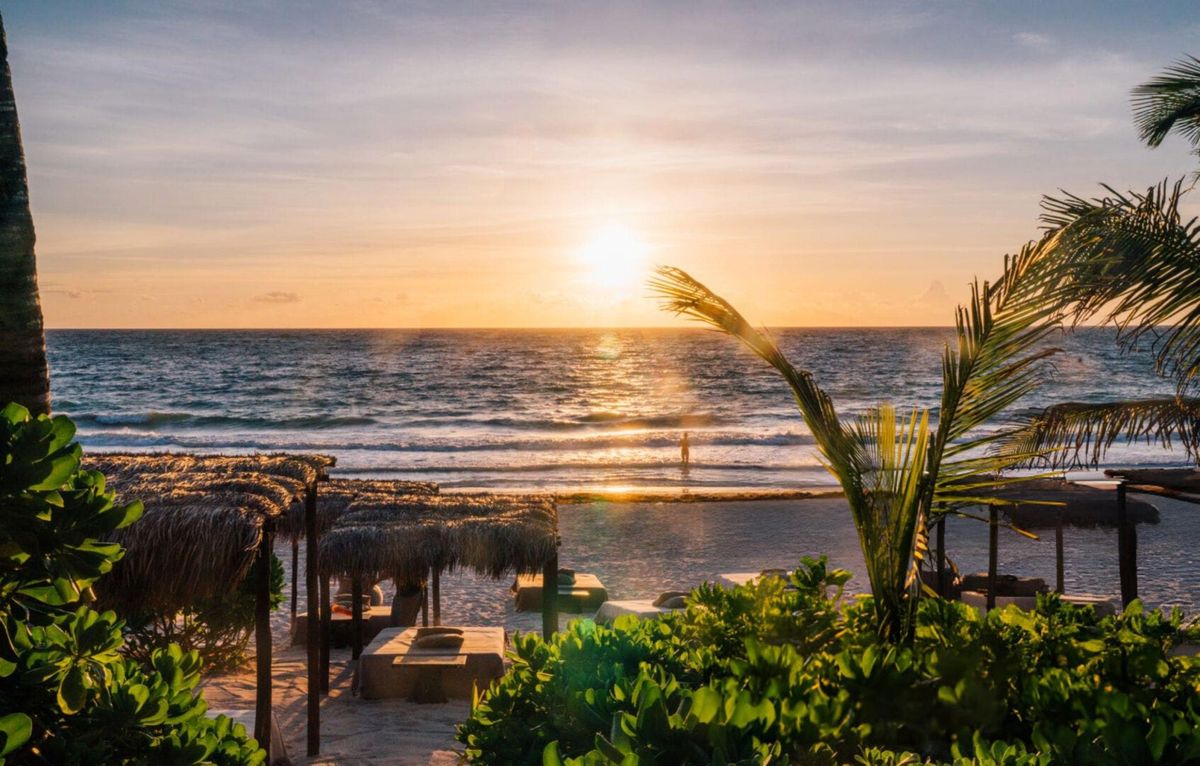
For months, the headlines were brutal. Tulum, once the darling of the Caribbean, had become a ghost town. Tourists vanished, businesses shuttered, and the beaches were buried in sargassum. “Tulum has lost its magic,” they said.
But today, if you stand barefoot on the sand, the narrative feels like a lie that overstayed its welcome. The horizon is crisp again. The turquoise sea hums with light. And in the words of one local café owner, “It’s like the town finally exhaled.”
What was cast as a collapse might actually have been a correction.
A necessary pause, not a fall
When the summer season crumbled, it shook everyone: hoteliers, artisans, taxi drivers, tour guides. The pain was real. But so was the pause. For the first time in over a decade, the town slowed down. Beneath the panic of empty tables and quiet streets, something deeper was happening.
Tulum wasn’t dying. It was resetting.
In the past few years, the town had been choking under its own success: hotel prices spiraled, environmental pressure mounted, and a once laid-back destination turned into a circus of luxury branding and digital performance. Locals watched their town become a backdrop, not a home.
Now, with fewer eyes watching, the town got to work.
Sargassum retreats, the color returns
The shoreline tells the clearest story. After months of heavy sargassum invasion, the sea is reclaiming its blues. Shifts in Caribbean currents, combined with weeks of coordinated cleanup efforts by residents and local authorities, have transformed the coast.
On early October mornings, the water is almost absurdly clear, like glass pulled tight across sand. Fishermen drag boats down the beach. Children run barefoot again. The color has returned, and with it, a mood: relief.
One Tulum lifeguard called it a “natural blessing.” Another local said it more simply: “We missed our sea.”
A new economic balance
With the downturn came humility and change. Hotel occupancy during the summer dropped to historic lows. Many businesses were forced to rethink. The result? A wave of affordability not seen in years.
Mid-tier hotels are now offering deals that echo pre-Instagram-era prices. Luxury properties, instead of tacking on inflated extras, are investing in guest experience. The message is clear: value is back.
From October to December 2025, travelers will find the sweet spot, low crowds, high service, and prices that don’t demand a trust fund. It’s the kind of balance that made Tulum special in the first place.
“Feels like 2010 again,” said a local dive instructor. “When people came to breathe, not broadcast.”
Tulum’s safety evolution
Earlier this year, a string of violent incidents rattled Tulum’s image. For a moment, the fear felt bigger than the town. But since then, state and municipal forces have tightened coordination. Night patrols increased. Lighting improved across beach corridors. A dedicated tourism police unit was deployed.
The impact is subtle, but real. Locals say nightlife feels less frenzied. Streets that once felt volatile now feel more watched, more balanced. No destination is risk-free, especially in a country as vast as Mexico. But the difference now is visibility and intent.
It’s not perfect. But it’s progress.
Public beaches, private resistance
One of the most visible battles in Tulum has long been about access. For years, hotels and beach clubs controlled entry with steep “minimum consumption” rules. This year, that began to change.
Following pressure from residents and civil groups, local authorities opened new public access points to the coast. Enforcement teams are now tasked with protecting the public’s right to enjoy the beach, without needing to buy a cocktail first.
A family of four can now walk to the water without being questioned. Backpackers no longer need to argue their way past velvet ropes. The coast feels, for the first time in years, like it belongs to everyone again.
It’s a small change. But it signals a big shift: from exclusivity back to community.
Local voices rise again
Perhaps the quietest revolution in Tulum is also the most powerful, a shift in mindset. After a decade defined by fast money and unchecked construction, residents are reclaiming the narrative.
Artists, entrepreneurs, and environmental activists are collaborating in new ways. Farmers’ markets are returning. Restaurants are sourcing ingredients from nearby communities. Beach clubs are cutting back on single-use plastics, not because it’s trendy, but because the sea demanded it.
In a small gallery near Aldea Zama, a local artist recently displayed a collection titled “Return to Earth.” The message was simple: slow down, reconnect, remember why we live here.
For many, it’s not nostalgia. It’s survival.
Infrastructure meets introspection
Tulum’s new international airport is now operational, and the Maya Train’s expansion is steadily linking the town to the rest of the Yucatán Peninsula. Ironically, as Tulum becomes more accessible, its soul feels more protected.
The frenzied influencer economy has cooled. Visitors today arrive not just to party, but to reconnect, with nature, with culture, and with themselves.
One solo traveler, sipping coffee on a quiet October morning, put it like this: “I came for the quiet. I stayed because I felt something honest.”
Why now might be the moment
In rare moments, a place becomes more than a destination. It becomes a mirror. Tulum, in late 2025, is one of those places.
The chaos peeled back the layers. What remains is raw, but real. The ocean still sings. The jungle still listens. And the people, they’re rebuilding with quieter hands and deeper intention.
You won’t find the spectacle. You’ll find the soul.
And maybe that’s what matters now.
We’d love to hear your thoughts. Join the conversation on The Tulum Times’ social media.
What do you think this new version of Tulum means for the future of travel?