
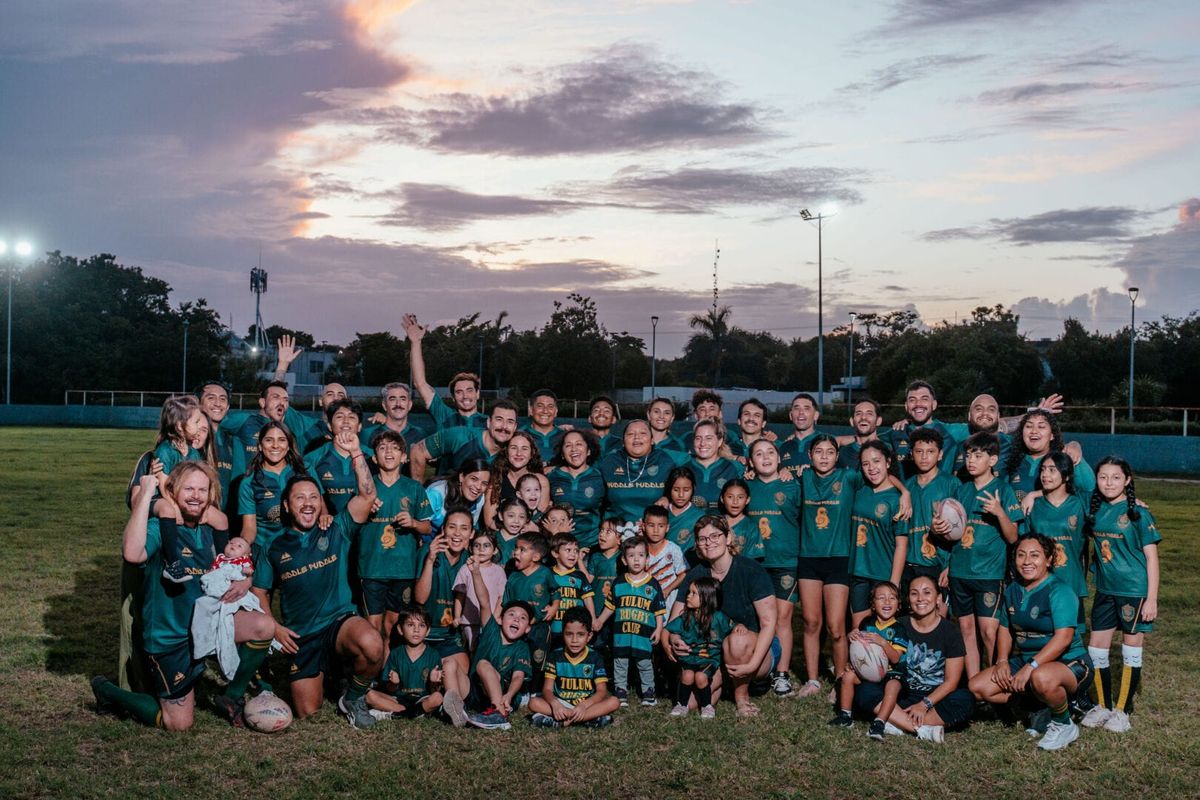
Tulum Rugby Club, known as Malix, will compete on February 14, 2026, in Mexico City in the quarterfinals of the Mexican Rugby League, seeking to defend its national title and secure a place in the semifinals. A victory would not only keep its championship bid alive but could also bring the next stage of the tournament closer to home.
If Malix wins this weekend’s match, the semifinal will be officially hosted in Tulum. However, due to the absence of an adequate rugby field in the municipality, the club would most likely need to stage the match in Playa del Carmen. The scenario underscores one of the club’s long-term objectives: building a proper rugby field in Tulum.
For a team that began as a small community project, the possibility of hosting a national semifinal highlights both its rapid growth and the infrastructure limitations that still shape local sport.

Growth beyond the championship
Tulum Rugby Club was founded by Ricardo “Chaky” Chacón and Paulina Chacón as a community-driven initiative aimed at developing rugby locally while using sport as a tool for discipline and inclusion. In its first year competing in the Mexican Rugby League, the club became the first team from Tulum to win a national rugby championship.
Now in its second season, Malix has qualified again for the national quarterfinals, positioning itself for a potential back-to-back title. That achievement would be rare for a project still in its early competitive years.
But the club’s leaders say the broader mission extends beyond trophies.
“Being one step away from becoming back-to-back national champions is historic for us,” Chacón said. “But even more important is what the project represents for local youth and the wider community.”
The club now operates junior, men’s, and women’s teams, expanding participation across age groups and genders. Several players have been selected for national-level processes and competitions, indicating that the development model is producing athletes capable of competing beyond the local stage.

Infrastructure challenge shapes next step
Should Malix advance to the semifinals, the logistical question of where to play would become immediate. While tournament rules would designate Tulum as the host city, the town currently lacks a regulation-standard rugby field suitable for national-level competition.
As a result, the club would likely relocate the semifinal to Playa del Carmen, the nearest municipality with appropriate facilities.

The limitation has reinforced one of the organization’s strategic goals: establishing a dedicated rugby field in Tulum. Club leadership says it is actively exploring options to make that a reality, though no specific timeline has been announced.
For residents and families involved in the program, the absence of infrastructure directly affects training consistency, youth development, and the ability to host visiting teams locally. A permanent field would anchor the sport in Tulum in a more structured way and reduce dependence on neighboring cities.

Weekly outreach at a local children’s home
Another core element of the project takes place away from formal competition. Each week, members of Tulum Rugby Club visit a local children’s home to provide rugby classes to the children who live there.
The initiative is presented by the club as a central part of its mission. Organizers describe rugby not only as a competitive discipline but as a framework for mentorship, structure, and opportunity for young people who may lack consistent access to extracurricular programs.
By integrating outreach into its regular calendar, Malix has positioned community engagement as a permanent feature rather than a one-time effort. The program also broadens who is affected by the club’s activities, extending the impact beyond registered players and their families.
In a town where youth opportunities are often tied to seasonal employment cycles and tourism-driven work, structured sport programs can provide an alternative routine and network of support.

Key figures sustaining the project
Behind the competitive and social initiatives is a leadership structure that has grown alongside the club.
Sam Gordon serves as Business Manager, overseeing organizational and operational responsibilities. James Talbot is the Men’s Head Coach, guiding the senior men’s team through national competition. Matías Cabaleiro leads as Women’s Head Coach, directing the development and performance of the women’s squad.
Together with founders Ricardo and Paulina Chacón and a network of long-standing supporters, these roles form the operational backbone of the club.
“This project has always been supported by family and close friends who believed in it from day one,” Chacón said. “That foundation is what allows us to keep growing.”
What February 14 could change
The quarterfinal on February 14 in Mexico City will determine whether Tulum Rugby Club advances to the semifinals and moves one step closer to defending its title.
If the team wins, Tulum would formally earn the right to host a national semifinal, even if practical realities require the match to be played in Playa del Carmen. The outcome could also accelerate conversations about building a permanent rugby field in the municipality.
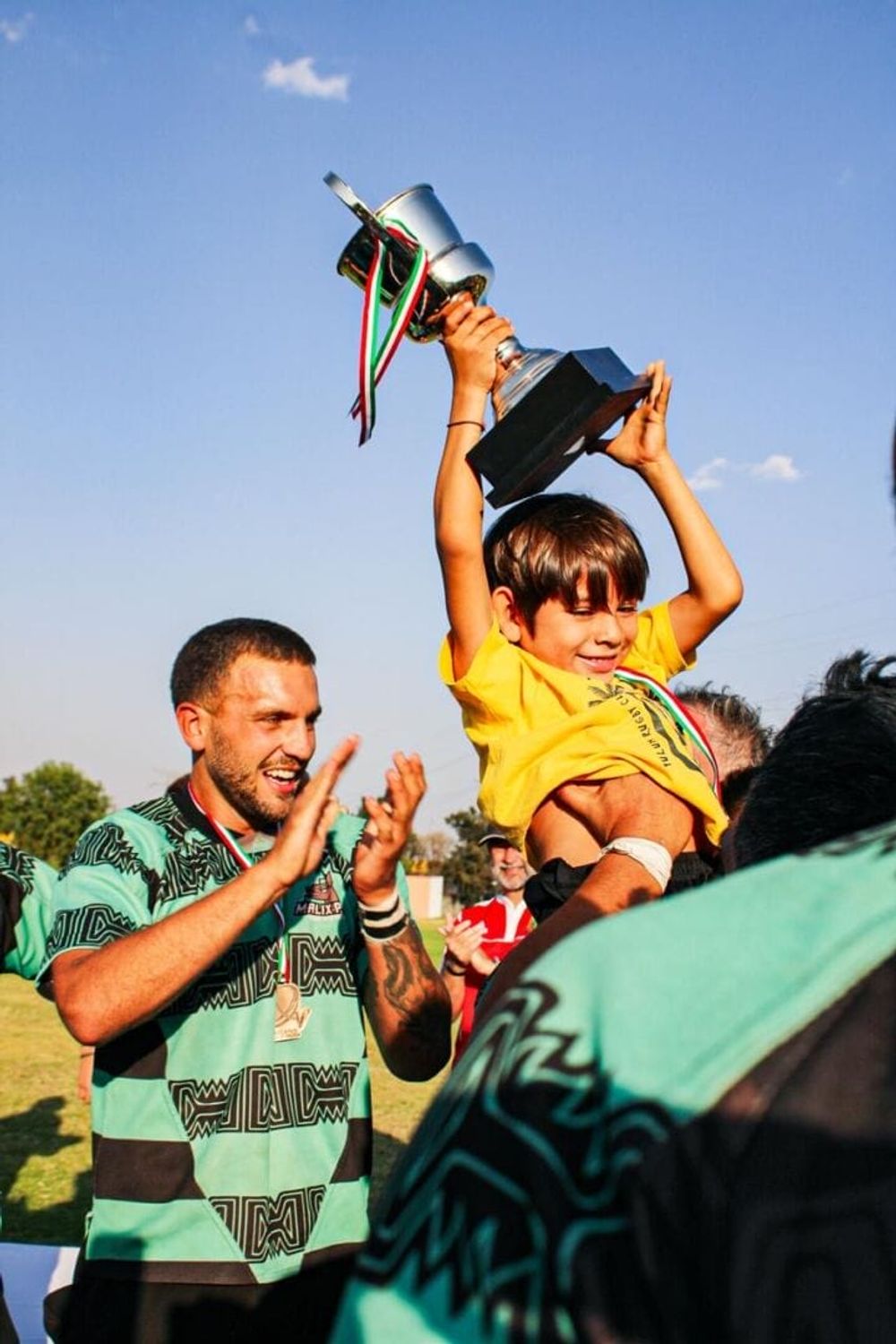
For players, families, and supporters, the stakes extend beyond a single result. Continued success in the Mexican Rugby League would reinforce Tulum’s presence in organized national sport and strengthen the case for long-term infrastructure investment.
The February 14 match, therefore, represents both a competitive milestone and a potential turning point for rugby development in the municipality.
Tulum Rugby Club now heads to Mexico City with the possibility of defending its championship and shaping the next phase of local rugby growth.
Photos: Juan Gaviria @juanggaviria
We’d love to hear your thoughts. Join the conversation on The Tulum Times’ social media.
If Malix advances, should building a dedicated rugby field in Tulum become a municipal priority?