
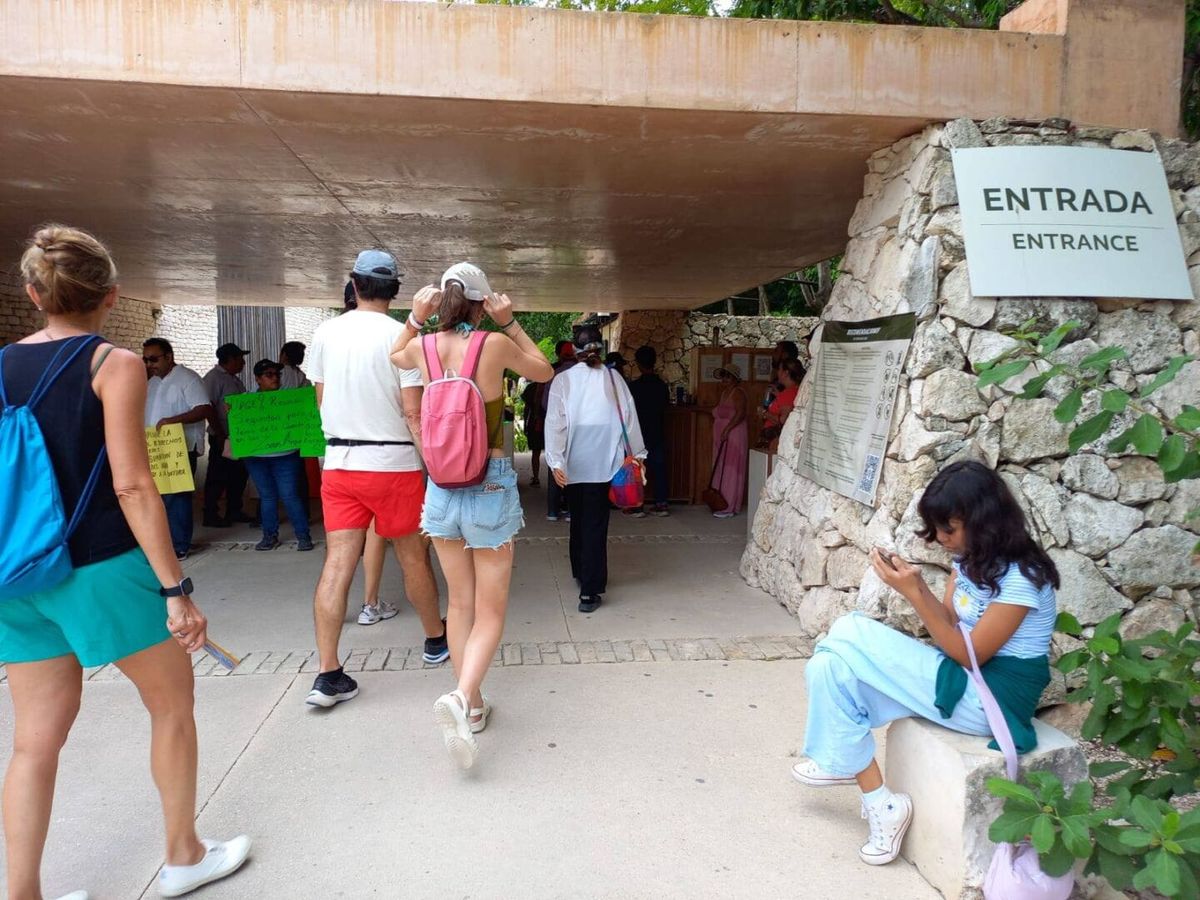
It’s a story that’s been repeating itself all summer in the blistering heat of Tulum. Families, couples, and backpackers with dust on their boots have all made their way to the famed ruins perched above the Caribbean, only to be stopped short by a tangle of fees, rules, and confusion that feels more like a Kafka novel than a world heritage site.
Tourists from across Mexico and around the globe are voicing growing frustration over what they describe as unclear and excessive charges tied to access through the so-called Parque del Jaguar. And they’re not mincing words.
They Told Us One Thing, Then Another
Javier Martínez, a visitor from Veracruz, came to Tulum with his wife, hoping for a smooth cultural detour during their vacation. What he encountered instead was a bureaucratic maze.
“You get one price, then they change it. First they say 250 pesos per person, then you learn it’s another 100 just to step into the archaeological zone,” he said, standing beneath the blinding midday sun. “It ended up being 350 per person. Expensive, and nobody tells you that upfront.”
For Martínez, the frustration didn’t end at the ticket booth. Despite paying for access to the entire park, he was told they couldn’t visit the miradores, the scenic viewpoints overlooking the coastline. That wasn’t what he came for. “We only wanted to see the ruins,” he added, clearly exasperated. “Now they say it’s mandatory to pay for the whole package. It’s just poorly organized.”

Chaos, Not Culture
María Torres from Mérida, Yucatán, echoed the sentiment with blunt honesty. “Es una desorganización.” Her voice carried the sharp edge of someone who had seen better. “It’s annoying to make multiple payments just to enter the ruins. This doesn’t happen in Uxmal or Chichén Itzá.”
Beyond the red tape, there’s also the physical reality. Bathrooms are reportedly out of service. Water fountains don’t work. Services fall far short of expectations, especially for a site of this global renown.
Sticker Shock for International Visitors
For international guests, the confusion hits harder, and the costs add up faster.
José Hernández and Antonio Oliva came from Spain with their families, wide-eyed and eager to explore one of Mexico’s crown jewels. But that excitement quickly turned to disappointment.
“We just wanted to see the ruins,” said Antonio. “Instead, we were forced to pay for access to the whole park, even though we didn’t use it.” For his eight-member group, the cost ballooned quickly to 455 pesos per person, plus the separate archaeological entrance fee.
José, traveling with children under 13, was surprised to be charged for them too, despite the tickets clearly stating that minors were exempt. “It doesn’t make sense,” he said. “And after this? I don’t know if we’ll come back.”

A Rupture in Long-Standing Norms
Even seasoned local guides are feeling the impact. One man, his weathered cap and sun-lined face evidence of decades spent walking these paths, has guided visitors through Tulum’s ruins for over 35 years. He’s never seen anything like this.
“Now they’re making us pay for a bracelet just to enter,” he said, his tone caught somewhere between disbelief and quiet fury. “This has always been INAH’s responsibility, the Instituto Nacional de Antropología e Historia. Charging for access? That’s never been part of the deal.”
To be clear, the INAH has historically managed and preserved Mexico’s archaeological zones. What’s unfolding at Tulum now suggests a shift, or perhaps a breakdown, in that traditional stewardship. And guides, caught in the crossfire, are being forced to adapt.
What’s Really Going On at Parque del Jaguar?
That’s the looming question. The Parque del Jaguar initiative was announced as a grand project meant to protect the environment, consolidate tourist infrastructure, and create a new model for access to the area. In theory, it sounded noble. In practice, it has been murky.
The layered fees, limited transparency, and reportedly inconsistent enforcement are undermining that vision. Visitors say it feels less like conservation and more like exploitation.
Growing Pains or Systemic Flaws?
Could this be a case of poor rollout and lack of communication? Possibly. But to the average tourist with limited time and a tighter budget, the answer doesn’t matter. What matters is that the experience they came for, a walk through history along the windswept cliffs, now comes packaged with confusion, surprise charges, and the kind of resentment that lingers long after the vacation ends.

Why It Matters
Tulum isn’t just a beach destination. It’s a symbol. Of ancient Maya ingenuity. Of Mexico’s cultural pride. Of tourism’s delicate dance between preservation and profit. When access to that symbol becomes a hassle, or worse, a deterrent, it risks more than a few bad reviews.
If left unchecked, this pricing controversy could tarnish the very thing Parque del Jaguar claims to protect. And that’s a price the region can’t afford.
We invite you to share your perspective. Join the conversation through The Tulum Times’ social media and stay informed with our continuing coverage of Tulum’s evolving tourism landscape.