

A humid dusk settles over Tulum’s main drag as reggae music drifts from a beach bar. Tourists clink glasses under palm fronds, their laughter mixing with the distant crash of waves. And just down the road, a police truck idles by a taco stand, red and blue lights flickering against mural-covered walls. In that moment, paradise shows its other face – subtle, vigilant, and very real. Tulum safety for tourists might not make it onto the travel brochures, but as the evening’s first stars appear, it lingers quietly in the background of every conversation, every cautious glance, every careful step into the night.
Crime and Law Enforcement: Paradise’s Thin Blue Line
“Is it safe here, honestly?” a wide-eyed traveler whispers at the hotel bar, the question hanging as heavy as the tropical night. In truth, Tulum’s postcard veneer has a few cracks. The town’s main beach zones and downtown streets do feel generally safe – there’s a reassuring police presence cruising past trendy cafes and taquerías. Yet every so often, reality intrudes. Locals still talk about that night in 2021 when cartel rivalries flared and stray bullets found two unsuspecting tourists dancing at a bar. One moment it was music and neon, the next it was sirens and disbelief. It was a rare tragedy, but a stark reminder that even paradise isn’t crime-proof.
Most days and nights in Tulum are thankfully far more ordinary. Petty crime is the usual concern: a stolen phone off a café table, a purse that disappears during a beachside DJ set. These are crimes of opportunity, not malice – the kind that happen anywhere crowds let their guard down. The Tulum safety for tourists ethos here is simple: enjoy yourself, but keep an eye on your stuff like you would back home. Don’t flash wads of cash or wander down sketchy side streets alone at 3 AM. Basic, yes, but effective.
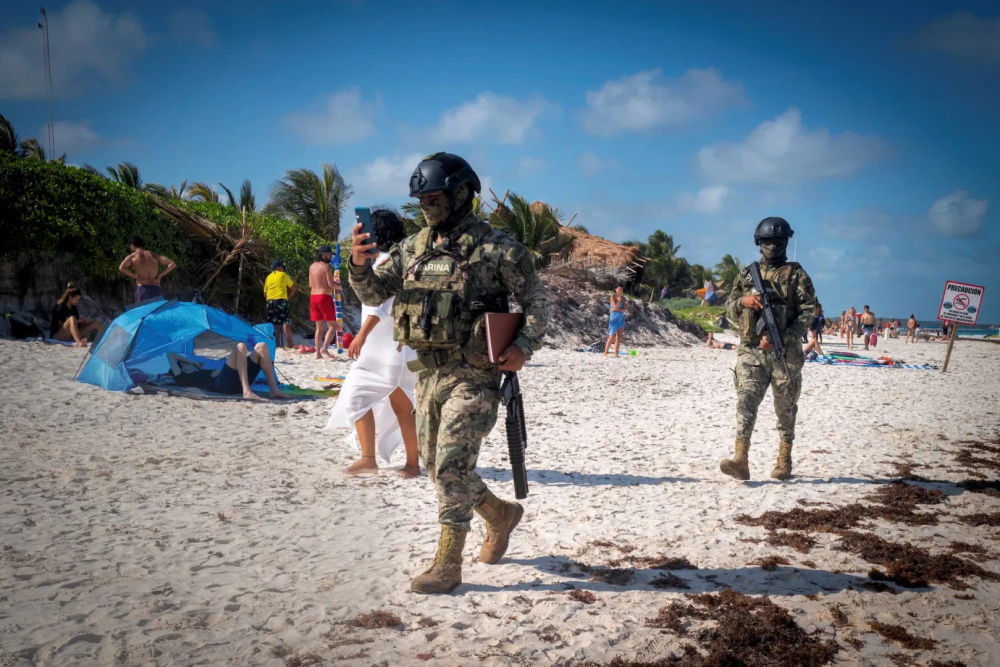
Law enforcement is visibly working to keep it that way. In recent years, federal police and National Guard troops have been deployed to reinforce the local cops, especially after those headline-grabbing incidents. You’ll spot their pickups and sand-brown uniforms along the hotel zone road or parked near the clubs on Saturday nights. For many visitors, seeing armed officers in body armor is jarring against a backdrop of coconut palms. But for the most part, those officers are polite, even friendly, if you meet them. They’re there to reassure tourists and send a message that troublemakers aren’t welcome.
Of course, not every uniform inspires confidence. Talk to expats over a few beers and you’ll hear the other side: the occasional corrupt cop pulling over rental cars for a “fee,” or the half-hearted investigations when a theft is reported. It’s a known issue that some police see tourists as walking ATMs to shake down with bogus fines. And yet, many officers truly take pride in protecting their town. It’s a mixed bag – a dance between genuine guardians and a few bad apples. One long-time bartender confided, “Ninety-nine times out of a hundred, the police will help you or leave you alone. That other time, well… just be respectful and firm. And maybe keep a 500-peso bill tucked in your shoe, just in case.”
Still, by and large, Tulum’s crime rates remain low compared to big cities. This is a small community of 46,000 hosting nearly 2 million visitors a year, and the vast majority of those sunburnt adventurers head home with nothing worse than mosquito bites and a mild hangover. The local businesses, from dive shops to yoga studios, quietly band together to watch out for their guests. It’s not uncommon for a shopkeeper to chase down a pickpocket or a fellow traveler to warn you that your backpack is unzipped. Safety in Tulum is a communal effort, a constant, unspoken pact between the people who love this place and those just discovering it.

Health and Medical: Care Under the Palms
Midway through my stay, I found myself sitting in a small clinic off Tulum’s main road, watching a gecko skitter across the ceiling while a doctor poked at my ankle. I had stepped on a rogue seashell in the surf and earned a deep cut – a minor vacation hiccup, but it got me an intimate tour of Tulum’s healthcare scene. The verdict? It’s basic but capable, much like the town itself was a decade ago.
Tulum’s medical facilities range from a public health center to a handful of private clinics, and they cover the fundamentals pretty well. The public clinic, Centro de Salud, is where locals go for check-ups, stitches, or a quick vaccine. Tourists can walk in too, though expect Spanish to be the language of the hour, and a waiting room humming with overhead fans. Care is low-cost (often free for locals) but no-frills. For something more serious – or if you just prefer English-speaking staff and air conditioning – the private options are the way to go. Hospital de Tulum and CostaMed are the two biggest private facilities, and they’re surprisingly well-equipped for a beach town clinic. You can get X-rays, decent emergency care, and a doctor who likely speaks fluent English and maybe a bit of French. Of course, that comfort isn’t cheap; without insurance, you’ll be swiping your credit card for a hefty sum. But when you’re doubled over with a kidney stone at 3 AM, you’ll be grateful it’s there.
For everyday traveler ailments, the pharmacy is your best friend. Tulum has a pharmacy on nearly every other block – neon crosses and “Farmacia” signs beckoning you in for everything from antibiotics to aloe vera gel. Got a savage sunburn or the infamous Montezuma’s Revenge (traveler’s diarrhea)? The pharmacists have seen it all and will hand you the cure with a knowing smile. Often, you can even find a little consulting room in the back with a doctor on duty; you slip them about $5 worth of pesos for a quick exam or prescription. It’s an odd comfort knowing that in a town where people sip green juice and practice yoga at dawn, there’s also an army of pharmacists quietly saving vacations one upset stomach at a time.

Still, healthcare in Tulum has its limits. There’s no large hospital with cutting-edge specialists on standby. Serious trauma or complicated emergencies get stabilized here, then sent up the highway to Playa del Carmen or Cancun, where the big hospitals are. Suppose you have a heart condition or any risky medical issue. In that case, it’s best to come prepared – bring necessary medications, know the location of the nearest decent clinic, and definitely invest in travel insurance that covers medical evacuation. I met one elderly expat at a café who chuckled about this: “Tulum is a great place to heal your soul, but if it’s your body that needs serious fixing, you get on a damn ambulance to Playa.”
On the bright side, minor health hiccups are handled smoothly more often than not. An Australian traveler I encountered had a nasty coral scrape from a cenote dive; she got it cleaned and bandaged at a private clinic and was back on the beach by afternoon, armed with antibiotics and a tetanus shot. The key is not to panic – help is available, if not next door, then an hour up the road. In the end, Tulum’s approach to healthcare is a patchwork of local heart and tourist dollars: a mix of simple clinics with bighearted medics, and modern facilities carving out a foothold as the town grows. It’s far from a medical tourism hub, but it’ll take care of you well enough when paradise bites back.

Getting Around Safely: Taxis, Cars, and Bikes
Tulum is small enough that you can hear the nightlife thumping on the beach even when you’re in the middle of town. But that doesn’t mean everything is a quick walk away. How you get around can make or break your sense of security here. Luckily, there are options – each with its quirks.
Taxis are Tulum’s lifeline after dark. On a sweltering midnight, I slid into the back of a white taxi, the cracked vinyl seat sticking to my sunburned skin. “Hotel zone, por favor,” I mumbled, and the driver nodded, rosary beads swinging from his rearview mirror as he pulled into the jungle road. There’s no Uber to hail (local taxi unions have kept rideshare apps at bay), so these cabs rule the roads. For the most part, they’re safe and reliable if not exactly cheap. Drivers often don’t use meters here, so negotiating the fare before you set off is just part of the dance. It feels awkward the first time – a gringo haggling over 50 pesos – but it’s expected. And to be fair, many drivers are honest folks who’ve been shuttling tourists for years; they’ll get you home in one piece while giving you tips on the best taco al pastor in town. The key is to use official taxis (brightly painted with numbers) and avoid hopping into any random car offering a ride. By day, taxis are everywhere you look, honking gently at backpack-laden pedestrians in case you need a lift. By night, they’re your best friend when you’re too tipsy or tired to bike back to your bungalow. Just keep your wits: sit in the back seat, keep Google Maps open if you’re unsure of the route, and have small bills (some drivers “forget” to make change).
Then there’s the quintessential Tulum bicycle – practically a symbol of this town’s free-spirited vibe. In the mornings, you’ll see sun-kissed visitors weaving on rented bikes, a surfboard under one arm and a woven beach bag bouncing in the front basket. Biking around Tulum is pure joy in daylight: the terrain is flat, distances are short, and you get the wind in your face as you pass murals and coconut stands. The community even built a dedicated bike path that stretches from town towards the beach, painted bright red and shielded by palm trees. It’s idyllic… until it’s not.

Come nightfall, that path can plunge into patches of darkness where streetlights give up. I remember pedaling back one evening after sunset; the jungle chorus was in full swing, and my bike’s dinky headlamp barely cut the blackness. Every shadow made my heart skip. Was that a stray dog or just a palm frond? I couldn’t tell, and I pedaled faster. The lesson landed like a thud on a pothole: biking at night in Tulum is a bad idea unless you’re fully prepared – bright lights, reflectors, maybe a local friend riding along. Too many drivers speed on that narrow beach road, and they’re not expecting an unwary cyclist in the gloom. So enjoy the bike by day, feel like a carefree kid again, but after dark, swallow your pride and grab a cab.
For those who crave independence, rental cars offer freedom to roam beyond town, to hidden cenotes, distant ruins, or just down that random dirt road to see where it leads. Driving here is relatively straightforward: there’s basically one main highway and a grid of smaller roads in town (half of them suddenly turning to bumpy dirt the moment you think you’re lost). If you rent a car, keep a few things in mind. First, the rules of the road are… suggestions. Expect local motorists and trucks to pass you with inches to spare or stop without warning. Topes – the infamous Mexican speed bumps – pop up everywhere, sometimes marked, often not. I learned quickly to watch the car ahead of me; if it slows down for no reason, there’s probably a big bump or a roaming iguana on the asphalt. Parking in Tulum is mostly free and chaotic – you’ll see a Maserati next to a beat-up VW bug on the same sandy curb. Break-ins aren’t rampant, but don’t tempt fate: hide your bags, lock up, and park in lit areas when possible. And about the police: yes, they do love to pull over rental cars for minor infractions. Maybe you were going 5 km over the limit, maybe you weren’t – either way, you might find yourself in an awkward chat with a stern officer. Stay calm, polite, and if they hint at a “fine” to be paid on the spot, insist gently that you’d prefer an official ticket and receipt. Often, they’ll wave you off, deciding you’re not worth the paperwork. It’s a nervy moment, but part of the road trip stories people bring back from Mexico.

Beyond that, there are buses and shuttles connecting Tulum to the rest of Yucatán. The ADO buses are comfy, air-conditioned giants that lumber between cities – a very safe bet if you’re heading to Cancun or Playa del Carmen without a car. And colectivos (shared vans) zip locals and budget travelers around the region; they’re cheap and usually safe, if a bit cramped and hot. Just know they won’t leave until they’re full, and the ride can feel like a rollercoaster as the driver races to make up time on the highway.
In short, getting around Tulum is part of the adventure. It can be as chill as a flip-flop bike ride to the smoothie bar, or as white-knuckle as dodging a wayward taxi at an intersection. Embrace it with a plan: choose the mode that matches your mood and the time of day. Daylight gives you more leeway – bike or drive, feel the breeze, explore those backroads. But when the stars come out, err on the side of caution. Hop in that taxi, even if the driver’s 80s rock playlist is blasting and he takes the long way around. It’s a small price to pay to arrive safe, still humming with the day’s memories.
Nature’s Hazards: From Sunburns to Storms
Tulum’s natural beauty is the stuff of dreams – but every dream has its dangers lurking in the shadows. This is a place where the sea can be a playful friend one day and a fierce foe the next. I remember a local lifeguard showing me a stretch of beach one morning, the water as clear and calm as a swimming pool. “Mira,” he pointed to an invisible line past the gentle breakers. “Underneath, there’s a current that can carry you to Cuba if you’re not careful.” I laughed at first, but his eyes stayed serious.

Sure enough, that afternoon the wind picked up and those once-tranquil waves turned into thundering whitecaps. The Caribbean here is usually mellow, but it has its moods. Rip currents – strong, narrow flows of water – sometimes lurk beneath the surface. They’re not obvious until you’re caught in one, and by then you’re already being yanked away from shore faster than you can shout ¡Ayuda!. The rule is simple: respect the posted beach flags (red for danger, yellow for caution, green for safe) and never assume the ocean is as tame as it looks from your beach towel. Several tourists each year learn this the hard way. Don’t be one of them. If you’re not a confident swimmer, stick to waist-deep water or play in the shallows of a calm cenote instead.
Speaking of cenotes – those magical turquoise sinkholes in the jungle – they too demand respect. It’s easy to forget, as you float in a cool cavern with sunlight filtering through the vines, that you’re essentially in a flooded cave system. But jump off a ledge without checking the depth or wander into an unmapped cavern, and you could end up in serious trouble. Always wear a lifejacket if provided, and listen to the local guides who know those waters like family. A veteran dive instructor once told me exploring a cenote is like “entering the veins of the earth” – awe-inspiring, but stray from the path and you’re asking for danger.

Then there’s Tulum’s jungle side – the wildlife that calls this paradise home. Truth be told, most of the critters would rather avoid humans, and you’re unlikely to meet anything scarier than a bold raccoon rifling through the garbage or an iguana sunning itself on a ruin. But it’s best to know what’s out there. Mosquitoes are an annoyance that can turn more serious if they carry dengue or other illnesses, so a good bug repellent is worth its weight in gold come dusk. No-see-ums (those tiny sandflies) can leave you polka-dotted with itchy bites if you nap on the sand at sunset. In the jungle brush, there are snakes – including the venomous fer-de-lance – but sightings near tourist spots are extremely rare. Still, watch your step when hiking off the beaten path and don’t go poking under logs or rocks. If you do spot a snake, give it a wide berth; it wants as little to do with you as you do with it. The same goes for spiders and scorpions, which occasionally sneak into eco-cabañas or shoes left outside. Shake out your boots in the morning, and you’ll almost certainly only ever find sand.
Sea life has its perils, too, in small doses. Tulum’s reefs and shallows are home to stingrays and sea urchins – beautiful to see, painful to step on. The old shuffle-your-feet trick works for stingrays: they’ll skitter away if they feel you coming. And if you’re snorkeling, remember that fire coral isn’t actually on fire, but brush against it and you’ll feel a burning sensation that lives up to the name. Jellyfish drift through on occasion, more common in warmer months; their stings are seldom dangerous, but they sure do smart. A basic travel first-aid kit with vinegar or sting ointment can save you a lot of agony. And never touch or harass sea turtles (which nest on Tulum’s beaches) – aside from being protected and precious, a bite from an annoyed turtle is a story you don’t want to feature in your vacation album.
Finally, keep one eye on the sky, especially during hurricane season (June through November). Most of the year, Tulum’s weather ranges from postcard-perfect to a bit unpredictable but manageable – a sudden thunderstorm that rinses the heat off the day, or an unseasonal cold front that makes you reach for a light jacket before it disappears by noon. But come late summer and fall, the big storms can roll in off the Atlantic. The town has weathered a few hurricanes and tropical storms over the decades. Hotels and locals know the drill: if a hurricane is inbound, you’ll hear about evacuation plans or be asked to hunker down in a safe structure. It rarely comes to that, but it’s wise to have a rough plan. Sign up for weather alerts, and keep your travel documents and a stash of water and snacks handy if the forecast looks ominous. Even lesser storms can knock out power or turn the roads into lagoons temporarily. I once spent a long, eerie night by candlelight in a Tulum hostel as a tropical storm raged outside, palm trees bent nearly horizontal. By morning, the floodwaters were receding, the sun was poking through, and life went on – slightly soggier but no worse for wear.

Amid all these natural threats, it’s important to remember that millions of people enjoy Tulum’s outdoors every year without a scratch. The key is the same as anywhere: know what you’re up against and use common sense. Put on high SPF sunscreen and a hat so the sun doesn’t fry you like a churro. Drink water even when you think you don’t need it – the jungle heat can creep up on you. Close the screen door of your cabana to keep the curious critters out. And when the ocean beckons, admire her, love her, but never turn your back on her. Nature in Tulum is a wonder, a partner in your adventure, but she expects you to dance to her rhythm – and she doesn’t forgive those who don’t listen.
Embracing Paradise Safely
At the end of the day, Tulum’s safety for tourists comes down to balance. It’s the balance between letting go and staying alert, between adventure and a dash of caution. Yes, there are two sides to this paradise – the bliss and the risks – but they coexist in an uneasy harmony that locals and savvy travelers know well. After all, the same forces that make Tulum enchanting – the wild nature, the vibrant nightlife, the feeling of freedom – are the ones that require a respectful touch and a watchful eye.
What sticks with me most are the people I met who quietly keep the gears of safety turning. The off-duty paramedic dancing at a fiesta, who still glances around to check everyone’s okay. The old fisherman who warns a young swimmer away from the rough surf recalls a lesson from his youth. The taxi driver who waits an extra minute after dropping you off, to see you unlock your hotel gate safely. These human guardians don’t wear capes or badges (well, some do), but they form a community quilt of care and vigilance. They remind us that in Tulum, as anywhere, safety is a shared story – one where everyone has a part to play.
Come to this beautiful town with your eyes open and your heart wide open. Swim in those cenotes, dance under the stars, and bike to the ruins at sunrise. Soak up every bit of magic Tulum offers, don’t check your common sense at the door. Think of it like learning the steps to a new dance: a little practice, a little awareness, and soon moving wisely through Tulum becomes second nature, allowing you to embrace its wonders without worry.
Safe travels, and we look forward to seeing you under the palm trees.
Join the conversation on The Tulum Times’ social media and share your own stories and tips – we’re all ears.