
Sargassum isn’t just an unsightly patch floating offshore anymore. In Tulum, it’s become a daily adversary, an invasive guest that refuses to leave. But while the seaweed keeps coming, so does the response, early, relentless, and increasingly coordinated.
Tulum’s Beaches Under Siege: What’s Happening With Sargassum in 2025?
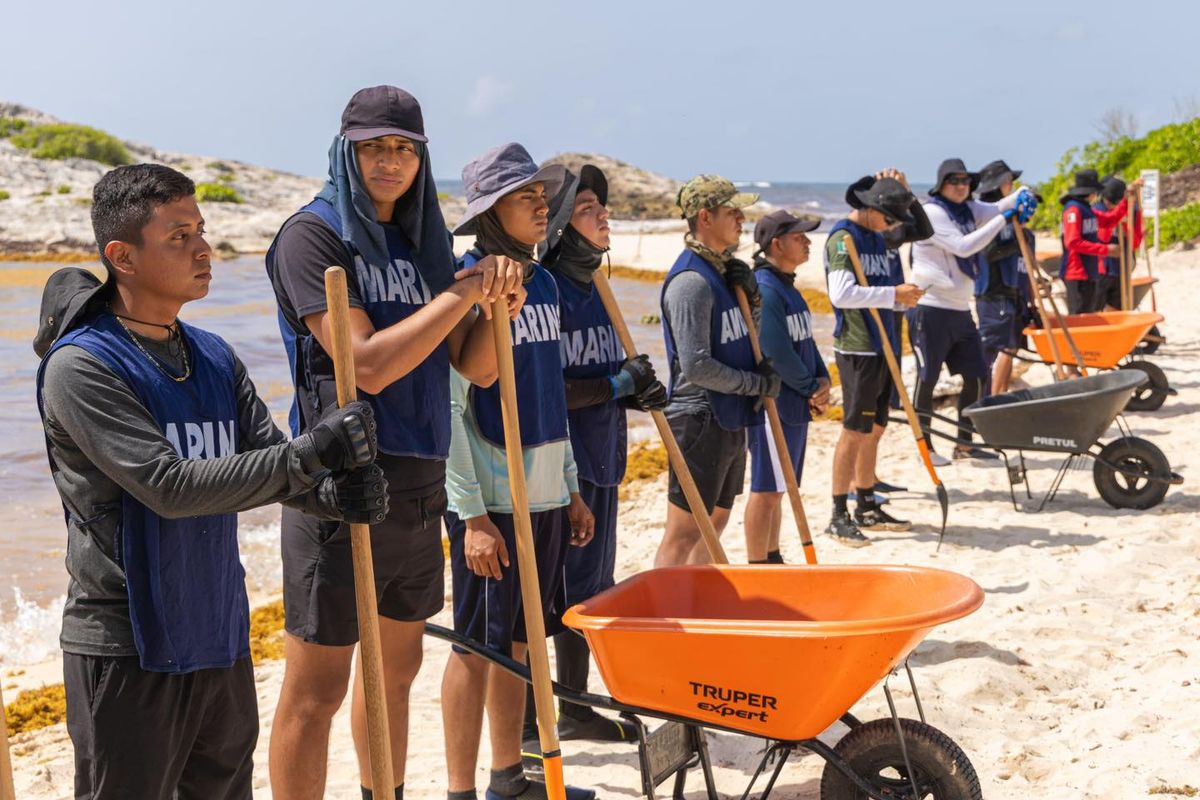
As July rolled in, the Mexican Navy stepped up, deploying 50 sailors to support cleanup efforts on Tulum’s beaches. They’re now working alongside the dedicated teams from Zofemat, the Federal Maritime-Terrestrial Zone agency. Together, they face a natural onslaught that has turned beach preservation into a full-scale environmental contingency.
Juan Antonio Garza, director of Zofemat in Tulum, confirmed that the initiative is part of a broader strategy driven by Mayor Diego Castañón Trejo. It’s a rare moment of true collaboration between municipal, state, and federal authorities.
“This year, the volume of sargassum is far greater than what we experienced in 2024,” Garza explained. “We’re seeing an atypical pattern that’s overwhelming in some areas.”
Over 2,000 Tons of Sargassum Removed, and Counting
So far, over 2,000 tons of sargassum have been removed from Tulum’s beaches, and that’s just in the first half of the year. For comparison, the entire haul in 2024 was 1,325 tons. That staggering increase has prompted a major escalation in both manpower and infrastructure.
Just this week, 70 more Navy personnel arrived to reinforce cleanup operations in Punta Piedra, one of the hardest-hit areas. Local brigades, already stretched thin, welcomed the backup. According to Garza, some zones, like Jaguar Park, had become too much for city crews alone.

Cleanup starts at 6 a.m. daily and goes well into the afternoon. Workers battle under the rising sun, scraping, hauling, and clearing tons of seaweed in what Garza calls a “titanic effort.” It’s not a metaphor, it’s the reality of coastal management during sargassum season in the Riviera Maya.
Which Beaches Are Most Affected by the Sargassum Bloom?
Sargassum landings have been especially severe in key tourist zones, including Playa Paraíso, Playa Pescadores, and the iconic Punta Piedra. These are the crown jewels of Tulum’s coastline, and when they’re blanketed in seaweed, the effects ripple through the local economy.
“We know the hospitality sector is concerned,” Garza said. “That’s why we’re concentrating efforts in areas with the most tourism activity.”
But not all beaches are under siege. Areas like La Comalcalco, Tankah, and parts of Tulum National Park are still in good condition. Authorities are trying to preserve these stretches as safe, scenic spots for both locals and visitors.
As a preventive measure, 2,500 meters of sargassum barriers have already been installed, particularly around the Jaguar Park, to intercept the algae before it hits the sand.
Coordinated Efforts Between Navy, Zofemat, and Tourism Sector
This year’s approach isn’t just about shovels and sacks. It’s strategic.
Zofemat is working closely with the Navy and the state of Quintana Roo to create a more sustainable cleanup model. There’s even talk of a new plan for 2026, one that would take into account Tulum’s wave dynamics, ocean currents, and prevailing winds. In other words, a “tropicalized” strategy tailored to the town’s unique geography and challenges.
The local tourism sector is also stepping up. Hotel owners, tour operators, and service providers are joining cleanup efforts. Their goal is simple: keep Tulum looking like the paradise people fly thousands of miles to experience.
“We’re collaborating with the business community because we want this destination to shine,” said Garza. “It has to be in top condition for the vacation season.”

Protecting More Than Just Sand: Tulum’s Sea Turtles
While sargassum dominates headlines, another delicate story is unfolding in the sand, sea turtle nesting season. Cleanup teams have been trained to recognize turtle nests and report them immediately to Tulum’s Ecology Department.
Garza emphasized that no looting incidents have been reported so far this year, and conservation efforts remain strong. “Our crews are trained to flag any nests right away. This ensures they’re protected according to environmental protocols.”
It’s a balancing act. Heavy cleanup operations must coexist with fragile nesting sites. Bulldozers can’t disturb what nature is trying to preserve.
What’s Next for Tulum’s Coastal Defense?
Tulum isn’t just cleaning beaches. It’s building resilience, one tide, one sunrise, one shovel at a time.
The fight against sargassum is as much a logistical operation as it is an ecological one. And while this year’s seaweed surge may be bigger than anything seen before, so too is the town’s response.
It’s not just about clearing the shore. It’s about defending a way of life, one where tourism and biodiversity don’t just coexist, but thrive together.