
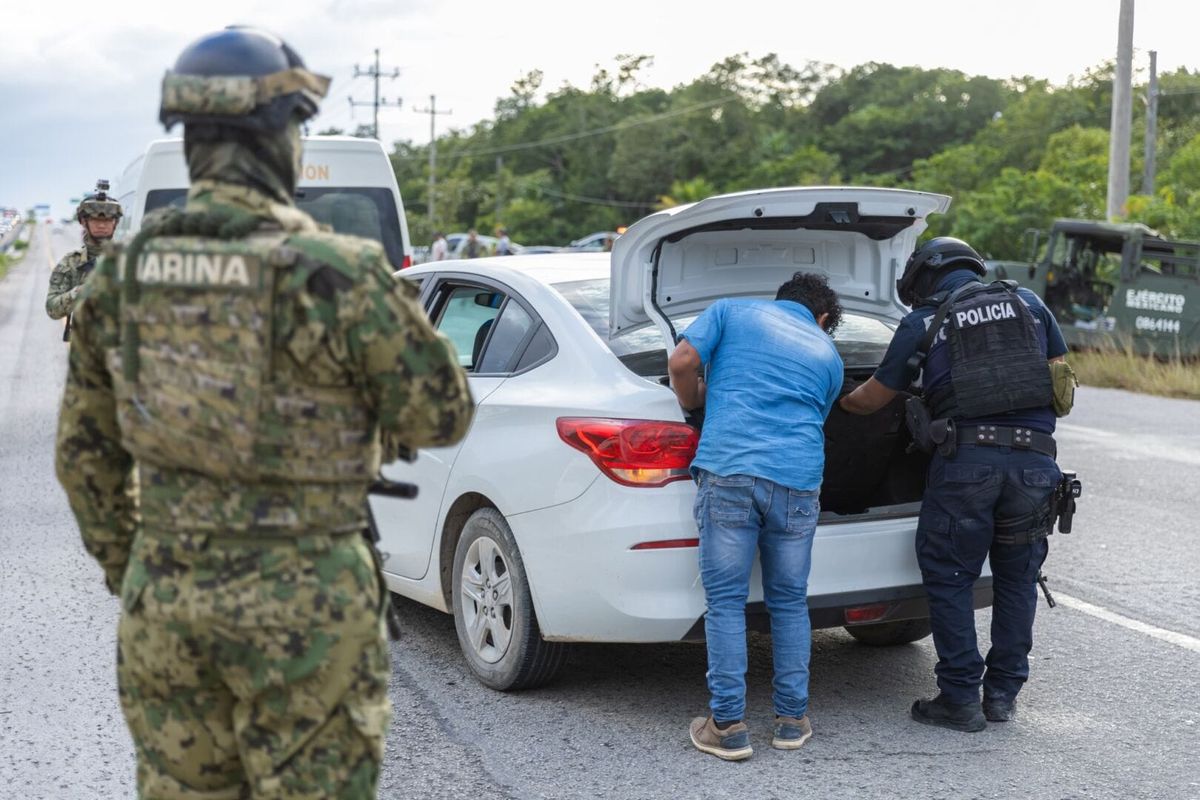
Tulum security appears to be entering a new phase as official data shows a steady decrease in homicides and a relatively small share of crime compared with the rest of Quintana Roo. The latest figures, presented by State Attorney General Raciel López, indicate that Tulum accounts for just 3.7 percent of the state’s registered offenses so far this year. The announcement has raised measured optimism among residents who have grown accustomed to fluctuating perceptions of safety in one of Mexico’s most prominent coastal destinations.
Authorities attribute this shift to strengthened coordination among federal, state, and municipal institutions. They argue that the past year has produced more disciplined joint operations and better intelligence sharing. It is a claim that seems plausible, even if the long-term sustainability of these results remains uncertain.
Why authorities say the current trend matters for Tulum
Officials emphasized that 152 people linked to criminal groups have been detained in recent months, including 82 individuals tied directly to organizations operating in the municipality. These arrests could be contributing to the current drop in homicides, though analysts caution that organized crime groups often adapt quickly to enforcement pressure.
A brief conversation outside a local café illustrates how these dynamics shape daily life. A shopkeeper recalled the unease felt two years ago when conflict between rival groups appeared more visible. “People forget how intense it was for a while,” he said in a tone that blended realism with restrained hope. It is a sentiment echoed across many corners of Tulum and the Riviera Maya, where residents recognize improvements but remain aware of lingering vulnerabilities.
When homicide numbers shift but underlying tensions persist
The Fiscalía’s report states that all homicides registered in Tulum this year are linked to confrontations between rival criminal groups, primarily disputes over drug distribution territories. The agency stressed that there have been no confirmed cases involving targeted attacks against civilians or tourists unrelated to these internal conflicts.
The explanation aligns with regional patterns seen across Quintana Roo, where selective violence between criminal organizations often spikes in areas of rapid economic growth. But it also invites a broader question: how can local authorities maintain relative control in a region that continues to attract external criminal actors seeking a foothold in lucrative markets?
One sentence from the press conference stood out for its stark clarity: “Criminal rivalry, not community targeting, defines the current incidents.” It has already circulated widely on social platforms and may shape public understanding of the situation.

A land dispute in Akumal tests the limits of easy narratives
Not all violent incidents fit the broader pattern. The case of Melchor, reported in Akumal, remains under investigation and appears to stem from a conflict over land transactions rather than organized crime activity. Officials describe it as a reminder that Tulum’s growth brings legal and property-related disputes that can escalate unpredictably.
Land issues across the Riviera Maya have become increasingly complex as demand rises and documentation disputes multiply. Legal experts note that rapid urban expansion, a diverse pool of investors, and inconsistent land records can create conditions where personal or business disagreements turn volatile. The Melchor case appears to fall into that category, underscoring that not all security challenges can be attributed to the same root cause.
And that nuance matters. Without it, public debate risks oversimplifying the local security landscape or ignoring the everyday tensions produced by development pressures.
Inside the push for sustained interagency cooperation
Security officials insist that coordination across institutions has become more systematic. Joint patrols, intelligence-driven detentions, and targeted operations have been deployed to reduce criminal mobility across Tulum and neighboring municipalities such as Solidaridad and Felipe Carrillo Puerto. These efforts also involve the seizure of weapons, drugs, and vehicles linked to high-impact crimes.
Such measures, while not new in Mexico, appear more consistent now than in earlier years. Several local officers quietly acknowledge that coordination previously depended heavily on individual leadership styles rather than structured protocols. The current approach, they say, feels more disciplined.
The Tulum Times reviewed statements from security officials who argue that keeping these mechanisms active is essential. They highlight that any pause in cooperative work could allow external groups to reassert influence in the region’s lucrative tourism corridors.

How population growth and tourism complicate Tulum’s security
Even with improved indicators, Tulum faces structural challenges. Population growth has outpaced urban planning, creating neighborhoods that are still stabilizing both socially and economically. Tourism remains the engine driving the local economy, but it also creates opportunities for illicit markets to operate discreetly within heavy visitor flows.
Experts who track security trends in Quintana Roo argue that the combination of rapid development, fluctuating labor markets, and high tourist turnover makes the region especially dynamic. Tulum’s evolving reputation as a global destination adds another layer of complexity, attracting both legitimate investment and actors seeking to exploit the area’s economic momentum.
Tension between development and oversight is not unique to Mexico, but it is particularly pronounced in fast-growing coastal zones. The challenge is not whether crime can be controlled, but whether institutions can keep pace with demographic and economic change.
What this moment could mean for residents and visitors
For now, authorities maintain that Tulum remains one of the municipalities with the lowest crime rates in the state. But they also acknowledge that the security landscape is sensitive to external pressures. Continued vigilance, they argue, is necessary to preserve recent gains.
Some residents express cautious appreciation for the reduced visibility of violent incidents. Others note that the perception of safety often lags behind statistical improvements. In conversations throughout downtown Tulum and the hotel zone, locals describe feeling a mix of relief and uncertainty. They hope the trend continues, but they are aware that organized crime rarely remains static for long.
One editorial reflection is hard to avoid: improvements in numbers do not automatically translate into lasting stability. But they can create space for communities to rebuild trust, which might prove just as important.
As Quintana Roo continues to balance growth, tourism demands, and shifting criminal dynamics, Tulum’s experience may offer lessons for other expanding municipalities across Mexico.

What is at stake for the region’s future
Tulum security now sits at an important crossroads. The decline in homicides and the relatively small share of state crime are encouraging signs, yet they remain fragile. Long-term stability will depend on consistent coordination, improved land governance, and the capacity to anticipate rather than merely react to emerging threats.
The months ahead could reveal whether this downturn represents a turning point or a temporary reprieve. Either way, the stakes reach far beyond daily statistics. They touch the lives of residents, workers, business owners, and the millions of visitors who pass through this corner of the Riviera Maya each year.
Tulum security will continue to shape how the region evolves, how investors weigh risk, and how communities imagine their future.
We’d love to hear your thoughts. Join the conversation on The Tulum Times’ social media.
What recent change has most influenced how safe you feel in Tulum?