

The streets of La Veleta may look like they’re paving the way to paradise, but beneath the surface, there’s a mess no one wants to talk about. Nearly 60% of Tulum’s urban zone has no access to a functional sewage system. Let that sink in. In one of the fastest-growing towns in Mexico, human waste still flows untreated into the earth.
A Boom Without a Blueprint
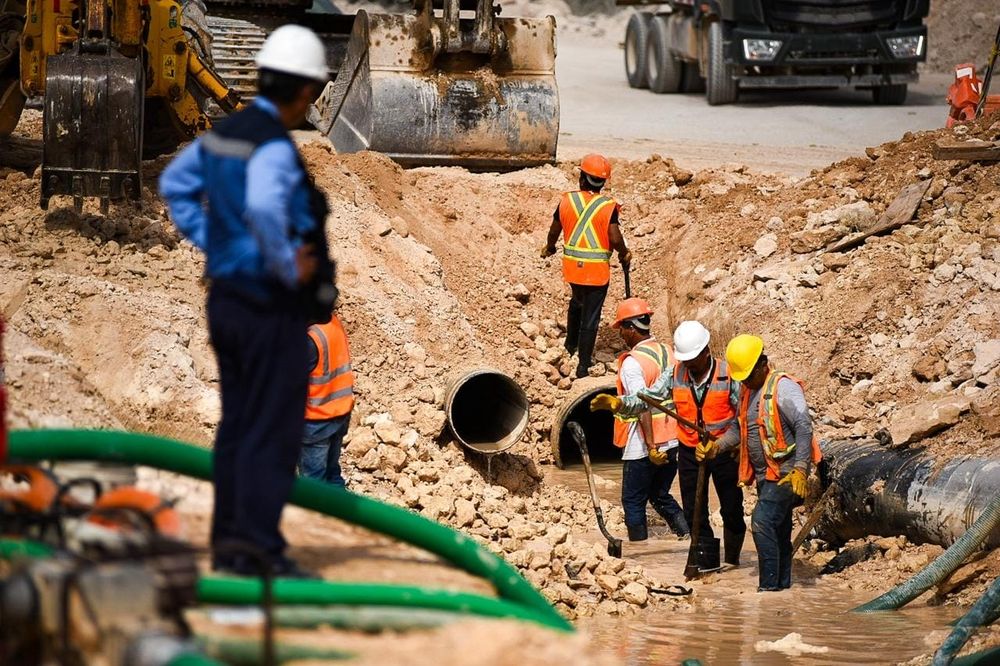
Fernando Aznar Pavón, president of the Tulum College of Engineers, doesn’t sugarcoat it. Only two streets are currently being equipped with sewage lines. That’s it. Meanwhile, entire neighborhoods like La Veleta and Avenida Kukulcán remain off the grid. It’s not just a bureaucratic oversight, it’s a failure of foresight.
According to Aznar Pavón, the Urban Development Plan lacked basic anticipation. “We’ve sold off the land we now need for infrastructure,” he noted, referring to the widespread municipal land sales. Without designated spaces, building proper sanitation systems becomes an uphill battle.
In a town where developers sprint ahead and policy limps behind, this kind of shortfall doesn’t just stall growth, it poisons it.
What Lies Beneath: The Aquifer Is Drowning in Waste
This isn’t just a Tulum issue. A few kilometers up the coast, Playa del Carmen faces its own sewage reckoning.
Alejandro López Tamayo, director of the environmental group Centinelas del Agua, painted a grim picture. In Playa’s Colosio neighborhood, roughly 70% of homes remain unconnected to the sewage network. As a result, raw sewage is dumped straight into the ground, and into the region’s fragile aquifer system.
Back in 2022, Centinelas del Agua launched a pilot project to connect just five families. The result? A daily reduction of 1,000 liters of black water entering the soil. Promising? Sure. Sustainable? Not even close. The initiative was never scaled.
This matters more than most realize. The Riviera Maya sits atop a honeycomb of limestone caves and underground rivers. When sewage enters the soil here, it doesn’t just sit, it travels.

When Coverage Isn’t Really Coverage
And here’s the kicker: the Comisión de Agua Potable y Alcantarillado (CAPA) counts sewage coverage as just the presence of pipes in the street. Not whether homes are actually hooked up. That’s like installing power lines but leaving people in the dark.
So the burden falls on residents, many of whom can’t afford the private installation costs. The result is predictable: more septic tanks, more illegal dumping, more black water leaching into caves and, eventually, the sea.
In beach towns already battling disappearing mangroves and coral die-off, the last thing we need is a sewage-fed ecosystem collapse.
Human Stories in the Wastewater Flow
Talk to residents in Campamento Hidalgo or Punta Laguna, and you’ll hear a different kind of resilience. These rural and Maya communities aren’t waiting around for government pipelines. Through Centinelas del Agua’s initiatives, families are learning to use dry toilets, low-tech, waterless solutions that work.
In Punta Laguna, one elder woman recalled how switching to a dry toilet system ended years of foul smells and mosquito plagues. “It’s not just about hygiene,” she said. “It’s dignity.”
There’s dignity, too, in the community’s effort to build its own water infrastructure. In places where trucks deliver drinking water once a week, these are not just environmental issues, they’re matters of survival.

Quintana Roo’s Invisible Threat
According to a hydrological report by INEGI, the real threat to Quintana Roo’s water isn’t scarcity, it’s contamination. The state’s geological makeup, thin soils, fractured rock, means contaminants move fast and far. Once pollutants hit the water table, they’re almost impossible to contain.
Add agrochemicals, over-pumping, and untreated sewage to the mix, and you’ve got a recipe for collapse. Especially when over 82% of the population lives in just 20 urban centers, discharging massive volumes of wastewater into a system not built to handle it.
Only Cancún, Chetumal, and Cozumel have anything resembling a partial sewage network. The rest? Improvisation and hope.
Meanwhile, the remaining 17.5% of the state’s population, scattered across 2,100 rural communities, face a different nightmare: no infrastructure, no funding, and no voice in public policy.
A Ticking Clock for the Riviera Maya
Tulum’s unchecked expansion has turned paradise into pressure. Tourists sip mezcal on rooftops while black water seeps underground. Real estate flyers sell eco-chic dreams, while raw sewage pours into cenotes.
The Tulum Times has reported before on the environmental strain beneath the region’s glossy surface. But this time, the crisis isn’t coming, it’s already here.
And it’s not just about nature. It’s about health, equity, and the future of tourism itself. Who wants to swim in a sea laced with waste?
Paradise Without Plumbing?
This is what happens when boomtowns skip the boring stuff. Sewage doesn’t make headlines like hotel openings or international festivals. But it should. Because without the invisible systems, pipes, drains, treatment plants, the visible ones crumble too.
It’s tempting to point fingers at government agencies or greedy developers. But the reality is murkier. It’s a mess made by decades of ambition without alignment.
Still, there’s a small, persistent current of change: NGOs pushing dry toilets. Engineers ringing alarm bells. Communities are finding ways to manage what the state won’t.
That’s the story worth watching.
What’s at Stake, and Who’s Left to Clean It Up
The future of Tulum, Playa del Carmen, and the wider Riviera Maya hinges on whether we address the waste we’d rather ignore. Without major investment, political will, and community engagement, the aquifer that sustains this coastline could become its undoing.
The clock is ticking. Will Tulum flush its future, or finally face the sewage crisis head-on?
We’d love to hear your thoughts. Join the conversation on The Tulum Times’ social media.
What local solutions do you think could actually work to fix the sewage problem in Tulum?