
At the southern edge of Aldea Tulum, where jungle once whispered untouched, a different kind of future now stands under the Caribbean sun. It’s not a hotel or another luxury condo. It’s a school, one that might just change how this town educates its youth, powers its spaces, and defines public investment.
The Technical Secondary School No. 42 “Kinich Ahau” was officially inaugurated this week by Governor Mara Lezama. Built with more than 50 million pesos between 2024 and 2025, it marks the latest chapter in what the state calls a new model of education under the Fourth Transformation. With solar panels lining the rooftops and classrooms designed to double as hurricane shelters, this school isn’t just another ribbon-cutting. It’s a signal.
A blueprint for Tulum’s educational shift
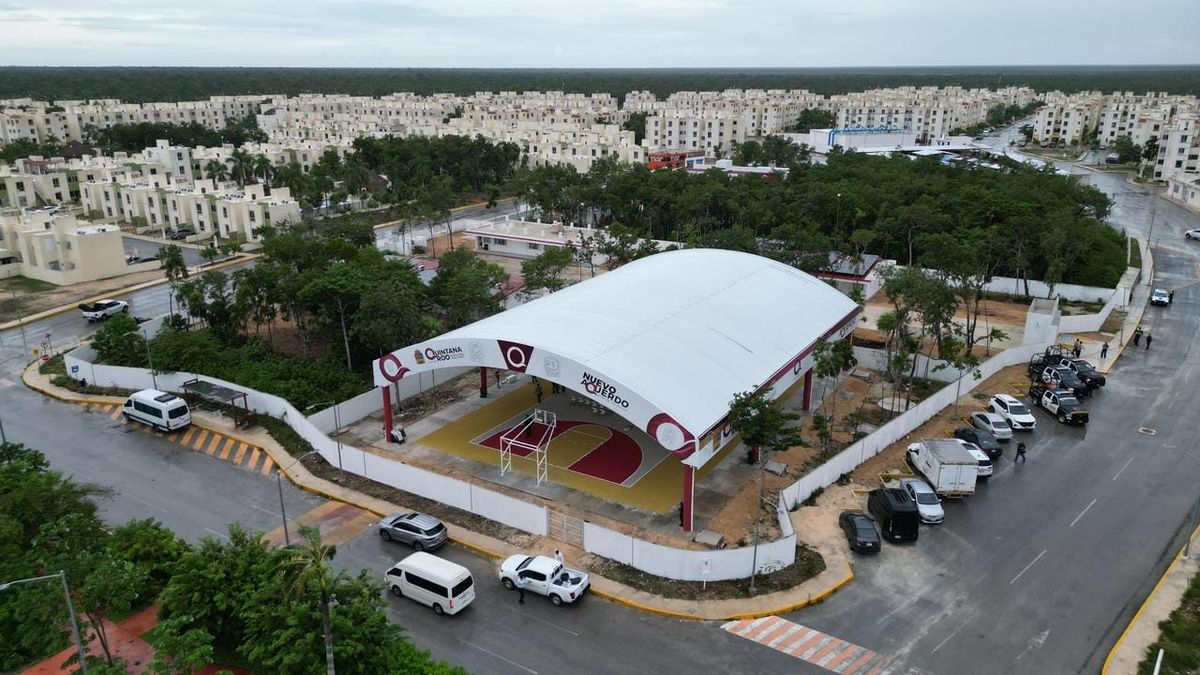
Located inside Aldea Tulum, a growing residential zone once known more for short-term rentals than long-term planning, the new public school serves up to 160 students across morning and afternoon sessions. It’s designed with modern infrastructure: labs, workshops, a civic plaza, and a domed community space meant to shield students from the punishing tropical climate.
But it’s the solar system, 106 panels in total, that makes it stand out. According to Aldo Castro Jiménez, head of the Quintana Roo Institute for Educational Physical Infrastructure (Ifeqroo), the goal is twofold: reduce electricity costs and instill a culture of sustainability. “This school saves money and saves the environment. It teaches by example,” he said during the tour.
It’s a bold contrast with many other public schools across Mexico, still struggling with basic electricity or outdated facilities. Tulum, often caught between ecological preservation and fast-track development, might be rewriting its script, one solar-powered classroom at a time.

The promise behind the plaque
Walking through the fresh paint and concrete, Governor Mara Lezama stopped to talk with students. Some had never attended a brand-new school before. Others, like Maiden Zophia Miranda Argüelles, a first-year student, stood up at the podium to say thank you. “This school means everything to us,” she told the crowd.
The ceremony was more than political theater. Lezama was flanked by the president of the municipal DIF, Verónica Lezama Espinosa; the mayor of Tulum, Diego Castañón Trejo; and the school’s director, Santiaga Aguilar. Together they unveiled a commemorative plaque, one that, notably, earned a nod from the state’s Transparency and Data Protection Institute (Idaipqroo) for its accountability in the use of public funds.
“This is not a cost. This is an investment in the future,” said the governor, speaking to students and parents under the sheltering dome. “Every peso here is the people’s money, returning to the people. We make it go further because we fight corruption.”

A dome, a dream, and a lesson in governance
It’s tempting to view this new school as a shiny outlier. But to locals, it’s a necessity. Before this, many families in Tulum’s expanding residential areas had to send their children to distant schools, sometimes far beyond walkable routes, especially in storm season.
Mayor Diego Castañón highlighted how the facility helps close that gap. “We are growing fast. But without education, it means nothing. This school expands our educational offer and protects our youth,” he said.
The dome built alongside the school isn’t just architectural flair. In a region where weather swings from brutal sun to flash floods, a covered area for events, recess, and gatherings is more than convenient, it’s essential.

A human moment amid the policy
One short moment stood out: a teacher gently guided a student with anxiety to the edge of the crowd. “You’re safe here,” she whispered. It was off-script, unplanned, but perhaps the most honest reflection of what this space aims to be. Safety, education, and a sense of future stitched together in concrete and conversation.
The Tulum Times observed this with a quiet sense of hope. In a town that often builds for outsiders, this felt rooted in the needs of its residents.
How public education in Quintana Roo compares
Tulum is not the only town in Quintana Roo building new schools. But few match the design or symbolism of Kinich Ahau. Compared to larger cities like Cancún or Playa del Carmen, where infrastructure often lags behind rapid tourism growth, Tulum’s move is relatively forward-thinking.
The integration of sustainability, civil protection, and accessibility aligns with national conversations around educational equity and climate resilience. But it also raises questions: Will future schools meet these standards? Can this model be replicated in rural areas? And what role will communities play in maintaining such facilities?
For now, Kinich Ahau stands as a reference point, an answer to what’s possible when policy, transparency, and community needs align.

Looking ahead: more than a single structure
There’s still more to be done. The new school covers immediate demand, but Tulum’s population is booming. As more families settle beyond the tourist core, pressure will mount on services, transportation, and staffing.
Still, this first phase plants a flag. As Lezama told the students, “Stay away from destructive paths. Live free of violence. Chase your dreams. Every decision matters.” It wasn’t just encouragement, it was a reminder that these walls only matter if what happens inside them leads somewhere better.
What’s at stake
In a state shaped by contrasts, wealth and poverty, nature and development, this new school offers something rare: a shared win. Whether it becomes a norm or remains a headline depends on what happens next.
Will Tulum continue to prioritize spaces like this? Or will future budgets drift elsewhere?
We’d love to hear your thoughts. Join the conversation on The Tulum Times’ social media.
Should all new schools in Quintana Roo follow the Kinich Ahau model? What do you think?