
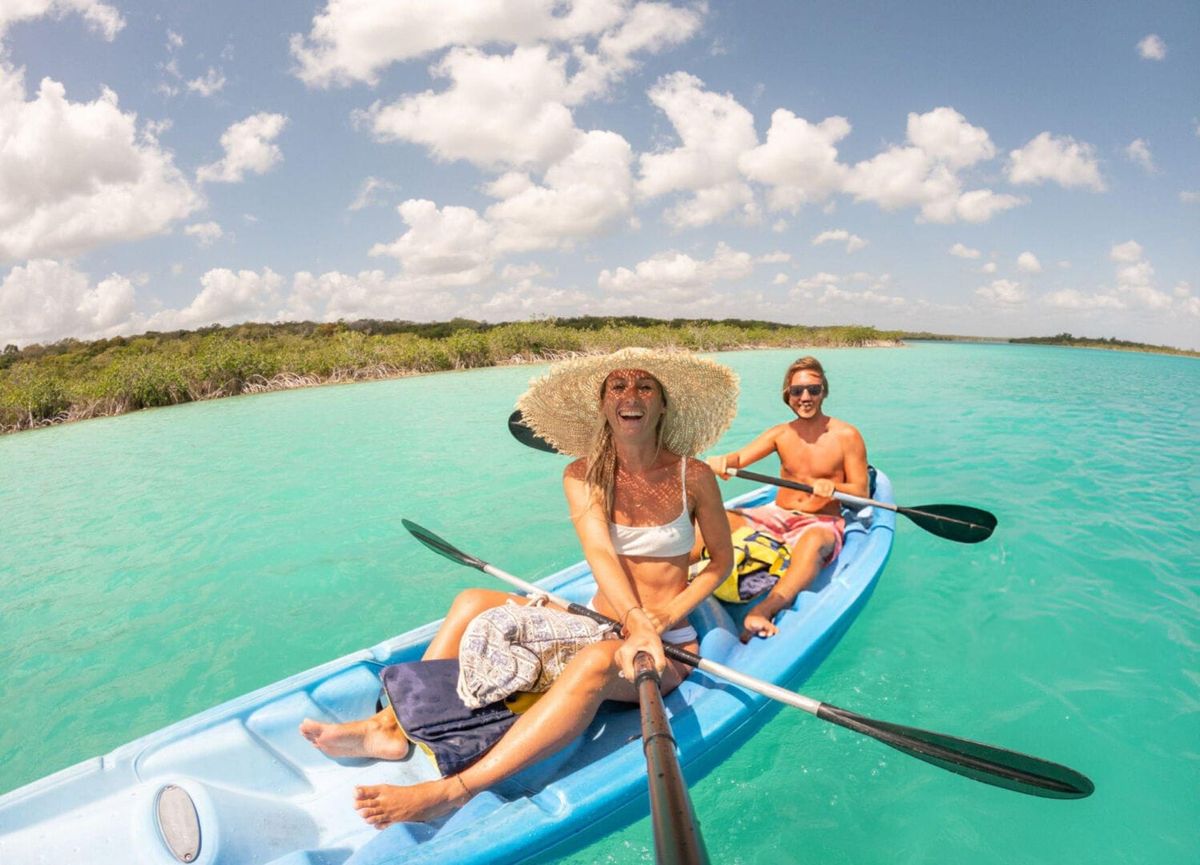
You come for the beach. Everyone does. That hypnotic strip of white sand and turquoise sea, forever captured in postcards, Instagram reels, and the dreams of 9-to-5 escapees across the world. But then the summer rolls in. And with it, the sargassum.
A silent invader, it creeps across the shoreline, cloaking the water in brown tangles and souring the breeze with the smell of decay. Tourists wrinkle their noses. Beachfront weddings relocate. The Caribbean looks tired.
But Tulum? Tulum pivots. Reinvents. Shakes off the seaweed and shows its other face, the deeper one, older and more intimate. Because when the beach is out of the picture, you start to see everything else. And what you find is a different kind of paradise. One less filtered, more felt.
Let’s go there.
Beneath the Surface: The Mythic World of Cenotes
Imagine a door in the jungle. A tear in the limestone, where vines hang low and the earth gives way to water. That’s a cenote, not a pool, not a lake, but a sacred scar in the land where light meets shadow and time seems to hold its breath.
The Yucatán Peninsula floats on a web of underground rivers, and cenotes are where that water comes up for air. For the Maya, these were portals to the underworld, Xibalba. For modern travelers, they’re salvation in the sweaty thick of summer.

Gran Cenote is the obvious entry point. Just five minutes from Tulum town, it offers the full spectrum: open water to float under the sun, cave tunnels to snorkel through, and turtles paddling past your legs like they’ve been doing it for centuries. It’s family-friendly, camera-ready, and refreshingly icy.
But if you want something more raw, Cenote Calavera waits down a dusty road, its name (“skull”) a nod to the three dark holes punched through the rock like empty eye sockets. You climb a ladder. You jump. And for a few seconds, you fall through darkness into a stillness so perfect it makes you forget the world above.
Drive a little further and you reach Cenote Carwash (real name: Aktun Ha). The locals used to rinse their taxis here; now, it’s a placid freshwater mirror where divers descend into submerged caves and dragonflies hover over lilypads. And then there’s Cenote Cristal and Cenote Escondido, twins separated by the road, each offering thick tree cover, high-diving platforms, and that hushed, holy quiet that only freshwater in the jungle can bring.
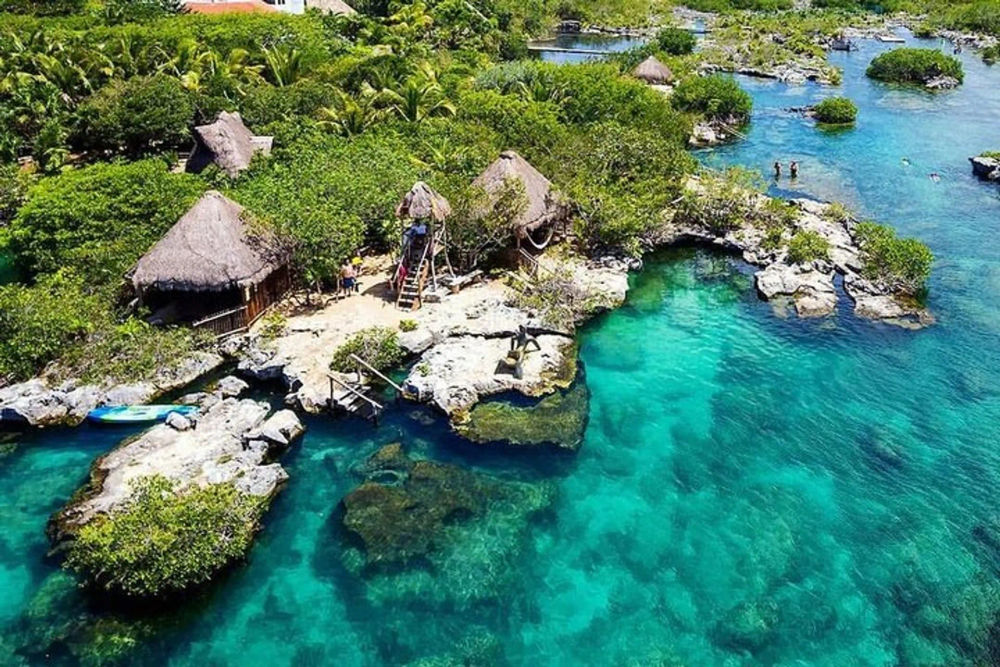
To swim in a cenote is to shed something. Your sweat, your stress, your phone signal. It’s the closest you’ll get to baptism without stepping inside a church.
The Lagoons of Stillness: Kaan Luum and the Sian Ka’an Secret
When the ocean misbehaves, Tulum’s lagoons step in.
Laguna de Kaan Luum, just a ten-minute drive south of town, is what happens when heaven gets lazy and lies down. Shallow, warm, and utterly transparent, it stretches wide and still, except for its center, where a deep, sunken cenote turns the water midnight blue. From the sky, it looks like a pupil staring back at the universe.
Locals wade into its shallows to exfoliate with the soft, mineral-rich mud. Travelers come for the overwater hammocks and the silence, no engines, no vendors, just wind and water and birds that call like flutes in the trees.

Want something wilder? Something primal? Head further into the Sian Ka’an Biosphere Reserve, a UNESCO World Heritage Site where civilization recedes into mangroves and the pulse of the Earth feels louder.
There, the Muyil Canal awaits. You walk through crumbling Mayan temples swallowed by vines, board a small boat, and glide through turquoise channels hand-carved by ancient hands. At a certain bend, the guide tells you to jump in. You slip on a life vest, not for safety, but for floating, and surrender. The current takes you. You drift between reeds, past dragonflies and hidden herons, through history itself.
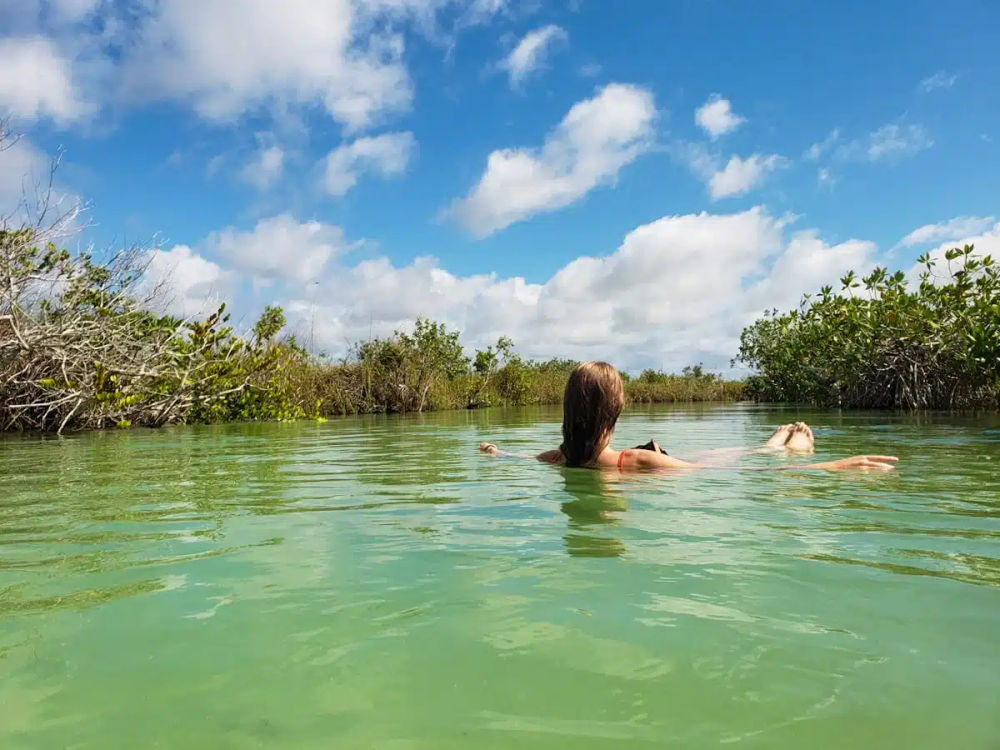
You don’t swim. You float. And in that drift, something loosens. Something you didn’t know you were carrying.
High Above the Jungle: Rooftop Pools and Design-Driven Calm
Back in town, the heat doesn’t let up. But it evolves.
Tulum isn’t just beaches and barefoot boho. It’s a hive of design, of curated spaces where water and architecture dance. Rooftop pools bloom above boutique hotels like modern-day mirages, offering cool relief with skyline views of the jungle’s infinite green.
At Hotel Bardo, the pool isn’t just a place to swim, it’s a sanctuary, framed by brutalist stone, floating incense, and silence. At Layla Tulum, you can sip a cold drink under a Moorish dome as the sun dips behind the palms. Una Vida, Nômade, Habitas, each a chapter in Tulum’s quiet rebellion against resort sameness.

Many now offer day passes. For the price of lunch and a drink, you get a full day in the water, a shaded cabana, and the feeling that you’re part of something, less tourist, more traveler, more present.
Healing Waters and Ritual Fire: The Spiritual Summer
Tulum didn’t become a wellness capital by accident. Long before the influencers arrived, seekers were coming here, to sweat, to purge, to reconnect.
At the heart of this is the temazcal, a pre-Hispanic sweat lodge made of stone and fire and steam. You enter barefoot, guided by a shaman. Copal smoke curls in the air. Lava rocks hiss as water is poured. Songs are sung. Stories shared. You sweat not just from your skin, but from your memories. And when you step out, blinking into the light, a plunge pool awaits. Cold, clear, final.
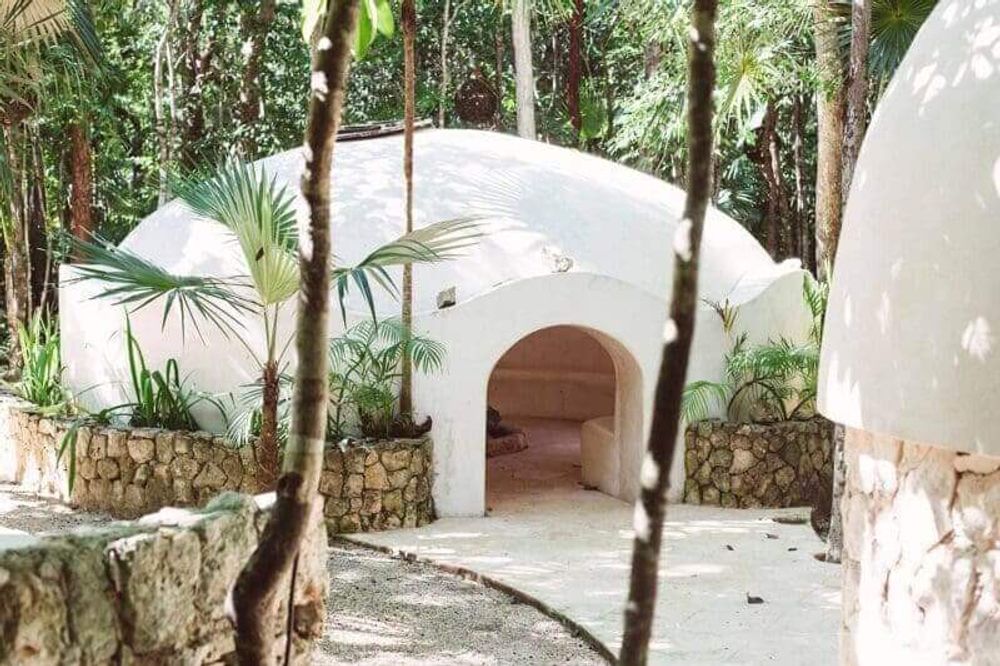
Other retreats offer sound baths, cacao ceremonies, and cold plunges in jungle caves. These aren’t gimmicks. They’re modern echoes of ancient tools. Tools that remind you this place was sacred long before it was Instagrammable.
Inland Treasures: Cobá, Chemuyil, and the Town That’s Growing Up
Not every escape needs water. Some just need a bike, a bottle of water, and a sense of wonder.
Rent a cruiser and head to Cobá, an archaeological site where stone temples rise above the jungle canopy like lost teeth. Unlike Tulum’s coastal ruins, Cobá is immersive, you bike between pyramids, climb steep stone steps, and imagine the drumbeats of ceremonies long gone.

Closer to town, the tiny village of Chemuyil hides cenotes so untouched they barely have names. They ask for no admission. Just respect. And maybe a whispered “gracias.”
And then there’s Tulum Pueblo itself. Once an afterthought, it’s blooming. Cafés like DelCielo serve breakfast that could rival Brooklyn. Galleries like IK LAB showcase avant-garde architecture and local art. Mezcalerías hum at night, and taco carts sizzle on every corner.
It’s real, it’s rising, and in summer, it’s all yours.
The Other Tulum: What Happens When You Stay
The beach might’ve drawn you here. But if you only stay for the sand, you’re missing the story.
Because Tulum isn’t just a place, it’s a layered experience, constantly unfolding, especially in the months when the coast is cloaked in seaweed and the crowds thin out. That’s when the land speaks louder. The cenotes beckon. The jungle breathes deeper. And you start to understand: the sargassum isn’t a curse. It’s an invitation.
To look again. To go deeper. To discover the version of Tulum that isn’t printed on brochures, but pulsing beneath your feet.
We’d love to hear your thoughts, join the conversation on The Tulum Times’ social media.