
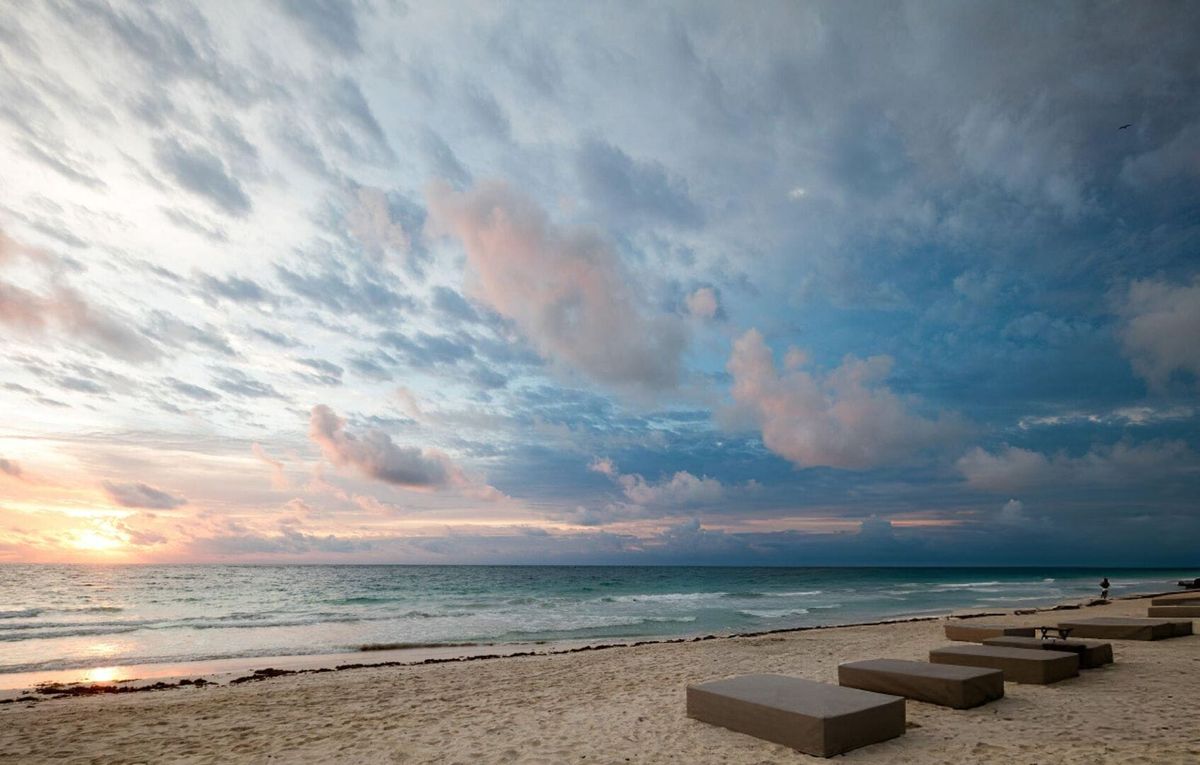
The images were stark and real, streets half empty and beach loungers unused, yet the deeper story of Tulum tourism in 2025 could be one of reset rather than decline. Visitors thinned out, hotel occupancy sagged, and frustration spiked, but a window opened for a fairer model that welcomes both locals and travelers.
Context and background
For years, Tulum symbolized a kind of barefoot luxury, a place where jungle paths met candlelit dinners and cenote mornings. That glow dimmed this summer. In town, occupancy dipped to around 15 percent according to local reports, while beachfront hotels hovered near 40 percent. Merchants in the archaeological zone and downtown said the months felt tougher than the lockdown years. Videos on social media appeared to confirm the mood, showing iconic spots near deserted at hours that used to hum.
Why did it cool so fast? The base text points to a mix of familiar stressors that converged at once. Prices rose on many fronts, from rooms and food to tours and taxis. Access felt restricted, especially on stretches of shoreline that residents consider theirs by right. Sargassum piled up in record amounts along the coast, at times turning the water brown and souring the simple joy of a swim. And safety worries, mentioned by some visitors, added static to the signal. In short, a high cost, low trust equation crowded out the easy magic that drew people here.
What is confirmed today
Amid the quiet, a few decisions hinted at course correction. Fourteen hotels and two beach clubs opened free access to the beach for locals and visitors, a gesture that many read as a late but sincere return to basics. The mayor, Diego Castañón Trejo, called for unity, urged residents and media to speak constructively about the destination, and described conversations with state and federal counterparts. He referenced coordination with the Council for Tourism Promotion, meetings with the federal Tourism Secretariat, and a plan to support roughly fifty artisans from Tulum in monthly sales at Cancún’s green markets. None of this is a magic wand. All of it, if consistent, could be a start.
There were operational realities as well. The new Felipe Carrillo Puerto airport saw fewer flights from certain international airlines than expected in 2025. Public transport operators felt the pinch of lighter demand. And along the shore, cleanup crews kept working, with officials citing roughly five thousand tons of sargassum collected so far this year. The work is exhausting, daily, and frankly unglamorous, yet it keeps the promise of the beach alive for the morning after a storm.
Impact on people and businesses
Numbers never walk home at night. People do. Eduardo Aguirre, a photographer who came to the Riviera Maya chasing wedding seasons and good light, lost his job when bookings dried up. His line is simple and heavy: “The couples are not coming.” A few meters away, Sebastián Cruz Gómez, a mason from Ocosingo, ties a fishing line to a bottle and casts for dinner. He walks three kilometers to the beach and back, a quiet proof of how fast a local economy can seize up.
In the hotel zone, a construction worker named Darwin sums it up with a shrug. Rotations paused. Crews idle. Families are waiting for transfers that do not arrive. “We drive around looking for anything,” he says, “but there is nothing this week.” When streets are sparse, even the small rituals change. A marquesita vendor near the archaeological site tells us she now returns home with batter she would normally finish by noon. These are microstories, yes, but they are also the texture of the crisis, the human grain that gives the numbers shape.
A calm, constructive reframe
If this reads like a reckoning, it is. But in Tulum, reckoning might be the beginning of recovery. As a psychologist might say, the first healthy step is naming the behavior that is not working. Visitors felt overcharged. Locals felt sidelined from their own beaches. Service workers felt replaceable in a model built for a revolving door of high spenders. Saying this out loud does not doom Tulum. It clears space for change.
What could that change look like without inventing anything beyond what is already underway? Fair pricing that respects both wage earners and business costs. Beach access policies that align with the spirit of the public shoreline. Partnerships that move artisan income beyond a single corridor. Public messages that balance realism with welcome. A town can do all this and still be aspirational. In fact, it might become more so, because the aspiration would be shared.
How Tulum compares with neighbors
Cancún and Playa del Carmen kept their seasons steadier, at least in relative terms. They have wider price ladders, more transit options, and, in parts, deeper infrastructure. Tulum has a different DNA. It was never built for mass volume. That difference, once marketed as a rarity, can still be an advantage if the offer feels open, fair, and local-first. A smaller destination that listens closely might regain loyalty faster than a giant that moves slowly.
The point is not to imitate Cancún or Playa. It is to study what works for families, solo travelers, and mid-budget groups who made the Riviera Maya famous long before viral videos, then adapt those lessons to Tulum’s own scale and soul.
Signals of a reset in motion
Free beach access, even if partial and evolving, says something simple. The sea belongs to everyone. The mayor’s outreach to state and federal tourism, combined with the green market route for Tulum artisans in Cancún, signals that the circle of benefit can widen beyond hotel invoices. Cleanup crews tackling thousands of tons of sargassum, day after day, communicate that nature is not an obstacle; it is a partner that needs care.
These are not headlines that trend. They are habits that compound.
Voices from the ground
“Empty isn’t the same as finished,” a boutique manager told The Tulum Times, looking at an almost quiet afternoon. “Empty can be a season to fix what got bent.” Another resident put it even sharply, “We lost tourists. Maybe we found our values.” That sentence could live on a poster or as a caption under a sunrise photo. It also reads like a plan.
Key facts shaped as a narrative
Occupancy in town slipped to around 15 percent in summer, with beach areas near 40 percent. Some hotels and beach clubs opened access to the shoreline without a minimum spend. Reports described beach entry charges that left locals and national visitors feeling excluded. Sargassum collection reached roughly five thousand tons in 2025, with crews cleaning and raking to keep beaches usable. International airlines adjusted their schedules to the new airport, and public transport drivers saw fewer passengers. A municipal call for unity emphasized practical support for merchants, coordination with tourism authorities, and monthly artisan sales in Cancún. All of this exists side by side, like waves that look separate but move toward the same shore.
What comes next for Tulum tourism
The winter season is approaching. If the current gestures become policy, and if the policy becomes culture, Tulum could move from a model of gatekeeping to a model of welcome. Pricing might soften to meet national travelers again. Beach access can remain clear and consistent. Safety operations can prioritize calm, not theater. Communication can be honest, measured, and hopeful. None of this requires slogans. It asks for follow-through.
What is Tulum doing to recover, in practical terms?
Beach access is opening at specific properties without compulsory consumption. The municipality is working with Quintana Roo and federal authorities on promotion for the high season. Roughly fifty artisans from Tulum have a monthly path to sell in Cancún’s green markets, adding revenue when foot traffic is slow at home. Cleanup of sargassum continues, including removal of decomposed algae to restore shore quality. Public messages invite residents, business owners, and media to act in concert, not at cross purposes. These measures might not solve everything fast, but they can lower the temperature, rebuild trust, and bring back the feeling that Tulum is for everyone.
A gentle editorial reflection
Tourism is a relationship, not a transaction. When that relationship tilts toward extraction, both sides feel it. The visitor senses the cold edge of pricing and posture. The host senses the hollowness of a quick sale. Tulum, it appears, is choosing to renegotiate that relationship. If the town treats this season not as a failure but as feedback, the reset could be profound. Think of it like a reef after a storm. What looks broken one week becomes a nursery for new life the next.
Tulum tourism in 2025 is not a story of endings; it is a test of alignment. The facts are sober, but the response can be steady, human, and kind. If free access expands, if prices find a fair range, if artisans and workers share the upside, the town could regain the trust it needs to thrive. The horizon still shines, and the water is the same water that first made people fall in love with this coastline. The next chapter depends on how we welcome, how we price, and how we share.
We’d love to hear your thoughts. Join the conversation on The Tulum Times’ social media.
What one change would make you feel that Tulum is, once again, truly yours?