
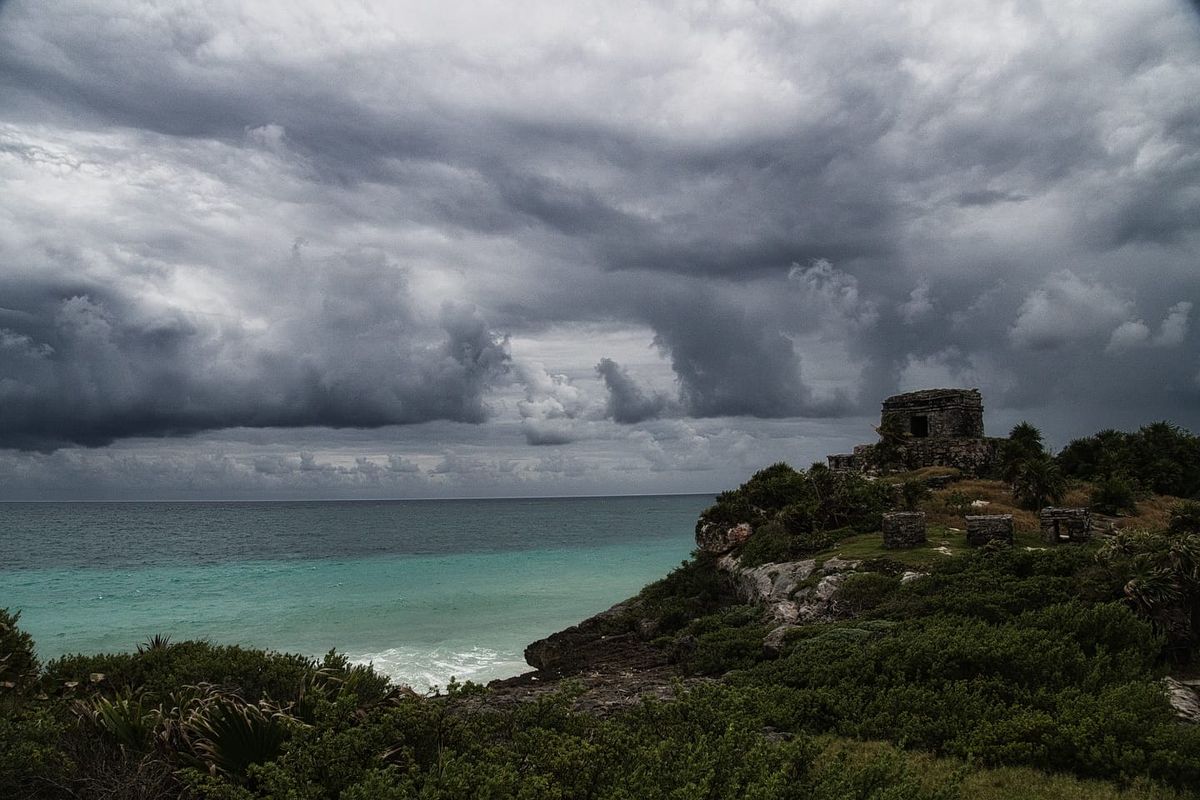
The word Tulum still evokes postcard-perfect imagery, bohemian serenity, turquoise waves, and sugar-white sand beneath the watchful gaze of ancient Mayan ruins. But for those who live and work here, tour guides, hotel owners, fishermen, the reality is starting to resemble something else entirely. Empty beaches, relentless sargassum invasions, and an ever-growing barricade between the people and the sea. As summer high season hits its supposed peak, Tulum isn’t buzzing with life. It’s struggling to breathe.
And here’s the uncomfortable truth: Tulum is facing a perfect storm, environmental, political, and economic, that threatens to leave permanent scars on the very soul of this once-idyllic paradise.
The Crisis Beneath the Sand: Sargassum, Fees, and Fading Patience
“The Visitor Arrives, Sees the Dirty Beaches, and Leaves”
For Francisco Cámara, a local boat captain who spends his days navigating the waters off Playa Pescadores, the crisis doesn’t require statistics. “The visitor arrives, sees the dirty beaches, and leaves,” he explains, the frustration unmistakable in his voice.
The culprit? Sargassum, a thick, pungent seaweed that washes ashore in suffocating waves. Once a rare visitor, it now behaves more like a tenant, staining the surf, choking the coastline, and sending Instagrammers fleeing for cleaner views.
Paradise, Now with a Price Tag
Yet the problem extends beyond the seaweed. Cámara points to the Jaguar Park, a federal conservation project with grand intentions but devastating side effects. What was meant to protect nature, locals say, is now throttling tourism.
Visitors are greeted with steep entrance fees and scorching, kilometer-long treks just to reach the coastline. Many give up before setting foot on the sand.
Tulum didn’t used to come with a surcharge, but it does now.
Data vs. Reality: Whose Numbers Can You Trust?
Tourism Decline in Plain Sight
Jorge Portilla Mánica, a local entrepreneur and councilor, doesn’t sugarcoat things: “The tourism engine of Tulum is shutting down, and no one seems willing to oil it.” Hotel occupancy in central Tulum is staggering between 15% and 40%, numbers not seen in over a decade. Some hotels report just one or two rooms booked.
“This hasn’t happened in a long time,” Portilla notes. “It’s critical.”
The Official Spin
Yet, in a twist worthy of a government drama, the state’s tourism office recently declared a cheerful 63.2% occupancy rate. Is someone inflating the numbers? Or are we just witnessing the widening gulf between the coastal luxury zones and the struggling urban core?
Wander through the shuttered restaurants and deserted dive shops downtown, and you’ll likely find the more reliable data point.
The Jaguar Park Paradox: Protection vs. Participation
A Park Designed in Mexico City, Not Tulum
There’s no denying the ambition of the Parque Nacional del Jaguar. Conceived as a conservation initiative, it was dreamed up in Mexico City boardrooms and deployed with little input from those who actually live and breathe Tulum.
“They lacked knowledge of how tourism works here,” says Councilor Eleazar Mas Kinil. The result? A project that, ironically, may be pushing people away from the very environment it aims to protect.
Tour operators are now saddled with extra costs and logistical chaos, while the public perceives that once-open beaches are being quietly taken off the map, unless you can pay, hike, or decode contradictory regulations.
The jaguar may be sacred. But so is access to the sea.
Government Silence, Grassroots Anger
A Communication Breakdown with Real Consequences
At the core of the crisis is a glaring disconnect between federal, state, and municipal powers and the local workers whose livelihoods are on the line. Artisans, hoteliers, fishermen, they all describe a growing sense of invisibility.
Anger simmers over federal fees. Anxiety grows around rising insecurity. And exhaustion has set in from battling sargassum waves that never stop coming.
In a brutal twist, even flights into Tulum’s brand-new international airport are being cancelled, deemed unprofitable due to weak demand. A cruel irony for a town once heralded as the beating heart of Mexico’s tourism future.
Meanwhile, destinations like Playa del Carmen and Bacalar are quietly thriving. Tulum, in contrast, feels like a paradise caught in policy purgatory.
A Risky Bet: Music Festivals as Lifeline
Can Culture Save What Bureaucracy Broke?
With options running out, local leaders are betting on culture to reverse the tide. Enter Aura Music Fest, scheduled for August 14–16. With headliners like Lasso and Playa Limbo, and a mix of Mayan art, regional cuisine, and community spirit, it’s more than a party, it’s a cry for help.
Is it enough? No one knows. But at this point, it might be the only card left to play.
Mario Cruz Rodríguez, president of the local tourism council, knows time is short. His team is working overtime to re-ignite interest, participating in tourism expos and trying to spark new partnerships. But as Portilla bluntly puts it, “You might have a beach-facing hotel doing fine, but if you’re inland? Good luck.”
The Road Ahead: Recovery or Ruin?
Rebuilding Trust, Reclaiming Access
No one expects a quick fix. Reopening access to public beaches, overhauling the Jaguar Park’s logistics, and launching meaningful sargassum cleanup programs will require political courage, financial investment, and perhaps most difficult, humility.
This isn’t just about one season or a few underbooked hotels. It’s about the survival of a fragile ecosystem, economic, environmental, and profoundly human.
Tulum was once the crown jewel of the Mexican Caribbean. The dream isn’t dead. But it’s unraveling, thread by thread. And unless someone steps in to stitch it back together, what remains may no longer be worth the frame.
We want to hear from you. Join the conversation on The Tulum Times social media channels and tell us: What do you think Tulum needs now?