
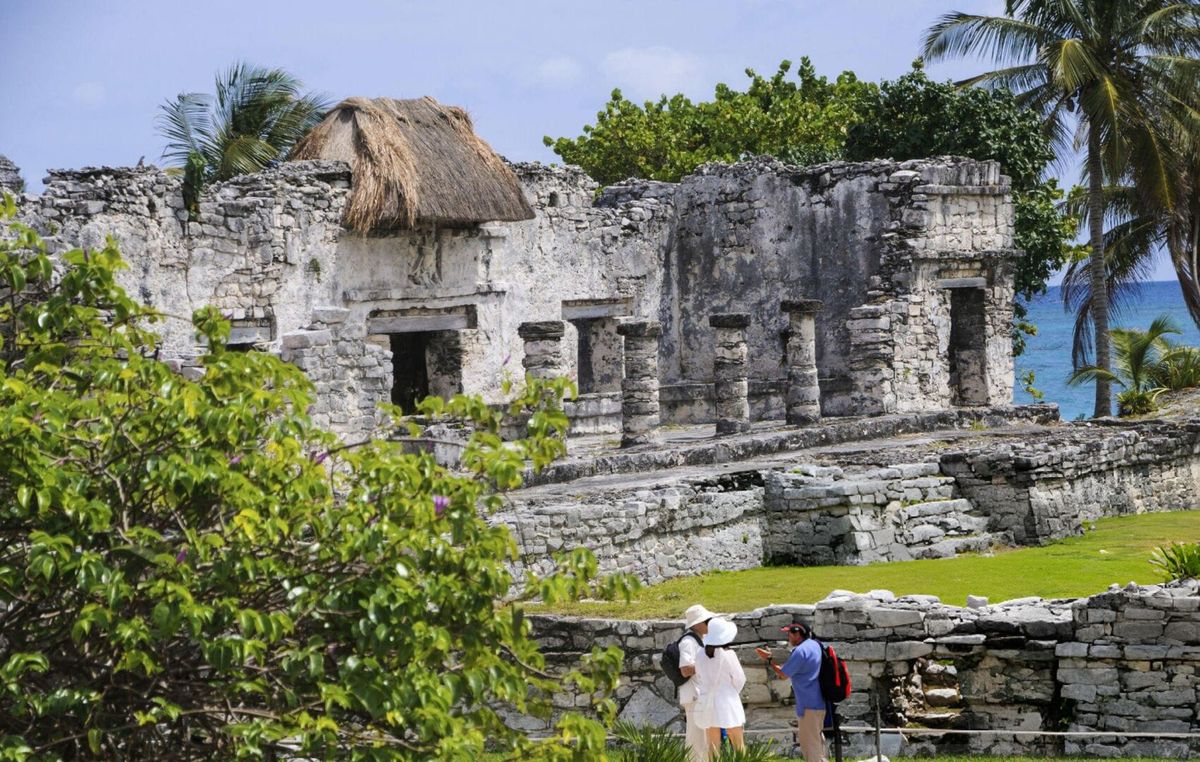
On paper, a 2.6% dip might not sound dramatic. But in a town like Tulum, where cultural tourism has long served as a backbone for the local economy, losing more than 21,000 visitors in just eight months is far more than a statistical footnote. It’s a warning sign.
Between January and August of this year, 790,447 people visited the Tulum archaeological zone, a figure down from 811,951 during the same period in 2024. That’s a decline of exactly 21,504 visitors. While the site still holds its place as one of the top three most visited archaeological sites in Mexico, the downturn signals growing discomfort, both for tourists and locals.
So what’s behind the slow leak in Tulum’s cultural draw?
A paradise fenced in
Tulum has always sold itself as a dreamscape: Mayan ruins facing turquoise seas, where ancient stone meets soft sand. But over the past year, that dream has frayed at the edges.
Increased entry fees to protected natural areas, including beaches, have sparked anger among residents and confusion among tourists. What once felt open and free is now guarded by price tags and barriers. At the heart of the storm is Parque del Jaguar, a federal conservation project that now includes large portions of the Tulum National Park, including popular public beaches.
In January 2025, fees across Quintana Roo’s most iconic reserves quietly doubled. Access to Tulum National Park jumped from 61 pesos to 122, Sian Ka’an from 100 to 200, and Isla Contoy from 65 to 130 pesos. The price for Banco Chinchorro, far to the south, now stands at 650 pesos.
That’s no small shift, especially for travelers on tight budgets, or locals simply seeking a weekend swim.
The protest that broke the silence
Then came August 31. Over 500 residents, fed up with restricted beach access, staged a six-hour protest outside the offices of Gafsacomm, the company managing Parque del Jaguar.
Their demand? Free access for Quintana Roo locals to their own beaches.
The protest wasn’t just symbolic. It was led, in part, by Tulum’s own municipal president, Diego Castañón, who broke ranks with federal authorities to publicly support his constituents.
“The people are tired, and it makes sense,” he said during the protest. “If you live in one of the most beautiful tourist destinations in the world and can’t access the beach, of course you’re going to speak up. I have to stand up for the people, it’s my responsibility. I’m open to dialogue with the company, but if they won’t listen, we must unite.”
The tension wasn’t just about money. It was about identity. About the invisible line that had been drawn between “local” and “tourist,” even in spaces once considered communal.
In the days that followed, beach access was partially restored, at least for now. But the damage, economic and emotional, had already been done.
Culture caught in the crossfire
Tourism in Tulum has always walked a tightrope between ecological preservation and economic necessity. But this year, the balance appears to have shifted, and not necessarily in favor of either.
The Tulum archaeological zone, which thrives on foot traffic from nearby hotels and coastal roads, now feels the ripple effects of restricted access and pricing confusion. For cultural tourists, those seeking both ruins and reef, the experience is no longer seamless. It’s fractured.
One local guide, who requested anonymity, put it simply:
“People come here to feel free, not to be told where they can and can’t walk. When everything starts to feel off-limits, they just go to Cancún or Playa.”
The drop in numbers, while still modest on paper, could indicate a deeper shift in traveler sentiment. And with the winter high season fast approaching, that sentiment could either stabilize, or spiral.
What Tulum is risking
The cultural tourism that defines Tulum is unlike anywhere else in Mexico. Unlike Cancún’s nightlife or Playa del Carmen’s all-inclusive resorts, Tulum sells a spiritual and historical experience. But that experience is tightly linked to access, to beaches, to ruins, to nature.
If those touchpoints become costly, complicated, or contentious, the visitor might simply choose elsewhere.
And the local economy, built on tourism’s delicate promise, suffers first.
Behind every percentage point drop in visitor numbers are tour guides losing bookings, restaurants seeing fewer tables filled, and artisans selling one less bracelet a day.
This isn’t just a policy issue. It’s personal.
A shadow over the Jaguar
Parque del Jaguar was meant to be a triumph, a symbol of ecological protection in the face of explosive development. And in many ways, it is. Its mission to shield biodiversity and regulate unchecked tourism is legitimate and urgent.
But implementation matters. And here, execution has collided with public sentiment.
The sudden reclassification of formerly public beach areas, the doubling of fees without clear communication, and the opaque role of Gafsacomm have all stirred unease. Many locals feel shut out of decisions made in their name.
That tension bleeds into perception. And perception is everything in tourism.
As one social media post put it:
“Tulum should be where Mayan heritage meets modern respect, not where locals need a protest just to reach the ocean.”
It’s a line that’s been reshared hundreds of times. And it’s not just rhetoric. It’s a reminder.
What needs to change before high season
As the 2025 winter high season looms, the question isn’t just whether numbers will recover. It’s whether Tulum can repair the trust between its institutions, residents, and the global travelers who sustain it.
At The Tulum Times, we believe this moment is pivotal. The local government, particularly the municipal administration, has both a challenge and an opportunity.
Here’s what we believe they should do:
1. Restore and clarify free beach access for locals, especially in areas now under Parque del Jaguar. Make the rules clear, and enforce them fairly. Nothing discourages tourism like inconsistency.
2. Launch a winter campaign that repositions Tulum as a welcoming cultural destination, one that celebrates its heritage and its people. Include clear pricing, accessible maps, and multilingual signage.
3. Open public forums with GafsaComm and community representatives to co-design future conservation policies. Tulum cannot afford to have its people and its ecosystems at odds.
4. Support local businesses through infrastructure improvements in the archaeological corridor, including lighting, signage, and transport services to ease visitor access.
These are not just bureaucratic tweaks. They are signals, of respect, of clarity, of vision.
And if Tulum wants to protect both its treasures and its future, those signals need to start now.
We’d love to hear your thoughts. Join the conversation on The Tulum Times’ social media.
Will Tulum’s leaders take this opportunity to reset the balance, or let another season slip through their fingers?