
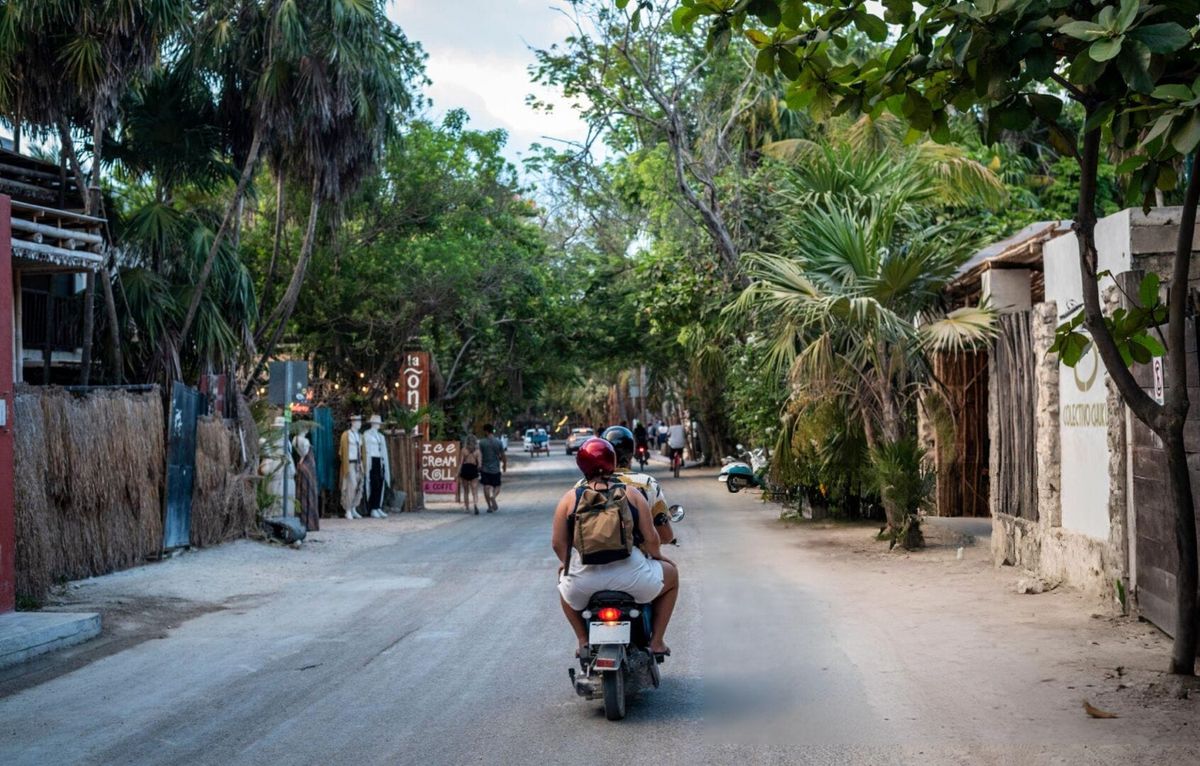
In Tulum, even the wind feels different lately, quieter, as if holding its breath. Once bustling beach roads now echo with the absence of flip-flops and rolling luggage. The numbers confirm what locals already feel in their bones: Tulum is experiencing a sharp drop in tourism, and it might be more than just a seasonal dip.
According to the Secretaría de Turismo de Quintana Roo, hotel occupancy in Tulum during the first half of October sank to 49.2 percent. That’s a dramatic fall from the 66.7 percent reported during the same period last year, a staggering 17.5-point drop. Behind every percentage point are empty rooms, quiet restaurants, and tour guides watching sunsets with no guests in tow.
And this isn’t just a Tulum problem. It could be a preview of what’s coming for other Mexican beach towns.
How Tulum got here
Tulum didn’t fall overnight. It was built, quite literally, on the promise of paradise, white sand, turquoise sea, and a boho-chic mystique that turned it into an Instagram dream. But beneath the veneer, the town has long walked a tightrope between booming growth and fragile infrastructure.
Many destinations across Mexico offer “low rates” to stay competitive, but low prices don’t pay for water systems, trash collection, or well-trained hospitality staff. In Tulum, the equation is further strained by a growing shortage of workers. As social assistance programs become more appealing than underpaid tourism jobs, hotels and restaurants struggle to retain talent.
One hotel manager in Aldea Zama, who asked not to be named, said, “We used to fill 80 percent of rooms without trying in October. Now we’re lucky to hit 50. Staff are leaving, and guests are asking why the basics aren’t working.”
This isn’t just a dip. It’s erosion, slow, but visible.
A domino effect waiting to happen
When a flagship destination like Tulum stumbles, the tremors travel. Other places, Huatulco, Puerto Escondido, the rising coastal towns in southern Puebla, Veracruz, and Oaxaca, are watching closely. These emerging gems depend heavily on replicating the same tourism model: attract, expand, and hope the infrastructure keeps up.
But if Tulum, with all its global recognition, can’t hold the line, what hope do smaller towns have?
The Tulum Times spoke with several local business owners who say they’ve already scaled back operations. One café owner in the beach zone explained, “We closed two days a week now. No sense staying open when there’s no foot traffic.”
It’s not just lost revenue, it’s lost confidence.
Three urgent moves for the government
The slump isn’t irreversible. But it requires fast, smart, and targeted action from public authorities.
1. Conditional liquidity injection
Tourism destinations facing over 10 percent drops in occupancy should receive emergency federal and state funds. But not as blank checks. These funds must be tied to basic upkeep, digital promotion, staff training, and reactivation plans.
2. Strategic international promotion
Mexico can’t rely on last-minute bookings. The government must coordinate focused marketing in major source markets like the U.S., Canada, and Europe. That means bundled packages, airline partnerships, and high-value products, think ecotourism, cultural routes, and wellness travel.
3. Real infrastructure investment
Tourists don’t return just for pretty views. They return for reliable services. This includes beach recovery, sargassum management, proper roads, environmental protection, and consistent utilities. Tulum has to offer quality that lasts beyond the first selfie.
A wake-up call for local businesses
The private sector isn’t off the hook. In fact, it may hold the key to turning this around.
Differentiate or disappear
Dropping prices is a race to the bottom. Tulum’s businesses must instead invest in authentic, high-value experiences: cooking classes with Mayan families, premium regional cuisine, or artisan-led workshops.
Work together, not apart
Hotels, restaurants, and local guides should collaborate on shared routes and packages. A rising tide only lifts boats that are tied together.
Take care of your people
Retention starts with respect. Fair schedules, ongoing training, and non-monetary incentives create environments people don’t want to leave. If a job doesn’t feel better than a social program, the problem isn’t the program.
A micro-story behind the statistics
Outside a small hostel near La Veleta, a young woman named María sweeps the sidewalk under a fading sign. “Last year, we had people from Germany, Argentina, and Japan. Now? We had one guest all week,” she says with a shrug. Her husband used to work as a night receptionist. Now he’s back in Chiapas, farming with his father.
Her story isn’t rare. It’s multiplying.
Can Mexico reinvent its tourism before it’s too late?
This tourism dip might just be Tulum’s most valuable warning. Not because it’s unique, but because it’s happening where few expected it. Tulum was supposed to be bulletproof, cooler than Cancún, more exclusive than Playa del Carmen. But cool doesn’t fix broken drainage. And exclusivity doesn’t cover poor service.
The stakes go beyond hotels. It’s about the long-term viability of tourism as a pillar of Mexico’s economy. If destinations don’t become sustainable, equitable, and resilient, the collapse won’t be seasonal, it’ll be structural.
One local planner put it bluntly: “Tulum can’t keep selling dreams while running on duct tape.”
What’s next?
Tulum still has time. But not much. Its decline is not just about numbers; it’s about trust, of travelers, workers, and locals. Recovering that trust means bold steps and honest collaboration.
Mexico’s tourism promise is still alive. But to fulfill it, we must protect what makes places like Tulum special, then build from there.
We’d love to hear your thoughts. Join the conversation on The Tulum Times’ social media.
What would it take for you to return, or stay, in Tulum?