
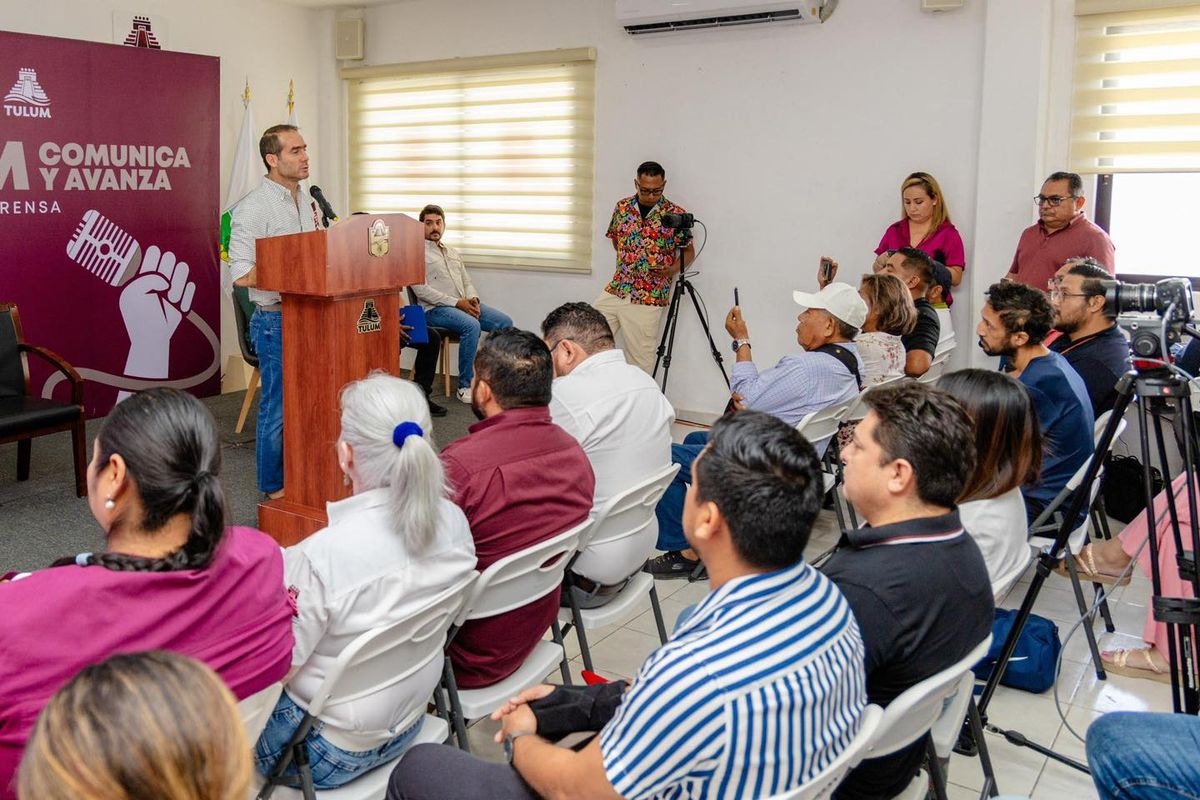
Not long ago, whispers about Tulum’s growing pains drifted through the streets like sea breeze, restless, intangible, easy to ignore. But this Monday, during the latest session of “Tulum comunica y avanza,” those hushed worries found a stage and a microphone. Beneath the golden August sun, Mayor Diego Castañón Trejo stepped forward, not with vague reassurances, but with numbers, timelines, and something rarer in political discourse: a clear blueprint of intent. At the very center of it all? Public safety in Tulum, louder and more urgent than ever.
The Human Pulse of Public Safety in Tulum
Not Just Policy, But People
Forget the sterile policy documents. Here in Tulum, safety doesn’t live in legislation, it moves through everyday life. It’s the beat officer pulling over a suspicious motorbike. It’s the hotel staff quietly alerting community WhatsApp groups when something feels off. It’s the mother in La Veleta who, for the first time in years, watches her child bike to school without the shadow of fear trailing behind.
Between July 28 and August 3, Edgar Aguilar Rico, Secretary of Public Security, reported 28 arrests: 25 for administrative offenses and three related to narcotics. These aren’t just numbers, they’re signals. Add to that the recovery of 25 motorcycles operating outside legal limits, and 19 abandoned vehicles towed from neglect into accountability.
The message is clear: the streets are no longer anonymous.
Proximity, Not Just Presence
The soul of this shift isn’t just about enforcement. It’s about closeness. Patrols now walk shoulder-to-shoulder with residents in neighborhoods like Guerra de Castas. Real-time communication channels link locals with law enforcement. And an upcoming joint operation with Playa del Carmen is set to weave tighter safety across municipal lines.

Building for Today, and Tomorrow
28 Construction Projects Anchoring the Present
Christian Moguel, the mind behind Tulum’s public infrastructure strategy, unveiled 28 active construction projects. These aren’t vanity projects, they’re vital interventions. Road improvements, expanded drainage systems in flood-prone neighborhoods, and urban upgrades are reshaping both the literal and symbolic foundations of the city.
Progress is already visible: Sagitario Street is fully repaired, and Trato Street is 95% complete. In Francisco Uh May, electrification and street lighting are bringing visibility to places long left in the dark. And in central Tulum, new absorption wells are in place to curb flooding during the rainy season.
Money Where the Plans Are
Of the 100.6 million pesos allocated for these upgrades, 78 million have already been deployed, not theorized, but transformed into concrete, cables, and labor. Tulum isn’t just dreaming; it’s building.
The Vision of 2025: Grounded in Community, Aimed at Progress
A Development Plan With People at Its Core
Planning, when done right, is a quiet act of optimism. That spirit runs through the newly presented 2025 Municipal Development Plan, introduced by Jesús Hernández Valencia. Built not behind closed doors, but through dialogue with residents, including Indigenous communities, this is a collective roadmap etched into policy.
The 2025 POA (Programa Operativo Anual) proposes a total investment of 203.45 million pesos, with nearly 95% drawn from federal funding. The plan encompasses 30 infrastructure projects and six operational initiatives: the long-awaited revitalization of Sendero Verde, phase one of a new sports complex, implementation of C5 technology at a command center in Tulum, and fresh pavement along Osiris Avenue and Cupul Street.
Accountability With Ambition
But ambition here comes with transparency. Hernández made it clear: this isn’t a closed book. Citizens are invited to question, participate, and help shape the execution. His team has already secured applications for an additional 200 million pesos in federal funds, turning intention into real leverage.

Nature’s Relentless Return, and a Human Response
Sargassum: A Battle, Not a Cleanup
Then there’s the sea, beautiful, yes, but persistent. Juan Antonio Garza, leading Zofemat’s environmental front, described July in salt and statistics: over 3,000 tons of sargassum were removed from Tulum’s beaches. Let that sink in: 3,000 tons. This isn’t maintenance, it’s resistance.
While containment boats and floating barriers from the Navy have helped, some beaches remain tangled in seaweed aftermath. Reinforcements are coming. A new federal cleanup initiative is on the horizon for August, and Garza has issued a clear call to locals: don’t just witness, participate. The coastline belongs to everyone.
The Thread That Binds: A City in Search of Balance
What connects safer streets, public works, beach battles, and million-peso budgets? A pulse. Not mechanical, but human, beating through a city wrestling with its contradictions. Between jungle serenity and urban ambition. Between the fragility of nature and the hunger for growth. Between headlines and homes.
Tulum isn’t a finished product. It might never be. But it is evolving, listening, adjusting, responding. And if this week’s forum proved anything, it’s that the kind of safety that truly matters, the safety that lets a city exhale, is being built one patrol, one plan, and one citizen at a time.
We want to hear your voice, join the conversation with The Tulum Times on social media and be part of Tulum’s story.