
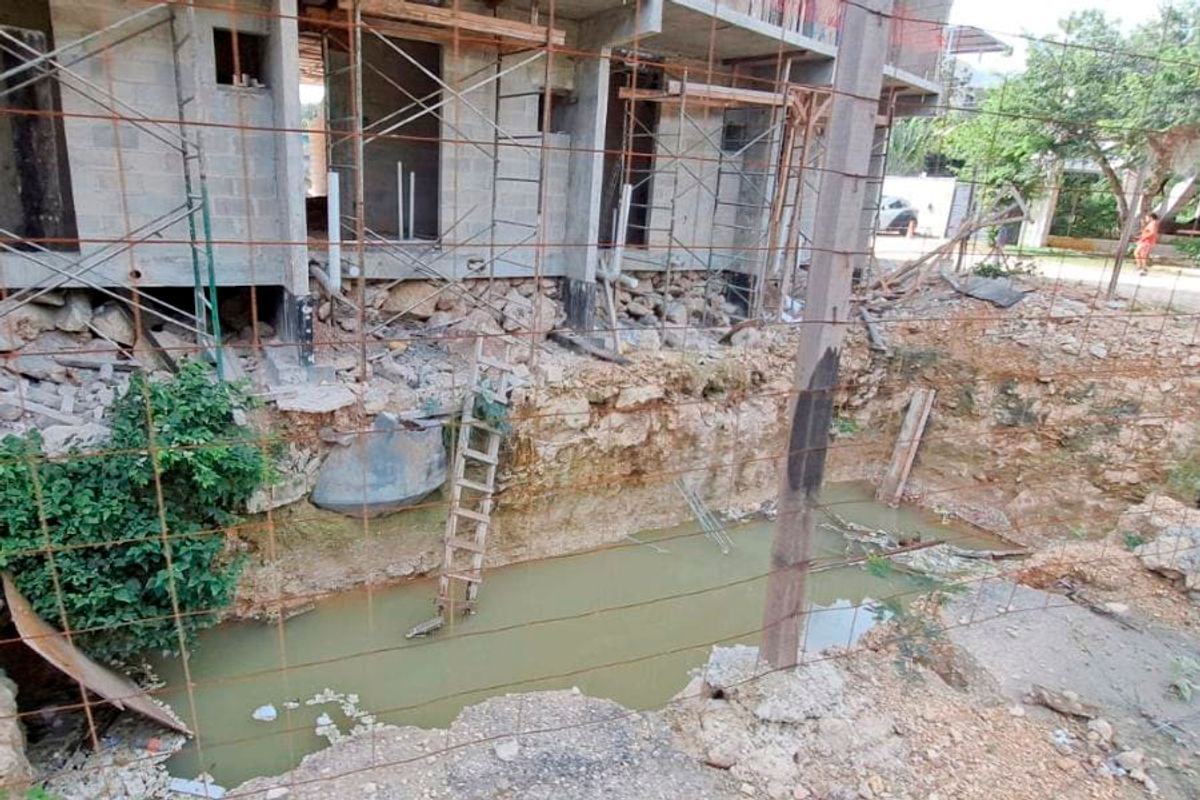
The rapid tourism growth that has transformed Tulum into one of Mexico’s most sought-after destinations is now threatening its own natural foundation. Environmental groups warn that wastewater from hotels, restaurants, and businesses is contaminating the aquifers beneath the Riviera Maya, pushing the region toward an ecological crisis that could damage its tourism-dependent economy.
According to the environmental association Tulum Limpio, the area’s treatment systems are overwhelmed, leading to sewage leaking into the groundwater and coastal ecosystems. The contamination, they say, is already visible in some cenotes, those turquoise sinkholes that symbolize the region’s connection between land and water.
“The current systems are over capacity, and hotel discharges go directly into the ground,” said a spokesperson from Tulum Limpio. “In several cenotes and coastal zones, you can already find traces of fecal matter.”
The discovery raises a serious question for one of Mexico’s fastest-growing destinations: can Tulum continue to expand without destroying the very nature that draws millions of visitors each year?
A paradise under pressure
In Quintana Roo, tourism development has been both a blessing and a burden. Over the past decade, Tulum’s rapid urbanization, fueled by hotel construction, luxury condos, and restaurants, has outpaced the region’s basic infrastructure. Wastewater management, once a secondary concern, has become the central environmental issue.
Laboratory analyses and community reports reviewed by The Tulum Times confirm the presence of organic pollutants in the groundwater system. Environmental experts warn that contamination could soon reach deeper aquifers, affecting not only cenotes but also drinking water sources across the Riviera Maya.
One activist summarized the local fear succinctly: “People come here for the color of the water, for its purity. If they knew what’s really in many of these cenotes today, they might hesitate to swim.”
The invisible flow beneath the surface
Tulum’s landscape hides an intricate network of underground rivers. These natural conduits connect cenotes, mangroves, and the Caribbean coast. Any contamination in one section can quickly spread across the region, making cleanup nearly impossible once pollution enters the system.
Environmental scientists have long warned that septic tanks and small-scale treatment plants, common in hotels and private developments, are inadequate for the volume of wastewater generated. Most operate below capacity, lack proper maintenance, or are built without strict oversight.
In technical terms, Tulum’s challenge is not just quantity but diffusion: wastewater seeps through porous limestone directly into the water table, bypassing the natural filtration that soil would normally provide. The result is an invisible but expanding contamination zone.
A call for a shared solution
To address the crisis, Tulum Limpio is proposing a regional wastewater treatment plant capable of handling the combined discharge from multiple establishments. Such a facility, they argue, could significantly reduce environmental risk while establishing a model of collective responsibility among local businesses.
“It makes no sense for thirty hotels to run thirty small plants, each operating at half capacity,” said the association’s representative. “One well-designed and supervised plant could process everything efficiently and prevent irreversible damage.”
The idea aligns with broader environmental strategies being discussed across Mexico’s Caribbean coast. In Playa del Carmen and Cancún, similar regional systems have improved water quality in high-density zones. But in Tulum, local regulations and fragmented land ownership have made coordination difficult.
Municipal officials have acknowledged the problem but cite legal and budgetary limits. While some private developments have begun upgrading their facilities voluntarily, the lack of unified planning continues to hinder large-scale solutions.
Ecological responsibility meets economic survival
The tension between growth and conservation is not new to Tulum, but the stakes are rising. Tourism accounts for nearly all of the municipality’s income, and its image as a natural sanctuary is its most valuable asset. If that image fades, so could investor confidence and visitor demand.
Environmentalists argue that sustainability is no longer a branding option, it’s a survival strategy. And while many businesses promote “eco-friendly” credentials, few are addressing the root issue: wastewater management.
“Tulum is at a crossroads,” said a local biologist involved in groundwater monitoring. “Either it invests in collective infrastructure now, or it will pay the price later in lost biodiversity, health risks, and declining tourism.”
That statement encapsulates the paradox of Tulum’s success: the more it grows, the greater the pressure on the fragile ecosystem that sustains it.
What’s at stake for the Riviera Maya
Beyond Tulum, the issue reverberates across Quintana Roo. The contamination of aquifers could eventually affect the entire Riviera Maya, from Akumal to Bacalar. Experts warn that without coordinated intervention, the problem might escalate into one of Mexico’s largest coastal sanitation crises.
Regional tourism boards have started to discuss stricter environmental certification for hotels and restaurants. Yet without enforcement and shared infrastructure, such measures could remain symbolic.
For now, activists continue to test water samples, raise awareness, and push for state-level action. The question is whether authorities will respond before irreversible damage occurs, or after tourists begin to notice the change themselves.
Tulum’s struggle with water pollution is more than an environmental story. It reflects how unchecked growth can erode the foundations of prosperity in paradise.
We’d love to hear your thoughts. Join the conversation on The Tulum Times’ social media.
Could Tulum still reinvent itself as a truly sustainable destination before the damage becomes permanent?