
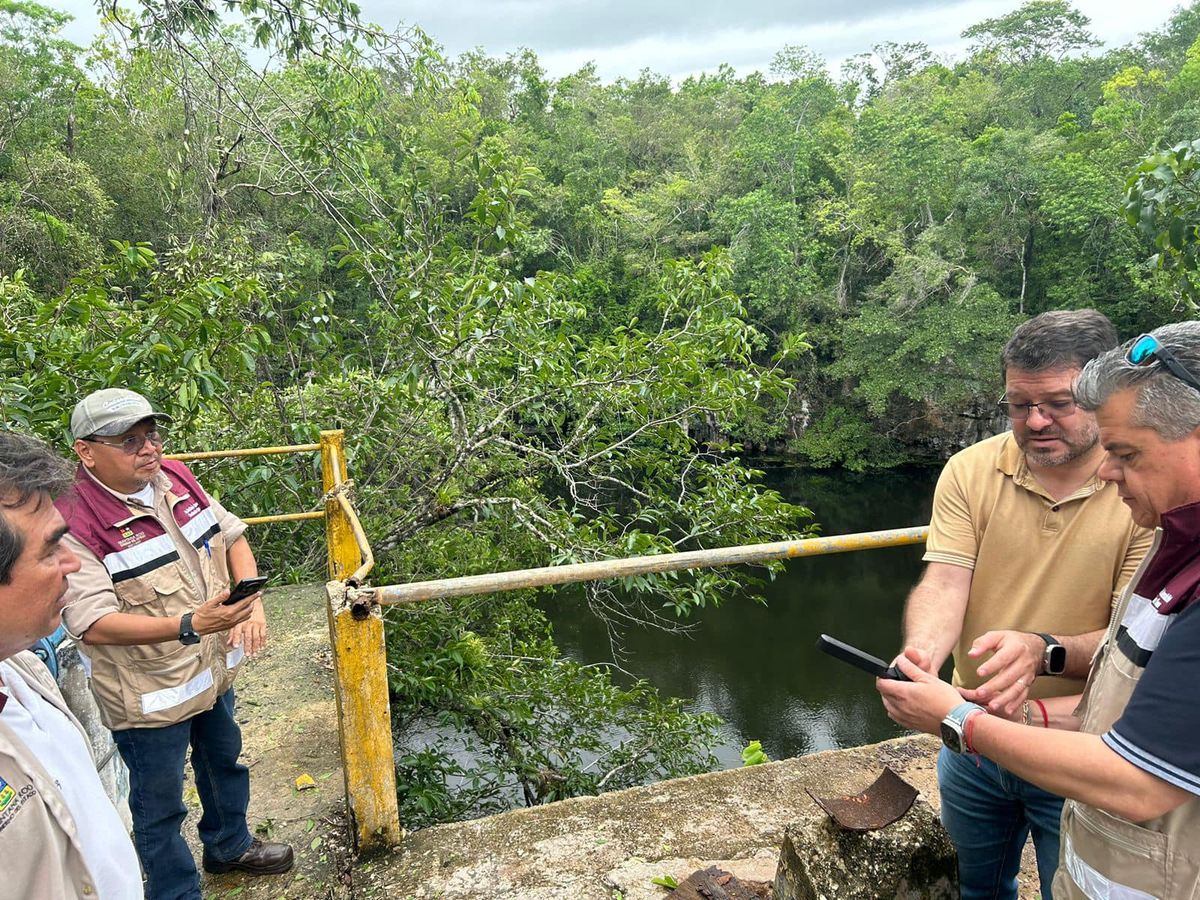
In the dense heat of a June morning, a new phrase has started to echo across the limestone bedrock of Tulum: Drinking Water Extraction Zone. It doesn’t exactly roll off the tongue, but it carries the weight of a city bursting at the seams, thirsty for growth and, more pressingly, for clean water.
The Blueprint Beneath the Jungle
Just 4.8 kilometers north of the Tulum-Cobá highway, tucked behind the scrub and shadow of Macario Gómez, the Government of Quintana Roo plans to drill deep. Seventy hectares of state-owned land will be transformed, not quietly, into a matrix of 24 deep-water wells. Each borehole, engineered to pull 25 liters per second, promises a collective yield of 600 liters per second. That’s a river beneath the earth, redirected by steel and pressure, and funneled toward a city whose demand now outpaces its supply.
And yes, it comes with a price tag that smacks like salt in the mouth: 542 million pesos, give or take a few centavos. All of it laid out in a Manifestación de Impacto Ambiental (MIA) request, now making its rounds through the wheels of SEMARNAT’s environmental oversight.
Drinking Water Extraction Zone: Promise or Provocation?
The term may sound sterile, but it’s anything but. The project isn’t just about infrastructure; it’s about geography, ecology, and an uneasy balance between progress and preservation. The aqueduct that will snake alongside the state highway spans more than 14 kilometers, composed largely of high-density polyethylene pipe stretching 28 inches wide in parts. It’ll cross federal highways, hug the path of the Tren Maya, and eventually tie into the artery that feeds Aldea Zama, one of the trendier quadrants of town.
The numbers are precise, almost clinical. A 1.86-hectare conduit. A 1.3-meter-wide pipe. A 76.15-hectare footprint. But what do they actually mean to the people who live here? For some, it means shorter lines and better pressure. For others, especially those eyeing the environmental toll, it raises old ghosts, of cenotes gone dry, of ecosystems shuffled and reshaped without consent.
What Lies Below, and What Comes After
Each well, as outlined in the MIA, will drop 30 meters into the karst. Fourteen-inch shafts wrapped in slotted pipe, sealed tight to stave off contamination. Sanitary brocals. Air valves. Pressure release systems. It reads like an engineer’s lullaby. But what isn’t said outright speaks loudest: the source water must be far enough inland to dodge the brine of coastal intrusion. In short, they’re reaching deeper and wider because the old wells just aren’t cutting it anymore.
There’s something metaphorical about the whole endeavor. Tulum, the golden child of Riviera Maya tourism, now finds itself digging deep, not just into the ground, but into its own future. Growth has a cost. And water, the very thing that once made this place sacred to the Maya, is now being rerouted in polyethylene veins.
The Thirst of a City on the Edge
The justification is clear, at least on paper: exponential population growth, overburdened infrastructure, and the need for higher-quality, saline-free water. CAPA insists the project is integral to maintaining not just quality of life for locals, but also the shimmering illusion that draws millions of tourists each year. You can’t build a boutique hotel without water. You can’t wash linens, serve cocktails, or keep pools glistening without it either.
But the deeper question lingers: can a place built on mystique and natural wonder continue to sprawl outward without unraveling what made it magical in the first place?
The answer, if it exists, is buried beneath 30 meters of limestone and ambition.
We’d love to hear your thoughts, join the conversation on The Tulum Times’ social media.