

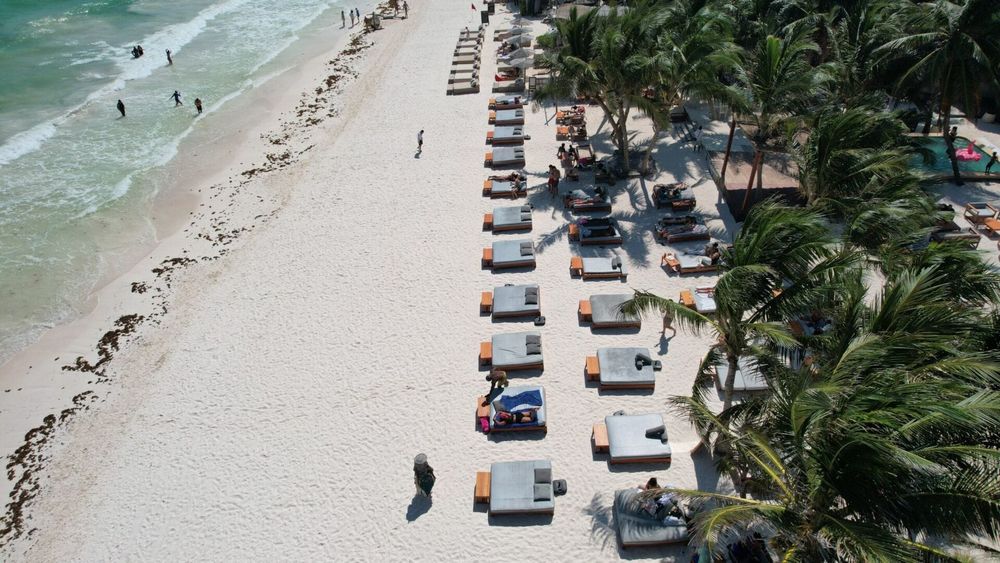
A lone traveler stands on Tulum’s once-pristine beach, eyes scanning a shoreline now buried under mounds of foul-smelling sargassum. The turquoise Caribbean waters that drew dreamers from across the globe are brown and teeming with seaweed. Overhead, pelicans circle idly, few tourists are left to startle them. Tulum is in crisis. In 2025, this bohemian paradise is at a breaking point, hit by a perfect storm of natural disaster and human missteps that has sent its tourism industry into a tailspin.
First came nature’s rebuke: a record-breaking sargassum bloom in 2025 that smothered the Riviera Maya coastline. By April, scientists reported the largest sargassum influx ever recorded, with vast brown mats stretching across the Atlantic and washing ashore in unprecedented volumes. For Tulum’s delicate ecosystems and postcard beaches, it has been nothing short of catastrophic. Piles of rotting seaweed now line the sand in waist-high drifts, killing sea turtles and fish, and releasing a stench of decay that hangs over formerly idyllic shoreline cabanas. The sargassum crisis of 2025 has driven tourists away in droves – after all, who books a luxury beach vacation only to find the beach itself disappearing under an endless tide of algae?

Yet even if the seaweed were to vanish tomorrow miraculously, Tulum’s troubles would be far from over. Years of soaring prices and unsustainable growth have sparked a fierce backlash among travelers and locals alike. Once a laid-back hideaway for backpackers and yogis, Tulum practically became a high-end hotspot overnight. The boom brought glossy boutique hotels, $20 cocktails, and restaurant bills to make New York foodies blush. But the same visitors who happily paid a premium for “Tulum chic” a few years ago are now hitting their breaking point. Social media is rife with disillusioned tourists warning that Tulum isn’t worth it anymore – not when a simple dinner can cost more than an entire day’s budget elsewhere in Mexico, and certainly not when thick seaweed covers the beaches. Tulum’s travel costs have shot through the roof, and the world has noticed.
Local businesses have been caught in a cruel bind. On one hand, commercial rents and operating costs in Tulum surged as speculation and demand skyrocketed. Iconic mom-and-pop taco joints and artisan shops that gave the town its soul have been pushed out by landlords seeking triple the rent, or elbowed aside by glitzy international brands. On the other hand, visitor patterns are changing in ways that undercut the old business models – today’s travelers compare prices on their phones and think twice. Why buy overpriced souvenirs from a trendy boutique when a similar item can be found online or in a less expensive town? Why hail a marked-up taxi in Tulum when a rideshare app offers a fare at half the price in other parts of Mexico? This digital competition has further squeezed those local operators who struggled to adapt. The result is painful: empty tables at once-thriving restaurants, quiet nights at boutique hotels that a year ago were booked solid, and a local economy feeling the strain.

As if these challenges were not enough, Tulum’s grand infrastructure bet – the new Felipe Carrillo Puerto International Airport – has stumbled just when the town needed a win. In late 2024, the opening of Tulum’s very own airport (code TQO) was hailed as a game-changer. And indeed, in its first year, the airport saw over 1.2 million passengers, far exceeding expectations. But 2025 brought a harsh dose of reality. Instead of ramping up flights, several major airlines pulled back. Routes trumpeted with fanfare were quietly scaled down or canceled outright. By mid-2025, at least two international carriers had axed all their Tulum flights, and U.S. airlines like United and JetBlue slashed their schedules, citing weak demand. The sight of half-empty planes and shrinking arrival numbers at TQO starkly contrasts with the optimism that built it.

Behind those cancellations lies a tangle of regulatory and infrastructure hiccups plaguing the new airport. Passengers arriving in Tulum have reported frustrating delays at understaffed immigration checkpoints and baggage areas that are still working out their kinks. Some carriers whispered of bureaucratic headaches in obtaining route permits and coordinating with federal authorities at this brand-new hub. The result is that many airlines find it easier to funnel tourists through Cancún’s established airport rather than gamble on Tulum’s unfinished promise. In the meantime, Tulum’s shiny new terminal hasn’t gone entirely quiet – it’s just filled with the wrong kind of traffic. Private jets and charters are now a common sight, whisking in celebrities and influencers to exclusive villas, while commercial flights dwindle. This growing reliance on private aviation only underscores the town’s painful divide: Tulum is at risk of becoming a playground for the ultra-rich, with an empty airport for everyone else.
All these threads – the sargassum invasion, the price backlash, the faltering airport – are woven together in Tulum’s unfolding crisis. Each problem feeds the next. Fewer flights mean fewer tourists patronizing hotels and tours, sapping revenue needed to combat the environmental disaster on the shore. Seaweed-choked beaches and viral complaints of price-gouging mean those flights go unfilled, convincing airlines to cut more routes. It’s a vicious cycle, and its effects are glaring. This year, the hotels and guesthouses that managed to stay open reported occupancy well below normal; some estimates show the Riviera Maya’s accommodations are seeing double-digit percentage drops compared to last year. The usually packed Tulum archaeological site – those famous clifftop Mayan ruins with a sea view – has seen visitor numbers plunge by nearly 24% from a year ago. What was once an unstoppable tourism juggernaut has ground to a worrying halt.

Adding to the growing sense of exclusion, one of Tulum’s most painful changes has been the quiet disappearance of public beach access. What were once open, free stretches of coastline, welcoming to locals, backpackers, and families alike, have now been absorbed into the newly established Jaguar National Park. With this reclassification, access to beaches like Playa Pescadores and Playa Santa Fe now requires entrance through official park gates and a significant fee. For many visitors and residents, the notion of a beach town where the sea belongs to everyone is slipping away. The high cost of simply stepping onto the sand only deepens the perception that Tulum is becoming reserved for those who can afford to pay the price, not just for luxury, but for nature itself.
And yet, amidst the anxiety and loss, Tulum’s story is not simply one of defeat. In the face of adversity, this community is beginning to rally. Local volunteers and workers gather with rakes and wheelbarrows at dawn, determinedly clearing sargassum from the sand daily. Their task is Sisyphean – the seaweed returns as fast as it’s removed – but each morning they start again, fueled by love for their home and hope that tourists will find their way back. Entrepreneurs and researchers, too, are seizing this moment to innovate. In makeshift labs and workshops, they turn dried seaweed into opportunity: compressing it into bricks for eco-friendly construction, or experimenting with it as fertilizer and biofuel. What was once viewed only as a curse on the beaches sparks creative new eco-industries that might provide jobs and environmental benefits in the long run.
Local businesses are adapting in other ways, striving to win back goodwill. Restaurateurs have launched “locals’ nights” with affordable prices for residents and budget-conscious visitors, a humble nod to the days when Tulum was inclusive rather than exclusive. Hotels that once catered only to influencers and luxury seekers now quietly offer discounts or partner with airlines and booking sites to create value deals that seem almost out of character for the Tulum of recent years. Some boutique hotel owners, faced with emptier rooms, have started emphasizing cultural experiences – offering free guided nature walks, supporting local artists with in-house galleries, anything to reconnect with the authenticity that put Tulum on the map. In the town center, community forums and Facebook groups buzz with ideas: a cooperative shuttle service to undercut the pricy taxis here, a “farm-to-table” market to support local farmers and make food both sustainable and affordable, mentorship programs where established businesses help smaller vendors improve their online presence. These grassroots efforts signal that many in Tulum realize the old way of doing things must change if the town is to survive this slump.
Officials, for their part, can no longer ignore the cracks in Tulum’s facade. After years of touting record visitor numbers and luxury investment, local authorities now speak of sustainability with newfound urgency. Emergency funds have been allocated to sargassum cleanup and to maintain beach barriers that try (with mixed success) to keep the seaweed offshore. There is talk of imposing stricter environmental regulations on new developments and enforcing fair pricing laws so that tourists aren’t blatantly overcharged by taxis or tour operators. Plans are underway to improve infrastructure, from better roads and public transport to reliable utilities, to show that Tulum can support the growth it once chased. The new airport’s management is scrambling to lure back airlines, possibly with incentive packages and by streamlining those regulatory kinks that scared carriers away. Whether these steps come too late is an open question, but they represent a shift in mindset: an acknowledgment that Tulum must balance growth with care for its natural treasures and its community’s well-being.
Please make no mistake: Tulum’s decline in 2025 is a self-inflicted wound as much as a tragedy of external circumstances. Climate change and global ocean currents delivered the sargassum nightmare, but unchecked greed and shortsighted planning primed the town for collapse. When a destination charges New York prices but delivers less comfort and reliability, and when it forgets the very simplicity and natural beauty that made it attractive, travelers will eventually rebel. We are witnessing that rebellion now. But we are also seeing Tulum’s remarkable resilience. This town has not given up, and neither should we.
Tulum’s future hangs in the balance. The hardships of 2025 have been a bitter lesson and an opportunity to change course. The soul of Tulum – its stunning nature, rich Maya heritage, and people’s warmth–is still alive beneath the seaweed and the hype. It can be revitalized if all stakeholders choose a wiser path forward. That means business owners are committed to fair prices and genuine hospitality, investors and officials are committed to sustainable development and environmental stewardship, and visitors are showing support for the community beyond the Instagram highlights. If Tulum can learn from this crucible and reclaim the ethos of harmony with nature and culture that once defined it, then this decline can be the prelude not to a permanent fall, but to a powerful comeback story.
The world will be watching in the months and years ahead. Will Tulum remain a cautionary tale of paradise lost to greed and neglect, or will it become a model for rebirth in the face of adversity? The answer is being written now on its sargassum-strewn shores, in its struggling businesses, and in the hearts of those who refuse to let Tulum’s dream die. In this urgent moment, one thing is clear: Tulum must change to survive, and the time for that change is now.