

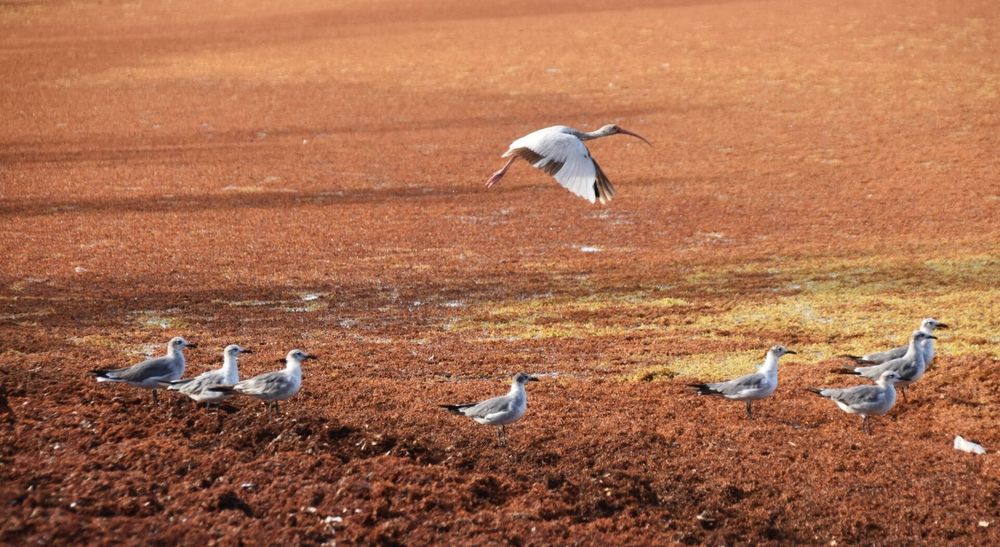
A tide of seaweed is swallowing Tulum’s shore – and this year it came with unprecedented force. By mid-2025, local crews had hauled in over 2,000 tons of sargassum from Tulum’s sand, more than double the amount taken a year earlier. The ultra-white beaches that once made Tulum a sanctuary now look like a brown, toxic carpet creeping inland. Why is there so much sargassum in Tulum, and more urgently, why isn’t anyone doing enough to stop it?
Tulum’s economy is built on that sand and surf – yet today the coastline is paralyzed. Luxury hotels and beach clubs sit idle, their crowds dwindling. Tourist numbers that normally soar in summer have flatlined, leaving the service industry panicked. One city councilor warned, “That patience has a cost – tourists will opt for other alternatives.” Still, local officials remain oddly optimistic: the tourism director had predicted 80% hotel occupancy this season despite the seaweed invasion. The desperate hope seems to be that the algae will miraculously wash away – but the evidence suggests the opposite is true. And the longer they wait, the deeper the damage.
What’s Working in Puerto Morelos That Tulum Hasn’t Tried
It’s instructive to look north at neighboring Puerto Morelos. There, officials invested in a fortress of floating barriers: more than 2,100 meters of orange mesh now sit miles offshore. Those nets divert roughly 90% of the incoming sargassum before it ever hits the sand. Specialized boats then skim and vacuum what sneaks through, keeping the sand almost spotless. In effect, Puerto Morelos has built a two-tier defense system: fences at sea plus agile beach crews on land. The result is clean, blue beaches and steady tourism.

Tulum, by contrast, has none of that armor. Why not? Why has one of Mexico’s most visited coastal towns remained so vulnerable, so passive? The answer says a lot about political will and what happens when it’s absent.
Why Is There So Much Sargassum in Tulum? Natural Forces at Play
The answer is layered. For one, nature itself can be a culprit. Tulum’s coastline is geologically more exposed and irregular than some calmer bays. Strong currents and surf in places like Tulum’s National Park have repeatedly foiled barrier deployment. The Navy has installed thousands of meters of barriers along Quintana Roo, but strong waves in regions like Tulum impede their installation in key points.
In plain terms, the seas around Tulum make anchoring long nets tricky. Crews might lay buoys, only to have storms knock them loose. In fact, local fishermen observed that by late May 2023, weeks past the promised deadline, only the buoys for a barrier had been dropped – no fence was ever strung between them. A visual metaphor for the town’s own half-measures.

Bureaucracy, Delays, and the Politics of Inaction
Another factor is bureaucracy and delays. The Mexican Navy (SEMAR) was tasked with Tulum’s barrier early in 2023, but progress stalled. Locals report that sailors once unloaded material onto the beach, yet the work never progressed fully offshore. The municipal beach authority even admitted it “didn’t know why” the installation lagged.
Each passing month adds sargassum to the pile. And every week that officials don’t act is a week that businesses suffer. There have been hints of mismanagement: sargassum barriers can cost up to 500 pesos per meter, and some contracts were inflated threefold. This isn’t just slow action, it’s potentially a misuse of resources, and no one seems to be held accountable.

The Real Cost of Ignoring the Sargassum Crisis
Cost isn’t the only answer. Politics and priorities play a role. Tulum’s city government has often emphasized long-term sustainability, but opponents argue that this leaves little left for immediate fixes. Some travelers even posted complaints: “Semar fails to clean Tulum’s beaches,” read a local protest on social media.
In July 2025, a federal Environment Secretary met with Tulum officials and business owners to tackle just this frustration. She pledged a new multi-level task force. But it was already too late for the peak season. The disconnect between talk and timely action continues to erode trust in institutions that should be protecting one of Mexico’s most valuable assets.
Climate Change, Pollution, and the Bigger Ecological Picture
Still, why did it wait until July? Some point to a dangerous misconception: that sargassum is a once-in-a-blue-moon nuisance. In fact, scientists warn that the problem is climate-driven and worsening. Warm seas, nutrient runoff, and shifting currents create what some call a “new normal” – a brown tide that won’t recede without active intervention.
It’s not just a seasonal mess, it’s a symptom of environmental breakdown. And as long as we pretend it’s temporary, we’ll keep losing the battle.

Poison Below the Surface: Tulum’s Hidden Contamination
Consider this: villages around Tulum have even discovered that their freshwater sources are tainted. A secret study found fecal bacteria and household chemicals in popular cenotes, up to 400% above safe limits. In other words, the very resorts and developments that made Tulum famous have been poisoning its underground rivers, sending a toxic brew toward the barrier reef below.
If Tulum continues to ignore what flows beneath, no amount of beach cleaning will fix what’s coming from the inside out.
Lessons from Other Towns in the Riviera Maya
And yet, the fight isn’t lost. Other parts of Quintana Roo show what’s possible. In Mahahual, a similar resort town, a coalition of hoteliers and volunteers has cleaned hundreds of tons in a single day. There, too, barriers and navy ships work in tandem.
Even in Tulum, some resorts have quietly hired boats to skim offshore or have workers shove the worst heaps into trucks each dawn. It’s not coordinated, and it’s not enough, but it shows that some people are no longer waiting.
Why Tulum Still Has Hope Beyond the Beaches
Each hurdle on its own is surmountable – the combination has been brutal. The net effect? Tourist dollars evaporate. Hoteliers report cancellations and walkouts; occupancy that was once sky-high in summer has never felt this low.
But let’s be clear: this isn’t just about sargassum. It’s about credibility. About whether people still believe Tulum is a place worth investing in, visiting, and preserving.
A Call for Urgent Action Before It’s Too Late
So even as piles of sargassum smother the sands, Tulum hasn’t entirely lost its magic. The story here isn’t only about neglect or failure; it’s about a call to urgent action. Residents and business owners are finally raising their voices together, demanding that governments at all levels step up. Someday soon, if the beaches are cleaned and the processes fixed, this crisis will look like a dark chapter we managed to close.
But make no mistake, this is the turning point. And if leadership continues to delay, the world will start turning away. Even if the algae linger longer, travelers should remember: Tulum’s soul isn’t just in its shoreline. It lives in the underground cenotes, the jungle lakes, and the reef teeming with life beneath the waves. Those treasures await, a reminder that this place is still filled with beauty, even when the sand is temporarily brown.