

On a humid Tulum evening, under garlands of papel picado and swaying palm fronds, an elderly Maya healer named Doña María fans copal incense over a small crowd. Children with faces aglow from candlelight watch intently as she murmurs an ancient blessing in Yucatec Maya. Not far away, the Caribbean surf crashes against the cliffs that cradle Tulum’s famous ruins – silent stone sentinels of a civilization past. Yet here, in the present, Maya culture is no museum relic. It thrives in the language, rituals, and daily rhythms of this coastal town. The past isn’t just prologue in Tulum; it’s an ongoing story, whispered in two languages and enacted in both humble homes and public festivals.
Echoes of Zama in a Modern World
By the time the Spanish arrived in the 16th century, Tulum – known as Zamá, the City of Dawn – was already a fading beacon of the Postclassic Maya world. Once, its walls protected seafarers and priests trading jade and cacao, and its temples guided merchants navigating by starlight. Those stones still stand, streaked with salt and history. But beyond the tourist throngs at the archaeological site, the Maya legacy endures in subtler ways. Walk a few blocks into town or venture into the nearby villages, and you’ll hear it: elders chatting in Maya over morning café de olla, the roll of x’s and k’s in their speech as familiar as the rustle of coconut palms.

In the tiny pueblo of San Juan, just west of Tulum’s glittering hotel zone, a grandmother scolds a wayward grandchild in Maya for forgetting to take off his muddy sandals indoors. The boy answers back in Spanish, giggling – a playful act of rebellion. It’s a small domestic scene, but it speaks volumes. “Our language is who we are,” says Elvia Caamal, a local schoolteacher who runs an after-school Maya language club. She’s watched Spanish and English flood the streets as Tulum’s population booms, yet she refuses to let Maya be drowned out. Every week, she gathers a dozen children (including that cheeky grandson) to teach them traditional lullabies, greetings, and even texting slang in Maya. “Chi ka’ano’on mixba’al,” she tells them with a smile – we are nothing without our language.
That language, Yucatec Maya, is very much alive here. It’s estimated that about a third of Tulum’s residents still speak an Indigenous tongue at home, most of them Maya. In rural pockets around the municipality, Maya is the first language of daily life – the tongue of prayer, of marketplace banter, of bedtime stories about the aluxo’ob (mischievous forest sprites) that little ones swear hide among the mangroves. Even in town, you’ll catch the cadence of Maya in the melodies of street vendors hawking elotes or in the quiet gossip among taxi drivers at the end of a long shift. In a region where ancient scribes once etched royal decrees into limestone, their descendants now swap jokes on WhatsApp in the same enduring language.
Rituals Under the Same Sky
Every fall, as October bleeds into November, Tulum transforms for Hanal Pixán – the Maya Day of the Dead. Tourists nursing their mezcal cocktails might stumble upon a strange and beautiful procession at dusk: the Walk of the Souls. Local families, dressed in embroidered huipiles and guayabera shirts, drift through town toward the cemetery, carrying candles and photographs of their departed loved ones. The scent of copal resin and marigold fills the air. It’s both haunting and joyous – a bit like Halloween meets a sacred homecoming. On this night, Tulum’s neon-lit bars and boutique shops fade into the background, overtaken by hundreds of flickering candles that trace a path to the underworld. “We do this so the young ones never forget who we come from,” explains Martín Pech, a community organizer who helped revive the Walk of the Souls tradition in 2018. He remembers a time not long ago when few families here formally celebrated Hanal Pixán. “Now even the teenagers post pictures of altars for their abuelos on Instagram,” he chuckles, “with the hashtag #HanalPixan – imagine!” Tradition has a way of adapting and surviving, even in the selfie age.
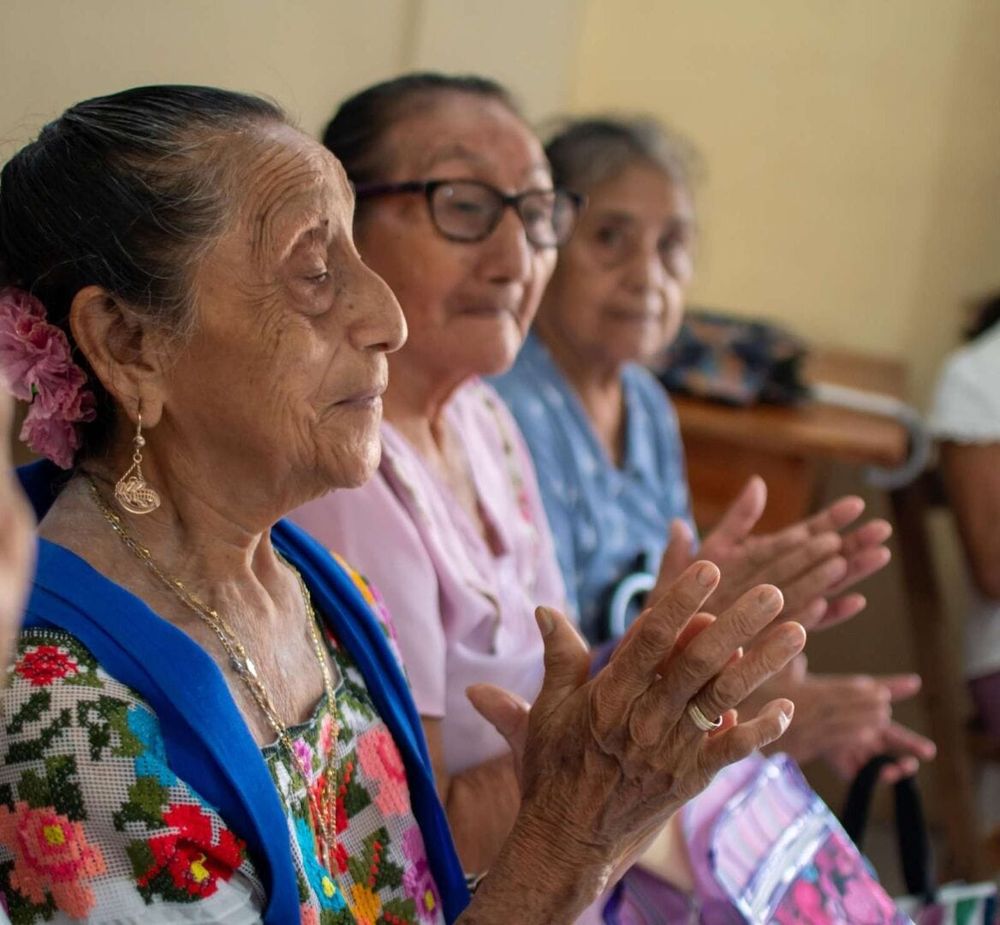
Ritual life in Tulum is an amalgam of the old and new. Catholic saints are honored in the whitewashed church off the main plaza, but many Maya villagers also keep a sacred zahcab (corn altar) tucked in a corner of their homes, where they leave offerings to the rain god Chaac when the dry season drags on too long. You might find a modern Maya family attending mass on Sunday and then driving out to a jungle cenote to ask permission from the duendes (spirits) before taking a swim. It’s not superstition, they’ll tell you – it’s respect. Nature is as alive as any ancestor in Maya cosmology, and in Tulum that belief is more than folklore; it guides how people plant their milpas, gather medicinal herbs, and even how they build their homes to face the rising sun.
And if you think these rituals are purely private affairs, think again. Tulum’s cultural calendar is increasingly dotted with public ceremonies. At the spring equinox, local spiritual leaders perform a sunrise blessing at the Tulum ruins, welcoming the sun back to its northern journey. A conch shell sounds, its mournful horn echoing off the Temple of the Wind, and prayers in Maya soar above the sea’s roar. Tourists sometimes join in respectfully, forming a curious semi-circle around the healers. It’s part spectacle, sure, but also something genuine: a bridge between worlds, ancient and modern, staged on limestone cliffs by the Caribbean Sea.

Crafting Identity, Thread by Thread
Young women in Tulum perform a traditional dance in brightly embroidered huipil dresses during the annual Fiesta de la Cancha Maya, celebrating their heritage with every step.
On a recent March evening, the basketball court in downtown Tulum – dubbed Cancha Maya – throbbed with the sound of marimbas and jarana guitars. It was the first night of the Fiesta Tradicional de la Cancha Maya, and dozens of local artisans had set up stalls around the perimeter. The scene was a swirl of color: racks of hand-embroidered blouses showing off the brilliant floral patterns known as bordados mayas, tables piled with woven palm baskets and carved wooden jaguars, the air thick with the sweetness of xtabentún liqueur and pork roasting in pib ovens underground. A troupe of young women in white huipiles, their skirts heavy with bright needlework, twirled in unison to a Maya jarana dance – each spin a display of both pride and flirtation. Their mothers and grandmothers cheered from the sidelines, some in the same style of dress, their faces glowing with sweat and satisfaction.
This biannual festival is more than a fair; it’s a lifeline for Maya artisans and a statement that “lo nuestro vale” – our heritage has value. Earlier that day, Quintana Roo’s state governor, Mara Lezama, had been on hand at the community dome (Domo Dos Aguas) to inaugurate the festival and honor veteran artisans from villages like Hondzonot and Chanchen Primero. With Tulum’s mayor by her side and a crowd of master weavers and woodcarvers watching, she spoke about the “manos mágicas” – magic hands – of the Maya creators. “Hoy abrazamos con orgullo nuestras raíces y nuestra historia ancestral,” she proclaimed – today we embrace with pride our roots and ancestral history. Flanked by beaming craftswomen in their 70s and 80s, the governor urged the community to keep passing these conocimientos, these skills and knowings, down to the next generation.

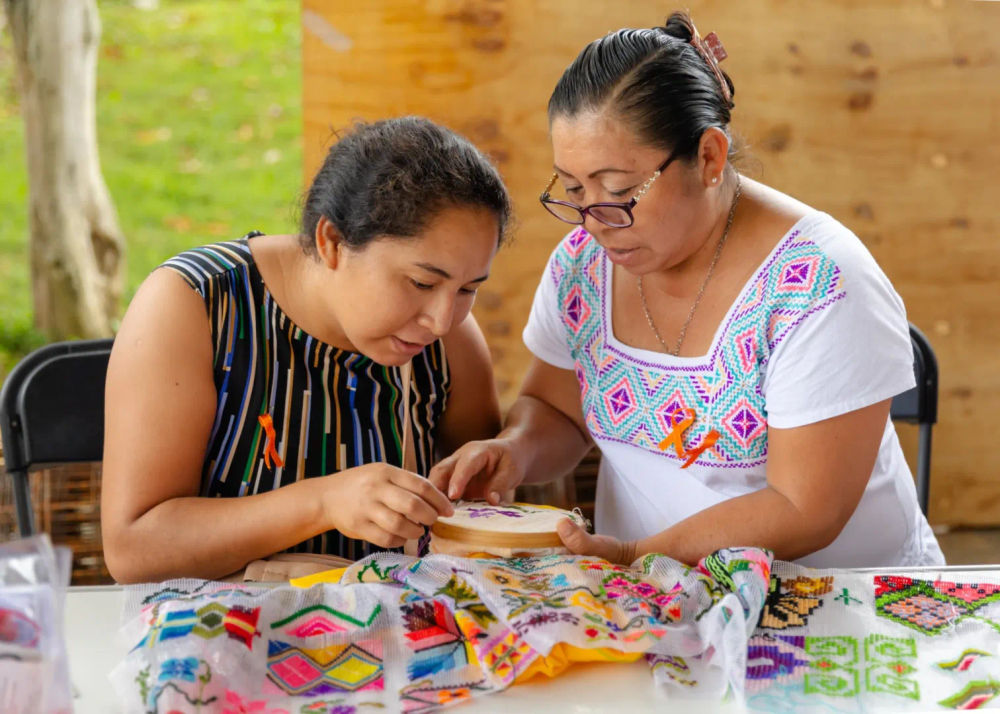
For artisans like Hilario Poot Pech, that mission is personal. Hilario is a quiet, sturdily built man from Chanchen Primero who has been carving wood since he could grip a machete. I find him at his festival stall carefully polishing a small statue of the Maya rain god. The figure’s eyes are inlaid with mother-of-pearl; it glints as if alive when he holds it up to show me. “My father taught me this,” Hilario says in a soft voice. Each scar on his hands tells a story of apprenticeships in dark huts by candlelight, of mistakes and mastery earned over decades. “When I carve a jaguar or an ídolo, I’m telling the story my tatabuelos (great-grandfathers) told me,” he explains. Lately, Hilario has started taking on young apprentices from the village – including, somewhat to his surprise, two young women interested in learning the once-macho art of woodcarving. He grins shyly when I ask if he’s a good teacher. “Poco a poco – little by little,” he says. “They’ll be even better than me, you’ll see.” Moments later a couple of tourists wander over, drawn by the gleam of Hilario’s carvings. They ask for prices in broken Spanish. He breaks into a broad smile and switches to fluent English – another skill he’s had to learn to survive. Yes, the statue is for sale, and yes, he’ll happily explain its meaning. In that moment Hilario embodies the balancing act so many Maya artisans perform: preserving tradition while engaging with the globalized world on their own terms.
The craft renaissance in Tulum isn’t happening by chance. Behind the scenes, local cooperatives and NGOs are helping artisans adapt and thrive. Fundación Tulum, a nonprofit founded in 2006, runs programs that help Maya women market their embroidery and textiles to high-end boutiques and hotels, ensuring that grandma’s cross-stitch can put granddaughter through school. The state government, under its new “Artesanas del Bienestar” initiative, has even helped establish official artisan cooperatives – complete with brand logos and online catalogs – so that a hammock woven in a tiny Maya village can now be sold to a customer in Mexico City or Los Angeles with a few clicks. Earlier this year, Tulum proudly opened the first state-run Casa de las Artesanías shop in the new Jaguar National Park, right by the ruins. This airy storefront, curated like a gallery, offers only authentic Quintana Roo artisan work, each piece tagged with the artist’s name and town. A portion of every sale goes straight back to the artisan. It’s both a business and a cultural statement: a challenge to the mass-produced trinkets in the tourist markets, and a bet that visitors will pay more for the real thing when they know the story behind it. So far, that bet is paying off – the store has drawn steady crowds, and artisans like Hilario report new orders coming in from patrons who discovered them in Tulum.
Teaching the Young, and Learning from Them
Culture in Tulum isn’t just being preserved in displays and festivals – it’s being lived and taught in everyday life, especially to the young. At the Casa de la Cultura de Tulum, a low-slung community center on Alfa Sur Street, kids from all backgrounds mingle in music and dance classes. On any given afternoon you might hear a group of Maya teens strumming jaranas (small guitars) and belting out the verses of “La Guacamaya,” a traditional Yucatec song, while next door a hip-hop class thumps bass beats. It’s a fitting picture of Tulum itself – a little bit Maya, a little bit global, and utterly its own. The cultural center’s director, Professor Arsenio Cetina Ek (himself of Maya heritage, as his last name attests), has made it his mission to incorporate Maya arts into the curriculum. He’s brought in local elders to teach jarana dance steps and hired weaving instructors to show children how to create the geometric patterns their ancestors once etched into temple walls. “We have to make it fun,” he says. “If it feels like school, they won’t care. But if it feels like pride, they will.”
Even the formal education system is catching on. This spring marked a milestone: Tulum’s first-ever public university opened its doors. For years, ambitious local youth had to leave for Cancún or Mérida to study beyond high school – a journey that often led them away from their communities for good. Now the new Universidad Tecnológica de Tulum offers degrees in sustainable tourism, Mayan gastronomy, and more, right here at home. Its inaugural class of 126 students includes young men and women from Tulum’s ejidos and rancherías who are determined to improve their lot without losing themselves. I spoke with one freshman, María Uc, a bright-eyed 19-year-old from near Cobá. She’s studying Hospitality Management and dreams of starting a small ecotourism lodge in her hometown. “I want to welcome the world to our Maya home,” she says, then adds with a grin, “and I want to do it in Maya and Spanish and English – so everyone feels the kananik.” I ask her about that word, kananik. “It’s hard to translate,” she laughs. “It’s like… the caring. The love you give to guests. In Spanish you’d say cariño.” It strikes me that kananik is precisely what so much of the Riviera Maya’s glossy tourism sometimes lacks – a genuine human warmth rooted in respect. With young people like María coming up, one dares to hope that might change.

Local schools at the primary and secondary level are also slowly integrating Maya language into the classroom, thanks to advocacy by parents and teachers. It’s not unusual now for a civics lesson in Spanish to be followed by a storytelling session in Maya. At Tulum’s public library, a pilot program has elders volunteering as storytelling grandpas and grandmas – “abuelitos cuenta-cuentos” – reading Maya-language storybooks to little kids who are more accustomed to TV cartoons. The kids giggle at the funny-sounding words at first, but then they lean in, captivated by tales of the Hero Twins or the rabbit on the moon, and soon they’re repeating Maya phrases back to the elders. One 7-year-old, daughter of a French expat mother and Maya father, stunned everyone by becoming practically fluent after a year of these story circles. “She’s our little ts’íib,” the librarians joke – our little scribe. In many ways, Tulum’s multicultural, fast-evolving society presents challenges to preserving heritage, but it also produces these beautiful surprises: children who can code-switch effortlessly between Maya and Spanish and English, who see no contradiction in celebrating all parts of their identity.
Paradise, Profits, and the Price of Authenticity
Yet, for all these heartwarming tales of cultural continuity, Tulum is also grappling with a fierce question: Is tourism saving Maya culture, or selling it out? The answer depends on whom you ask – and on what corner of Tulum you stand in.
On the pristine beach at sunrise, a Maya fisherman turned tour guide named Gabriel hauls his wooden canoe into gentle surf. He’s taking a small group of tourists out to the reef, but first he pauses, faces inland where the ruins silhouette against the pink dawn, and offers a quick Maya prayer he learned from his grandfather: a thanks to the sea and the ancestors for another safe day. None of his clients understand the words, but the moment is not for them; it’s Gabriel’s own ritual. Only then does he switch to English and begin his practiced patter about the coral and the turtles. For Gabriel and many like him, tourism has been a lifeline – a way to make a good living while still staying in his village, close to family and tradition. “If I had to work in Cancún at a resort, I’d lose myself,” he tells me later. This way, he can be his own boss, take days off for the village fiesta, and even teach visitors a bit of Maya along the way. “Repeat after me: Ma’alob k’iin – good morning!” he calls to the snorkelers as they clamber into the boat. A few make clumsy attempts at the phrase, laughter ensuing. Gabriel just beams. “I never thought people from so far would be speaking Maya with me,” he says, shaking his head. “It’s a small miracle.”
But stroll into one of Tulum’s swanky beachfront hotels and the picture changes. Upscale bars serve “Mayan Margaritas” spiked with local chaya leaves, spas hawk temazcal sweat-lodge experiences led by imported shamans-for-hire, and boutiques sell pricey dreamcatchers (borrowed from a completely different Indigenous culture) alongside knockoffs of Maya pottery. There’s a sense that everything sacred is being packaged and priced. I recall a conversation with a Maya artisan, doña Rufina, who sells her handwoven hammocks near the beach road. “Sometimes tourists ask me, can you make this design in neon pink with our hotel’s logo?” she says wryly. “They want lo nuestro – our things – but changed to fit their idea of cute decor.” She shrugs, more amused than bitter. At 62, Rufina has seen trends come and go. She’s savvy enough to fulfill the odd custom order if it pays well. But she draws a line: “I won’t put a Mickey Mouse on a hammock, not even for a thousand pesos,” she laughs. Then, more somber: “Our hammocks carry our family’s story. They’re not just furniture.”

It’s a delicate dance between commodification and preservation. Tourism in Tulum boomed so fast that it often bulldozed ahead of thoughtful planning. Massive new developments rise where jungle and humble homes once stood. Some Maya residents who grew up catching iguanas behind their thatched huts now find a chic café serving $10 avocado toast on that same patch of land – and they no longer can afford to live there. One local activist, a Maya restauranteur named Vicente, puts it bluntly: “Paradise got gentrified.” He has fought against evictions in his community, where long-time residents were pushed out to make way for boutique hotels. “They call it progress,” he says, spitting out the word. “Tell me how it’s progress if my grandmother has to move away from the village she was born in, so someone can build a yoga studio on our farm?” There’s anger and hurt beneath his proud, weathered face. But Vicente hasn’t given up on forging a middle path. He’s part of a grassroots group in Tulum lobbying for stronger cultural preservation rules – things like requiring Maya language signage around town, giving tax breaks to hotels that hire and buy from local Maya communities, and creating protected zones where traditional housing and land use are safeguarded from speculation. “We can’t stop development,” he sighs, “but we can guide it. At least, we have to try.”
There are signs that Tulum’s leaders are listening. The municipal government now sponsors the annual Maya Culture Festival, and the city’s tourism department has begun promoting community-based tourism to encourage visitors to spend time in the Maya villages beyond the beach. They highlight experiences like learning beekeeping from a cooperative of Maya women who cultivate Xunan Kab (the native stingless bees) and demonstrating how to make pozol, a refreshing corn-cocoa drink, at a family farm. These excursions not only bring much-needed income to rural households but also validate the cultural knowledge that standard tourism often overlooks. One tour brings people to Macario’s milpa, a cornfield where an aging campesino teaches how to plant by the Maya calendar and offers a taste of freshly roasted elotes with lime and chili. Macario’s been farming corn the way his ancestors did – with prayers, patience, and no pesticides – for over fifty years. “I never thought I’d have tourists in my milpa,” he says, scratching his white hair under a straw hat. “At first, I was shy. Now I kind of like the company. And it makes the youngsters in my family see that what we do here matters.” Indeed, Macario’s own grandson, who once considered milpa work old-fashioned drudgery, has started joining these tours to help translate his grandfather’s Maya explanations into Spanish and English. There’s pride blossoming where previously there was only the itch to leave for the city. Tourism, in its best form, can do that – shine a light on the value of what was always here.

Still, the challenges loom large. Tulum is on the cusp of even greater change: a new international airport is under construction just outside town, and the controversial Tren Maya railway project is laying tracks through the Yucatán Peninsula, with a station planned near Tulum. Proponents hail the train as a conduit for sustainable development, a way for tourists to easily reach inland communities and spread the wealth beyond the beaches. Detractors fear it will become a pipeline of mass tourism that could erode the very culture it’s named after. At a recent town meeting about the Tren Maya, sentiments were split. Some Maya elders voiced concern that the railway’s path might disturb sacred cenotes and jungle ecosystems – “We are tearing the veins of the earth,” one said sorrowfully, invoking the Maya belief that cenotes are portals to the spiritual world. Younger business owners, including several from Maya families, argued that the train could be “a two-way street”: not just bringing tourists in, but also giving Maya people better access to the wider region and its opportunities. Both sides make valid points. Gabriel, the fisherman-guide, told me he’s excited he might soon be able to take a cheap train ride to visit relatives in Mérida, but he’s wary of what Tulum will become if millions more flood in. “If it turns into another Cancún, that’s it – game over,” he says, using the English phrase and grimacing. He catches himself and forces a smile, tapping the wooden hull of his boat as if knocking on wood. “But maybe we can handle it. Maybe we’ll find a way.”
Tulum’s story is increasingly one of fragile balance: between economic growth and cultural integrity, between the influx of new residents and the rights of indigenous ones, between catering to visitor expectations and staying true to local values. The stakes feel especially high because the world is watching – and coming, in droves. Once a sleepy fishing village known only to adventurous backpackers and archaeologists, Tulum is now a global brand synonymous with boho-chic beach vibes. The pressure to live up to that Instagram image is immense. And yet, scratch the surface (sometimes literally just a block or two behind the trendy storefronts), and you’ll find the real Tulum: a Maya baker rising before dawn to bake cocas and panuchos for the town’s breakfast, a trio of local boys in a vacant lot passionately re-enacting an ancient pok-ta-pok ballgame with a makeshift rubber ball, a pair of sisters quietly weaving hammocks under a ceiba tree as their mother hums a folk tune about Xtabay, the mythical siren of the Yucatán. These are not performances or commodities; these are life. Living heritage is exactly that – living, evolving, messy, and resilient.

Weaving the Future from Ancient Threads
As midnight approaches on the final night of the Cancha Maya Festival, I find myself sipping a cup of balché, a mildly fermented honey drink the Maya have enjoyed for centuries. Around me, the celebration is winding down. A few stragglers dance to the last marimba song. Under a nearby tent, doña Rufina folds up her unsold hammocks, carefully wrapping them in cloth for the journey home. Hilario and his apprentices laugh while dismantling their stall, the girls teasing him that their carvings sold better than his (it’s true; his proteges’ work is already excellent). The humid air is heavy with exhaustion and contentment. I wander toward the edge of the plaza, where Doña María – the healer we met at the beginning – sits watching the embers of a small fire die out. She’s the same curandera who led the blessing at the festival’s opening, invoking the four cardinal directions in Maya. Now, off to the side and unnoticed, she’s quietly thanking the spirits for a successful celebration. I ask her in Spanish how she feels the festival went. She peers at me shrewdly and responds in Maya, a torrent of syllables I mostly don’t catch. Then she pats the ground next to her, motioning me to sit. In halting Spanish, mixing Maya words when she can’t find the Castilian ones, Doña María explains that what we witnessed these past few days – the dances, the crafts, the prayers – is only a small part of Maya culture. “Es la cascarita,” she says – just the shell. The real thing, she insists, lives inside people’s hearts and homes, in how kindly they treat each other, how they remember their ancestors daily, not just on holidays. I ask if she worries that all the tourism and change in Tulum will harm that. She smiles, revealing a flash of gold tooth. “The wind can shake the corn,” she says, gesturing to an imaginary milpa, “but the roots are strong.” Maybe that is Tulum’s story in a metaphor: like corn in the sea breeze, bending but not breaking.
As I walk away, the last strains of music fading, I imagine the city of Tulum at this late hour. Tourists are partying in the beach clubs, digital nomads are clacking on laptops in chic villas, and in the quieter streets, local families are asleep under palm-thatched roofs, dreaming in two languages. Tomorrow’s sun will rise – Zamá, the dawn, namesake of this place – and with it, new challenges and hopes. One can only hope the people of Tulum, especially the Maya who are its soul, continue to find creative ways to survive and thrive, to celebrate who they are without selling it short. They have survived so much already – conquest, wars, neglect – so the smart money is on their resilience.
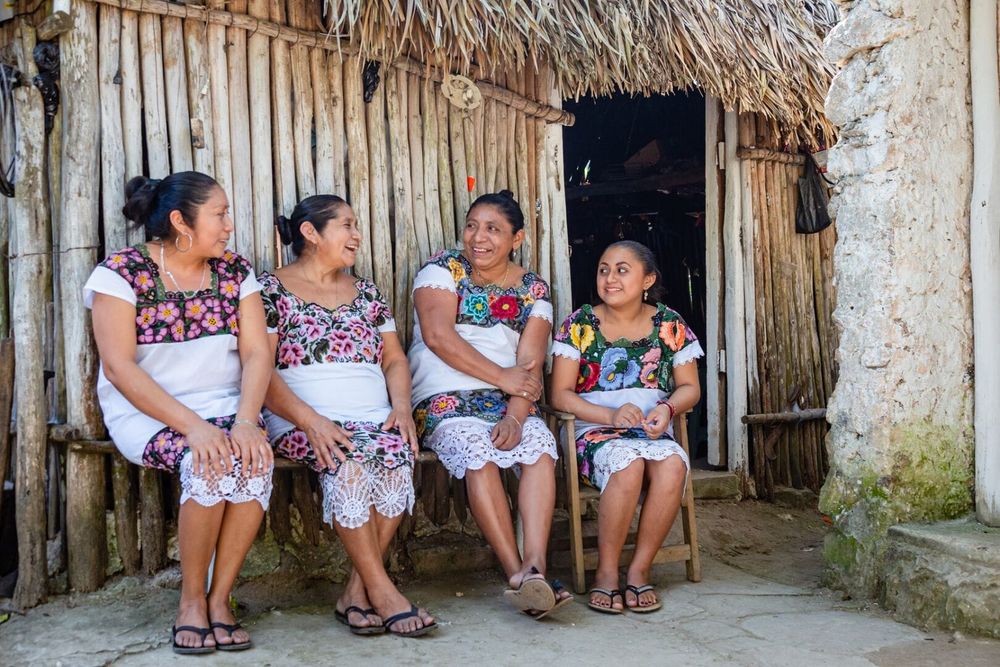
Tulum’s allure has always been this fusion of worlds: the visible ruins of an ancient city and the invisible, enduring spirit of the Maya that suffuses the land. That spirit is not stuck in the past; it’s dancing at the town fair, speaking up in planning meetings, singing lullabies to babies, and innovating for an uncertain future. The story of Maya culture in Tulum is still being written, one generation at a time, like a centuries-long novel with unexpected plot twists and recurring characters. And you – whether visitor, resident, or curious reader – are now part of that story too. How will it continue? That’s a conversation Tulum is inviting all of us to join. We’d love to hear your thoughts, join the conversation on The Tulum Times’ social media.